
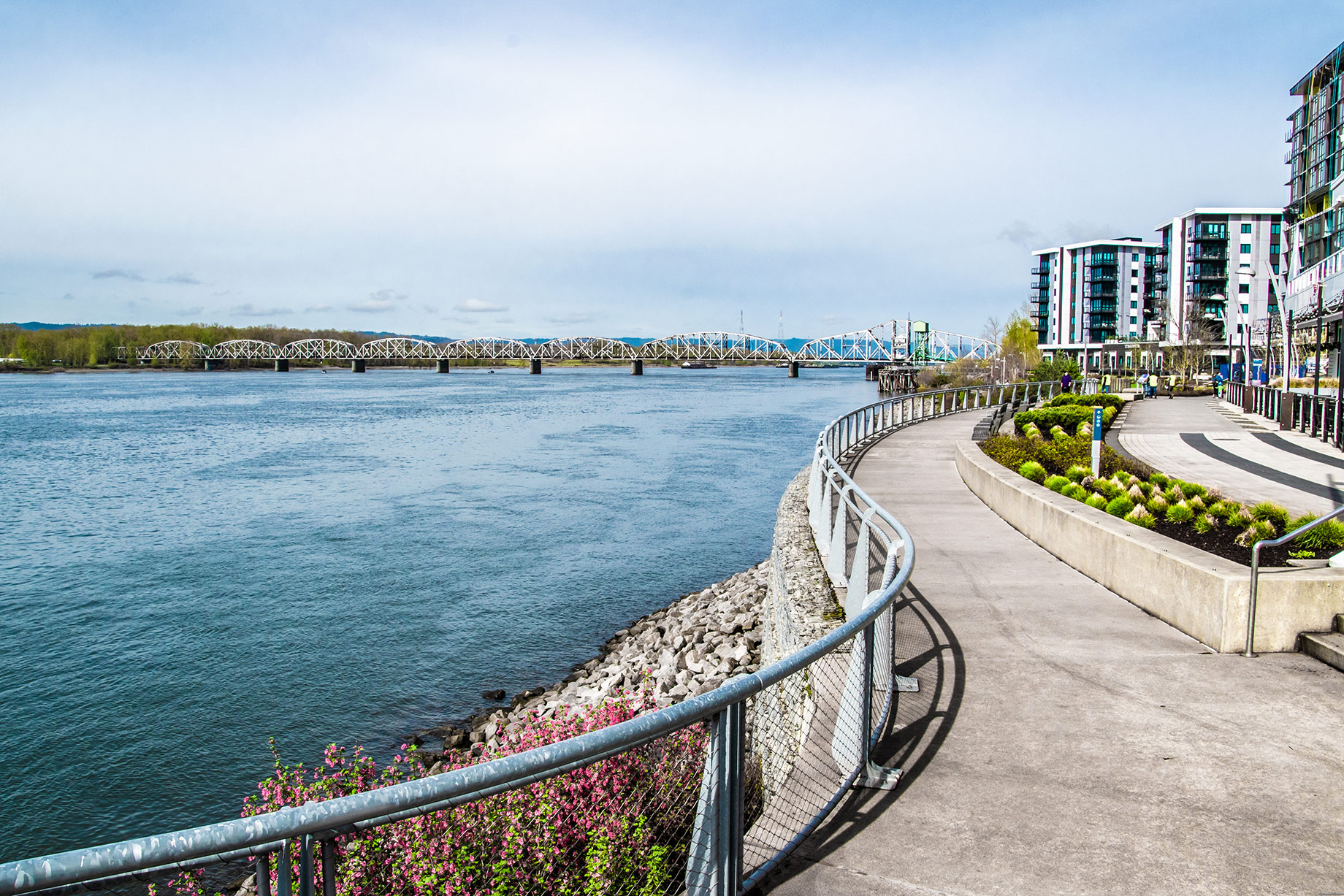
Most metropolitan real estate markets are defined by a city. The Portland market is defined by a river, and the state line running down the middle of it.
Portland sits on the Oregon bank. Vancouver sits directly opposite, in Washington. The two are close enough that residents cross for groceries, and far enough apart legally that a broker licensed in one cannot transact in the other.
For firms serving this metro, that boundary is not a technicality. It is a structural feature of the business, and it produces operating requirements that brokerages in single-state markets never encounter.
Two Licensing Regimes, One Commute
The starting point is that the two states do not merely differ in detail. They differ in vocabulary, in education requirements, and in the legal architecture of representation itself.
Oregon’s entry-level credential is the broker license. Oregon’s licensing agency requires applicants to be at least eighteen with a high school diploma or equivalent, to pay a $300 nonrefundable application fee, and to complete 150 hours of approved pre-license education. An individual may hold only one Oregon real estate license at a time.
Washington also calls its entry-level license a broker license, which causes considerable confusion, because the requirements behind it are different. Washington’s licensing department requires 90 hours of approved education, split into a 60-hour Real Estate Fundamentals course and a 30-hour Real Estate Practices course.
Same title. Sixty hours of difference in preparation.
A firm operating on both banks must therefore maintain two licensing tracks, two continuing education calendars, and two sets of compliance obligations for what looks, to the client, like a single market.
What a Listing Agent Does That Crosses State Lines
The functional work of seller representation is largely consistent regardless of jurisdiction, which is why the confusion arises in the first place.
Matin Real Estate, which operates from West Linn, Oregon and maintains a second office in Vancouver, Washington, publishes a seller-side breakdown of what a listing agent actually handles — establishing price through comparative market analysis, managing marketing and showings, advising on staging, negotiating offers, and monitoring for issues that could deter buyers or create later liability.
That firm’s own guidance also notes that well-staged homes often sell for one to five percent more than unstaged ones, against staging costs it puts at roughly one to three percent of the sale price.
None of those functions change at the river. A comparative market analysis works the same way in Camas as in Lake Oswego.
What changes is the legal container the work sits inside — and that is where cross-border firms earn their keep, because a seller who assumes the two states operate identically is exposed in ways they will not discover until a dispute arises.
The Disclosure Divergence
Both states require written disclosure of the representation relationship before a client commits. Both do it differently enough that the documents are not interchangeable.
Oregon


Oregon’s framework rests on the initial agency disclosure pamphlet. Oregon’s statute requires the Real Estate Agency to prescribe that pamphlet, and brokers must provide it at first contact with any consumer they will represent — a threshold reached as soon as the broker has sufficient contact information to deliver it.
Oregon recognizes three relationships: seller’s agent, buyer’s agent, and disclosed limited agent, the last covering situations where one brokerage represents both sides.
Washington

Washington’s framework is built around a differently titled document and a different structural assumption. The governing statute prescribes a pamphlet called “The Law of Real Estate Agency,” specifying its content and requiring that it be formatted for easy review.
That pamphlet states plainly that a real estate firm and broker must enter into a written services agreement with a seller to establish an agency relationship, and that the firm then appoints one or more brokers as agents of the seller.
The distinction matters more than it first appears. In Washington, the agency relationship attaches to the firm, which appoints brokers. The designated broker and any supervising managing broker are also agents of the seller.
For a firm operating in both states, that means the internal supervision structure — who is an agent of whom, and when — differs depending on which side of the water the property sits.
Why Firms Do It Anyway
Given the duplication, the obvious question is why a brokerage would bother maintaining presence on both banks rather than simply referring across.
The answer is client behavior. A household relocating for work in this metro frequently considers both states simultaneously, weighing Washington’s absence of state income tax against Oregon’s absence of sales tax, alongside schools, commute and inventory.
A brokerage that can only show one side of the river loses that client at the first comparison. A brokerage that can show both retains the relationship through what is often a months-long deliberation.
There is also the seller side of the same equation, which is less discussed. An owner selling in Vancouver and buying in Portland is running two transactions under two regimes, with different disclosure documents, different agency structures and different closing customs.
Coordinating that across two unaffiliated firms introduces timing risk at precisely the moment when timing matters most.
What Sellers Should Actually Verify
For anyone listing property in this metro, the practical due diligence is narrower than the general advice suggests.
Confirm the license, in the correct state, for the specific individual — not merely the firm. Confirm which disclosure document applies and ask to see it before signing anything. And ask directly how a simultaneous cross-river transaction would be coordinated, because the answer reveals whether the firm genuinely operates in both jurisdictions or simply advertises in both.
The Columbia is roughly a mile wide at Vancouver. Legally, it remains one of the more consequential boundaries in American residential real estate, and the brokerages that treat it seriously tend to be the ones worth hiring.
