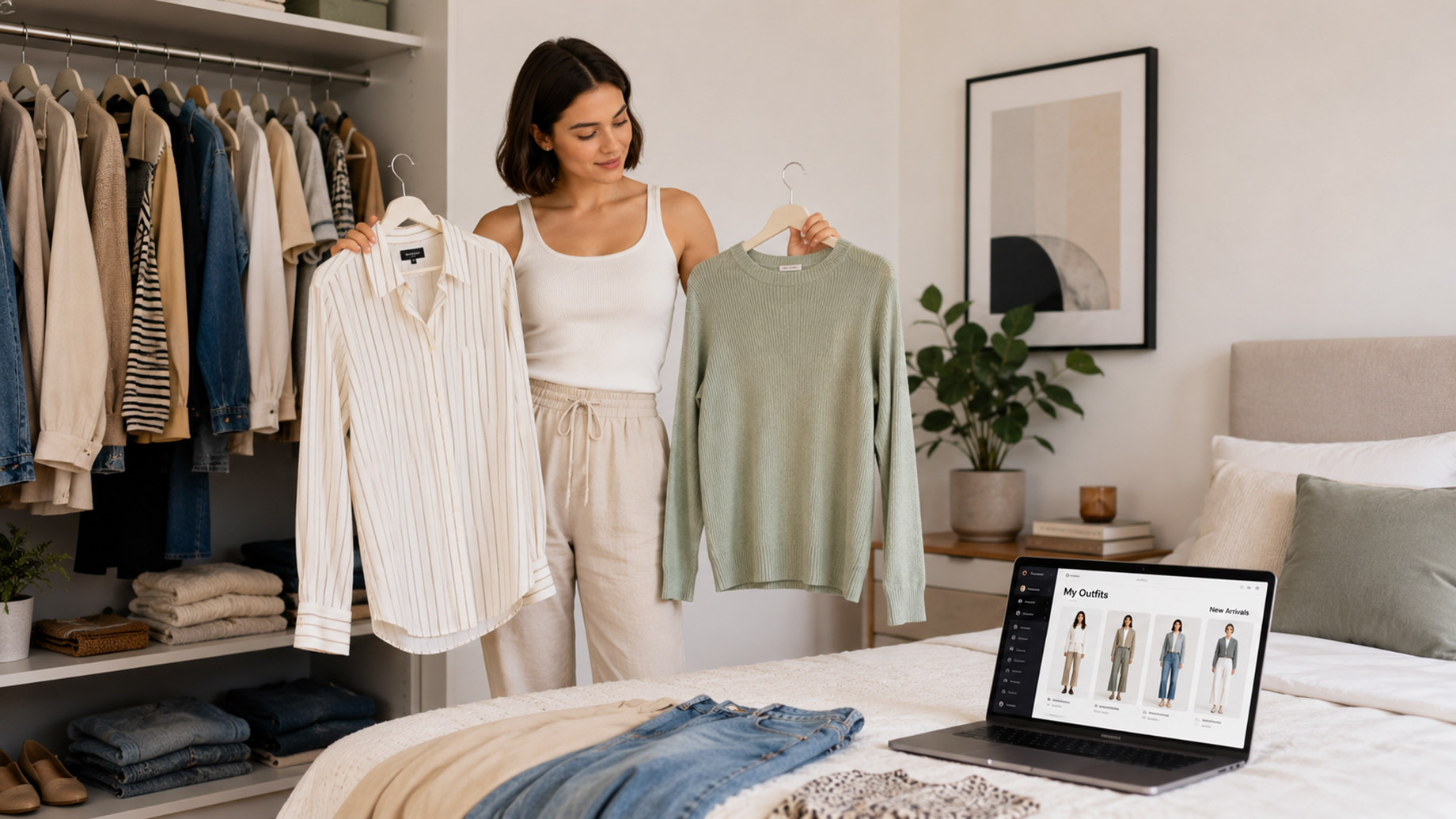
Personal style used to be something you either had or you did not. If you grew up in a family that paid attention to clothes, or if you had the budget to hire a stylist, you learned how to put outfits together. Everyone else muddled through with a closet full of things that sort of worked but never quite clicked.
That gap is closing. A wave of AI-powered styling tools has emerged over the past two years, and the best of them are doing something genuinely useful: they are giving everyday people access to the kind of personalized fashion advice that used to require a human stylist charging hundreds of dollars per session.
The Problem With Traditional Style Advice
Most fashion advice is generic by design. Magazine editorials showcase looks built around specific models, specific body types, and specific budgets that have nothing in common with how most people actually shop. Social media influencers do a better job of representing diverse styles, but their recommendations are still filtered through their own preferences and body types.
The result is that millions of people know what looks good on someone else but struggle to translate that into choices that work for their own wardrobe, body, lifestyle, and budget. This is not a trivial problem. Research consistently shows that people who feel good about how they present themselves report higher confidence in professional and social settings. Style is not vanity. It is a practical tool for navigating the world.
Human stylists solve this problem beautifully, but they are expensive and scarce. A good personal stylist charges anywhere from $150 to $500 per session, and the really good ones have waiting lists. That leaves most consumers relying on generic advice, trial and error at the mall, and the occasional compliment from a friend as their primary style feedback mechanisms.
What AI Styling Tools Actually Do
The current generation of AI styling tools works by analyzing multiple inputs about you: your body measurements, your existing wardrobe, your color preferences, your lifestyle, your budget, and your style goals. Using that information, they generate specific outfit recommendations, suggest new purchases that complement what you already own, and help you explore how different pieces work together before you spend money.
The better tools go further. They can analyze photos of outfits you like and explain what specifically works about them, the color balance, the proportions, the way different textures interact. They can take a photo of something you are considering buying and show you three different ways to style it with items already in your closet. They can even alert you when a piece you have been wanting drops in price at a retailer you trust.
What makes these tools different from the outfit recommendation features that apps like Pinterest and Instagram have offered for years is the personalization depth. Those earlier features recommended items based on what you clicked on or saved. Current AI styling tools build a genuine understanding of your individual style profile and make recommendations that account for your specific wardrobe, body, and context.
Virtual Try-On Changes the Buying Decision
One of the most practical features in this space is virtual try-on technology. Instead of ordering five sizes and returning four, you can see how a garment will look on your actual body before placing the order. The technology uses a combination of your measurements and AI-generated visualization to produce realistic previews of how clothes will fit and drape.
Platforms like Styl10 have built their approach around this concept, letting users browse outfit ideas and visualize how those combinations would work for their specific body type and coloring. The practical benefit is straightforward: fewer bad purchases, less return shipping waste, and more confidence that what arrives in the mail will actually work.
Virtual try-on is still imperfect. Fabric drape, texture, and the way a garment moves are hard to simulate perfectly. But the technology has improved dramatically in the past 18 months, and for most purchasing decisions it provides enough information to make a significantly more informed choice than a flat product photo on a model whose proportions are nothing like yours.
The Sustainability Angle
There is a meaningful environmental dimension here that often gets overlooked. The fashion industry produces roughly 92 million tons of textile waste annually, and a significant portion of that comes from consumers buying clothes that do not work for them. Returns alone account for an enormous amount of shipping emissions and packaging waste.
AI styling tools address this at the source. By helping people make better purchasing decisions in the first place, they reduce the cycle of buy, try, return, repeat that drives so much waste. By helping people get more wear out of the clothes they already own through creative combination and restyling suggestions, they extend the useful life of existing garments.
This is not going to solve fashion’s sustainability crisis on its own. But it is one of the few technology interventions that genuinely reduces waste rather than just shifting it somewhere else in the supply chain.
What to Look for in a Styling Tool
If you are exploring AI styling tools for the first time, a few things distinguish the genuinely useful ones from the gimmicky ones. First, check how much personalization the tool actually offers. If it is just recommending trending items without accounting for your specific wardrobe and body, it is not doing much more than a curated Instagram feed.
Second, look for tools that work with what you already own rather than just pushing you to buy new things. The most valuable styling advice often involves new combinations of existing pieces, and a tool that only recommends new purchases is essentially a storefront with a chatbot attached.
Third, pay attention to how the tool handles diverse body types. Many early AI fashion tools were trained primarily on images of professional models, which made their recommendations useless for anyone who did not share those proportions. The better current tools have been trained on much more diverse datasets and produce recommendations that actually account for the full range of human bodies.
The technology is still young, and it will continue to improve. But even in its current state, AI styling represents a genuine democratization of a service that was previously available only to the wealthy or the naturally fashion-inclined. For everyone else, it is a practical tool that saves money, reduces waste, and helps people feel better about how they present themselves to the world.
