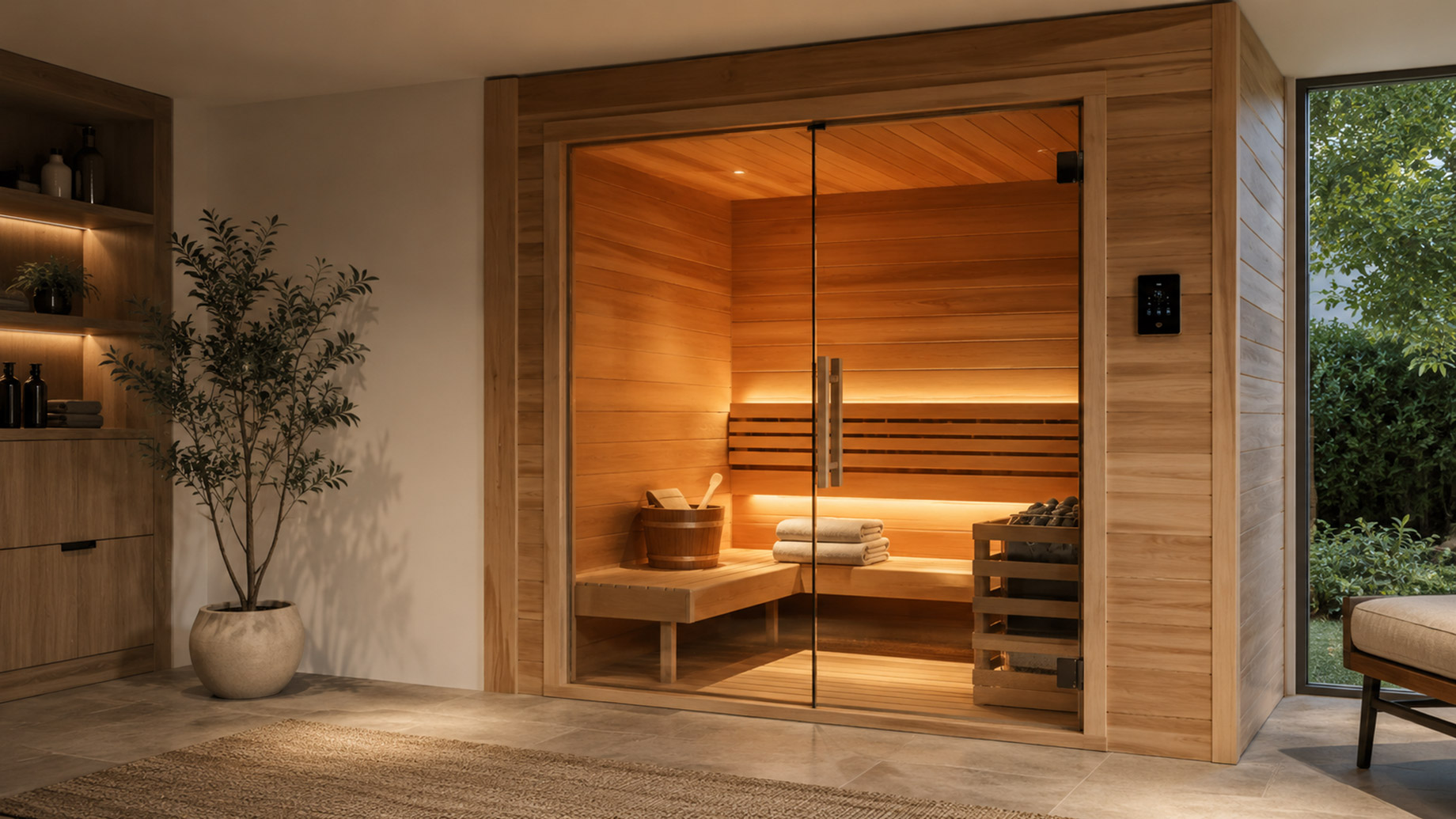
Home health has never been more important, and homeowners today are increasingly choosing to have their own home saunas for relaxation purposes. The advantage of having one’s own home sauna is that it ensures convenience, privacy, and top-quality spa services from the comfort of one’s own home.
But before making any purchase of home saunas, it is necessary to know about the different types of home saunas available, installation needs and maintenance cost. This guide will offer all these information on home saunas.
What is a Home Sauna?
Home sauna is a confined area that allows a person’s body to relax due to the heating effect.
There are various kinds of Luxo Living home saunas available, such as:
- Electric or wood-burning traditional saunas
- Infrared saunas
- Portable saunas
They can either be indoor or outdoor, based on a person’s choice.
Benefits of Having a Home Sauna
The various advantages of using a home sauna include convenience, privacy, money saving, among others.
Convenience and privacy
A private home sauna will enable you to relax whenever you want in your own space.
Money saving compared to spa sessions
It will be less costly for you to have your regular sessions in your home sauna rather than visiting the spa.
Health benefits (relaxation, circulation, recovery)
A home sauna can assist you with relaxation, promote circulation, and facilitate muscle recovery.
Home value benefits
When constructed well, a home sauna will enhance the aesthetic appeal of your house, making it worth more.
Types of Home Saunas Explained
There are different types of saunas like traditional saunas, infrared saunas, and portable saunas.
Traditional Sauna
The traditional sauna uses either electricity or wood to heat the room to extreme temperatures. Steam can be produced by sprinkling water onto the heated stones. Nevertheless, proper ventilation is necessary.
Infrared Sauna
The infrared sauna makes use of minimal energy for heating purposes. In addition, it is affordable and easy to install. This type of sauna is common in modern homes because of its convenience.
Portable Sauna
The portable sauna is affordable and takes up less room. It is an appropriate choice for beginners.
Choosing the Right Location
Indoor Arrangement
The indoor sauna arrangement can be installed in the bathroom, basement, additional bedroom, or gymnasium. The following are some of the elements that you need to take into consideration while designing an indoor sauna:
- Moisture and ventilation
- Source of energy and heat-resistant flooring
Outdoor Arrangement
An outdoor sauna can be constructed in your garden or backyard. An outdoor sauna is a comfortable space for relaxing outdoors, but it requires insulation against the weather.
Space and Size Requirements
Always remember to check the dimensions of the place where you are going to install the sauna before making your purchase decision.
For one person saunas, smaller spaces would be suitable while for family needs, more space and proper ventilation system would be needed.
Consideration of dimensions should include height of the ceiling along with the accessibility to the sauna.
Materials and Build Quality
Building of the sauna is determined by the type of material used.
Cedar
It is resilient, waterproof, and has a distinctive odor.
Hemlock
It is smooth, sturdy, and frequently used in infrared saunas.
Spruce
It is light and usually utilized in normal saunas.
Power and Installation Requirements
Electric installation (power, energy consumption)
Some types of saunas consume different levels of electrical energy; hence, one should consider the electrical capacity of their house.
Plug and play and hard wiring
There are some saunas that could just plug directly into a socket outlet while others would require hard wiring.
Professional installation vs do-it-yourself installation
There are some saunas that could be professionally installed, which is the most appropriate choice than doing it yourself.
Quality Standards And Certifications
The sauna you choose should be the one that has the right quality standards and certification.
Price Considerations
The cost of home saunas varies based on the kind, features, and design of the sauna.
- A portable sauna is cheaper.
- An infrared sauna costs more than a portable sauna.
- A conventional sauna is costly because of installation expenses.
Key Features to Consider Prior to Purchase
Below are some of the primary characteristics of contemporary saunas:
- Temperature control
- Timer settings
- Lighting system
- Automatic controls
- Safety features
Selecting the appropriate features will enable you to make full use of your sauna.
Maintenance and Care Tips
To ensure that your sauna remains hygienic and lasts for many years, you need to keep it clean.
Proper ventilation is vital to avoid moisture accumulation and mold formation. Moreover, you should inspect your heating devices and other electronic gadgets.
It is important to take care of wooden saunas because they not only have a good lifespan but also give an aesthetic appearance.
Common Mistakes to Avoid
It is not unusual for consumers to concentrate on costs while ignoring other relevant factors such as space, airflow, and installation.
An incorrect choice of sauna, along with the requirement of having electricity, might be an additional cost factor.
Remember that high quality and comfort are always key priorities.
Tips for First-Time Buyers
Start from your budget and space
While looking for a suitable sauna to purchase, it will always be imperative that you pick one which falls within your budget and space available in your house.
Frequency of usage
It is also essential to consider the frequency of use while selecting a sauna. For frequent use, it is better to opt for a high quality infrared or traditional sauna rather than the portable type.
Look out for quality brands and materials
Usually the brands and the materials which are used determine the durability of the sauna.
Warranties and reviews
This is very essential in order to make an informed decision.
Is a Home Sauna Worth It?
A home sauna would be an asset to those who enjoy engaging in a healthy exercise.
Although the initial cost of getting a home sauna may seem pricey, homeowners find it worth the bother given its advantages.
Those who will benefit from owning a home sauna include people who use the saunas often and families looking for privacy.
Conclusion
The use of sauna at home must not be regarded only as an indulgence. The sauna should rather be viewed as an important component of your general health routine.
The type of sauna that you select hardly matters at all. Be it traditional sauna, infrared sauna, or portable sauna; what really matters is your proper planning.
