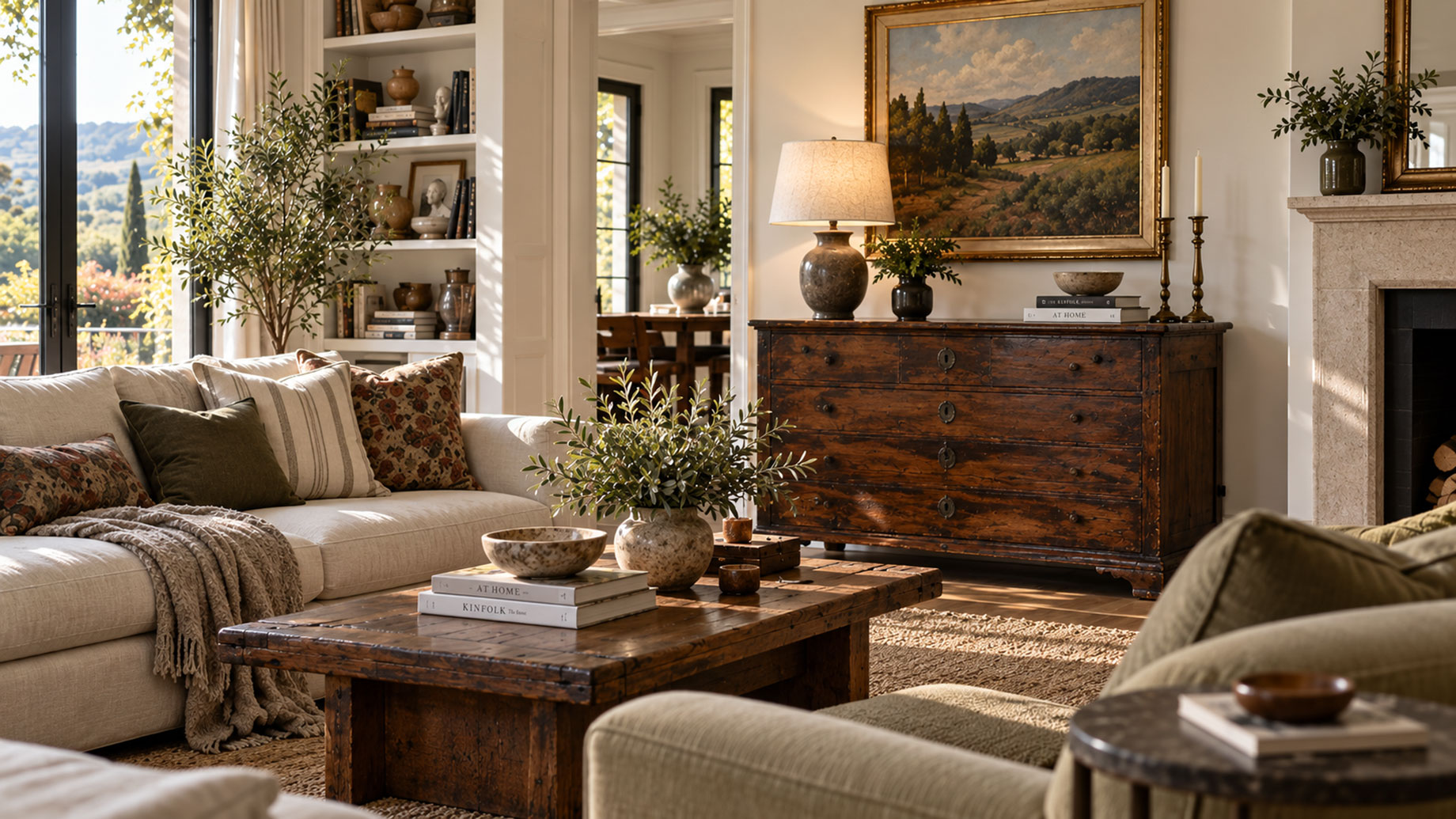
The sofa is new, the rug is stunning, and the curtains drape all the way to the floor. Yet, the room still feels as though no one has truly made it their own.
This is a common stage in the decorating process: the core design is largely complete, but the home struggles to reflect the owner’s personal style. Browsing home decor inspiration online can help you see how different interior designs handle these final, nuanced details.
How can you highlight a strong design style? Sometimes, the most effective details are surprisingly subtle—such as a dark-framed picture against a light-colored wall, or a low-profile lamp placed beside a cozy chair.
Before adding new decor, take a moment to consider what the room might be missing. It could be a sense of history, a comfortable seating area, or perhaps just a single, unexpected piece that breaks the mold of the overall style.
1. The piece that almost did not make the cut
Consider an old timber chest in a newly renovated living room. Its finish is uneven, and its proportions have little in common with the sofa. It is tempting to replace it with something cleaner and more coordinated.
Try giving it a proper position first. Put it where the drawers can open. Hang an artwork above it that relates to its width. Add a lamp with enough presence to hold its own against the wood. The chest may still be wrong, but now you can judge it as part of an arrangement rather than as an isolated leftover.
An inherited piece brings a different pace to a room full of recent purchases. It also gives you something specific to work with. The dark edge of its timber might reappear in a frame; the curve of its legs might find an echo in a chair.
2. A room can have too many finishing touches
Small objects are easy to buy because they seem like low-risk decisions. Eventually, every ledge acquires a vase, a candle, and a little stack of something.
Clear one surface completely. Return the item you most want to see, then the object you actually use there. Stop for a day. That pause often reveals whether a third thing would improve the arrangement or merely occupy the space. For example, this living room design uses a striking piece of wall art to create a strong Italian design character without adding unnecessary decoration.
Check the dimensions of home accessories before buying them. A bowl that looks substantial online may disappear on a broad console. A lamp may have a beautiful base but an oversized shade that crowds the seat beside it. Write down the available space before shopping.
3. Give the evening a different arrangement
Daylight can make a room look finished when its evening lighting is still an afterthought. Switch off the main ceiling light and see what remains usable.
Can you read in the chair you like? Is the far corner gloomy enough to make the room feel smaller? Does a bare bulb reflect in the television?
A table lamp moved from another room is a useful experiment. Live with the new position before committing to a fitting. Some of the best decorating ideas at home come from testing what you already own in the hours when you actually use it.
4. Leave room for work done by hand
DIY home decor adds character most convincingly when the object has a reason to exist. Frame a piece of fabric you have kept for years. Re-cover a simple cushion in a material you enjoy touching. Give a tired side table a new finish suited to its surface.
There is no need to distribute handmade projects throughout the house. One well-finished piece, placed where it is used and noticed, is enough to make the room less anonymous.
5. A place for the next find
Home decor changes as possessions arrive and routines shift. Leave a shelf partly empty. Keep the useful table even if it is not a perfect stylistic match. Let a room absorb something unexpected later.
A home that feels collected needs that permission to remain a little unfinished.
Conclusion
Creating a sense of timeless character in home decor is less about following a specific trend and more about giving a space personality, balance, and room to evolve. Exploring different interior design styles can help you understand how different elements, materials, and details come together to create a distinctive atmosphere. From inherited furniture and handmade pieces to thoughtful lighting and a little empty space, these choices can make a home feel collected rather than simply decorated. Instead of trying to make everything match perfectly, let the room develop naturally over time. That balance is what gives a home its lasting character.
