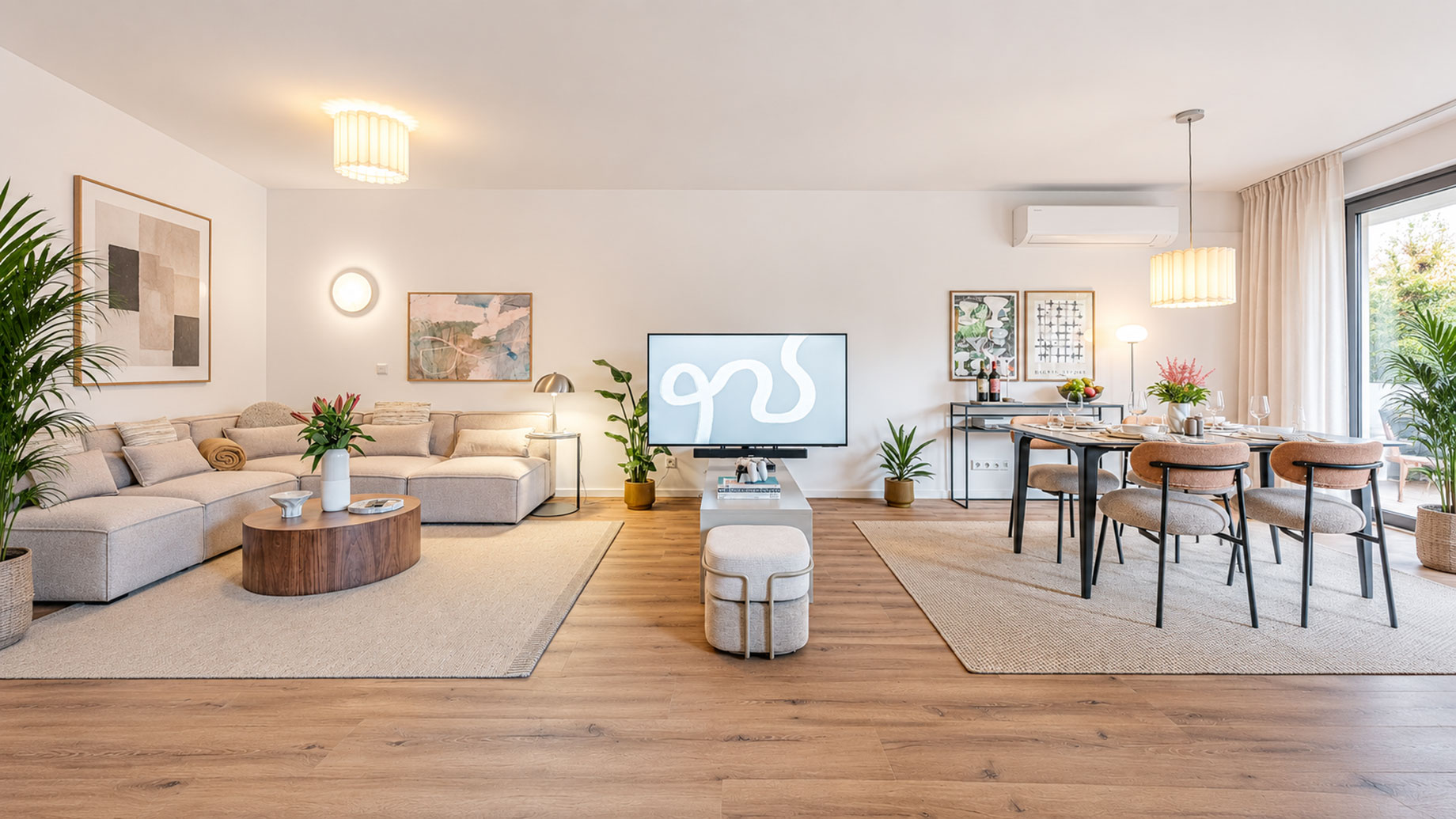
A hotel room can be perfectly adequate for a few days. But when someone stays in one place for several weeks or months, their expectations for accommodations begin to change. A place to sleep becomes a temporary home where much of everyday life takes place.
This applies to business travelers, consultants, project teams, professionals on temporary assignments, and people relocating to a new area for a limited period. They need more than a place to sleep. They also need somewhere to cook, work, unwind, and maintain a relatively normal daily routine.
That also changes what defines a high-quality place to stay. For extended stays, amenities and first impressions still matter, but what matters even more is how well a property supports everyday life.
1. From Accommodation to a Temporary Home
During an extended stay, accommodations become part of everyday life. A private kitchen, laundry facilities, and enough storage space give guests more independence.
Separate living and sleeping areas provide additional space and privacy. That matters even more when several people are traveling together but still need space to unwind or follow different schedules.
A true “home away from home” is largely about having the freedom to structure your day on your own terms. Privacy, enough space, and the ability to handle everyday needs create a greater sense of independence. That is what separates a temporary home from simply having a place to sleep.
2. Comfort Means Something Different During an Extended Stay
On a short stay, it is easy to focus on what you notice first. But something that barely matters after two nights can become important after two or three weeks.
An uncomfortable sofa, too little kitchen counter space, or a dining table you would rather not sit at for an hour suddenly matters a lot more. A good mattress, pleasant lighting, and a fully equipped kitchen also become more important the longer someone stays. Often, those ordinary details are what determine whether a place still feels comfortable three weeks in.
Reliable heating or air conditioning matters as well. During an extended stay, comfort is not just about how a property looks, but how comfortable and practical it is to live in day after day.
3. When an Extended Stay Also Becomes a Workspace
Of course, not every business traveler needs to work from where they are staying. For consultants, project team members, and digital nomads, however, the accommodation may also serve as a regular workspace.
Anyone working from their accommodation needs a proper place to do so. At a minimum, that means fast, reliable internet, a real desk and a comfortable chair, good lighting, and enough outlets. Quiet areas and sufficient privacy are especially important for calls and video meetings.
Small details such as easily accessible outlets, USB ports, or provided travel adapters can also make the workday easier for international guests.
For a longer business stay, a comfortable place to live is only part of the equation. When needed, it should also make it possible to work productively.
4. Thoughtful Design Rather Than Decoration
For an extended stay, good interior design has to do more than look appealing in photos.
It quickly becomes clear whether a space was designed for photographs or for the people actually living in it. A striking dining table offers little value if it is uncomfortable to sit at. A minimalist bedroom may look clean and uncluttered, but it becomes impractical when there are not enough surfaces, outlets, or storage options. Layouts, furniture, and materials need to work in real life, not just look good.
At the same time, design shapes how a space feels. Natural light, pleasant lighting, and well-proportioned rooms can make an apartment feel more inviting. They can create a space where people enjoy spending time, whether they are working or unwinding after a long day. Thoughtful design brings aesthetics and function together and continues to work well when a property is used for weeks rather than just a few days.
5. Location Matters Differently for Extended Stays
The importance of location also changes with the length of a stay. On a short vacation, being close to downtown areas, attractions, or entertainment may be the priority. During an extended stay, everyday routes tend to matter more.
Proximity to work, grocery stores, restaurants, fitness facilities, transportation, and parking can become much more important. Other factors depend on the guest’s individual situation. A quiet and safe residential area may matter just as much as access to public transportation or major roads. Families may also prefer neighborhoods with less traffic.
The Ramstein area in Germany is a good example of how those priorities shift. Someone working there for an extended period may consider not only the surrounding area but also the distance to work and the places they need in everyday life.
Someone staying for two days may judge a location by the experiences it offers. Someone staying for two months is more likely to judge it by their daily routine.
6. Reliable Support When It Is Needed
During extended stays, many guests want to live as independently as possible and organize their days on their own terms. At the same time, support should be easy to reach when something goes wrong or questions come up.
That is where clear communication makes a real difference. A dedicated point of contact makes it easier to resolve technical or practical questions quickly. Guests should have straightforward ways to get in touch, whether by phone, email, or a messaging service such as WhatsApp. They should also know when support is available.
Good service can also go beyond solving problems. It may include local recommendations, coordinating cleaning services, or helping with practical arrangements. Ideally, guests can handle their day-to-day lives independently while knowing help is there when they need it.
7. What Business Travelers Need Beyond the Basics
Temporary work assignments bring their own practical considerations. Consultants, contractors, project teams, and other professionals often arrive at a new location with an established work schedule and little time to organize the details of their accommodation.
For business travelers, comfort can also mean having less to organize after arrival. Someone arriving after a long day of travel may have to start work the next morning. They do not want to spend the evening finding bedding, kitchen essentials, or basic household supplies.
The less they have to organize after arrival, the sooner they can settle in and focus on why they are there. A move-in-ready apartment, regular cleaning, or even a few basic groceries and drinks waiting on arrival can make the first few days much easier. In everyday life, these practical details can often make a greater difference than additional amenities that are rarely used.
The area around Ramstein Air Base in Germany is one example. Military personnel, contractors, and other professionals may live and work in the region for extended periods as part of temporary assignments.
Stay Eden’s furnished apartments combine independent living with convenient access to work and practical services for longer stays. For someone arriving on a work assignment, that can mean less time spent getting settled and more time focused on the reason they came.
Bottom Line
The longer a stay lasts, the less that first impression matters. What matters more is how well it supports the everyday lives of the people staying there.
High-quality extended-stay living does not necessarily mean more amenities or more luxury in the traditional sense. Quality shows in how easily the space fits into everyday life — from working and cooking to relaxing and having some privacy.
When a property meets those needs, a furnished apartment can truly become a temporary home.
