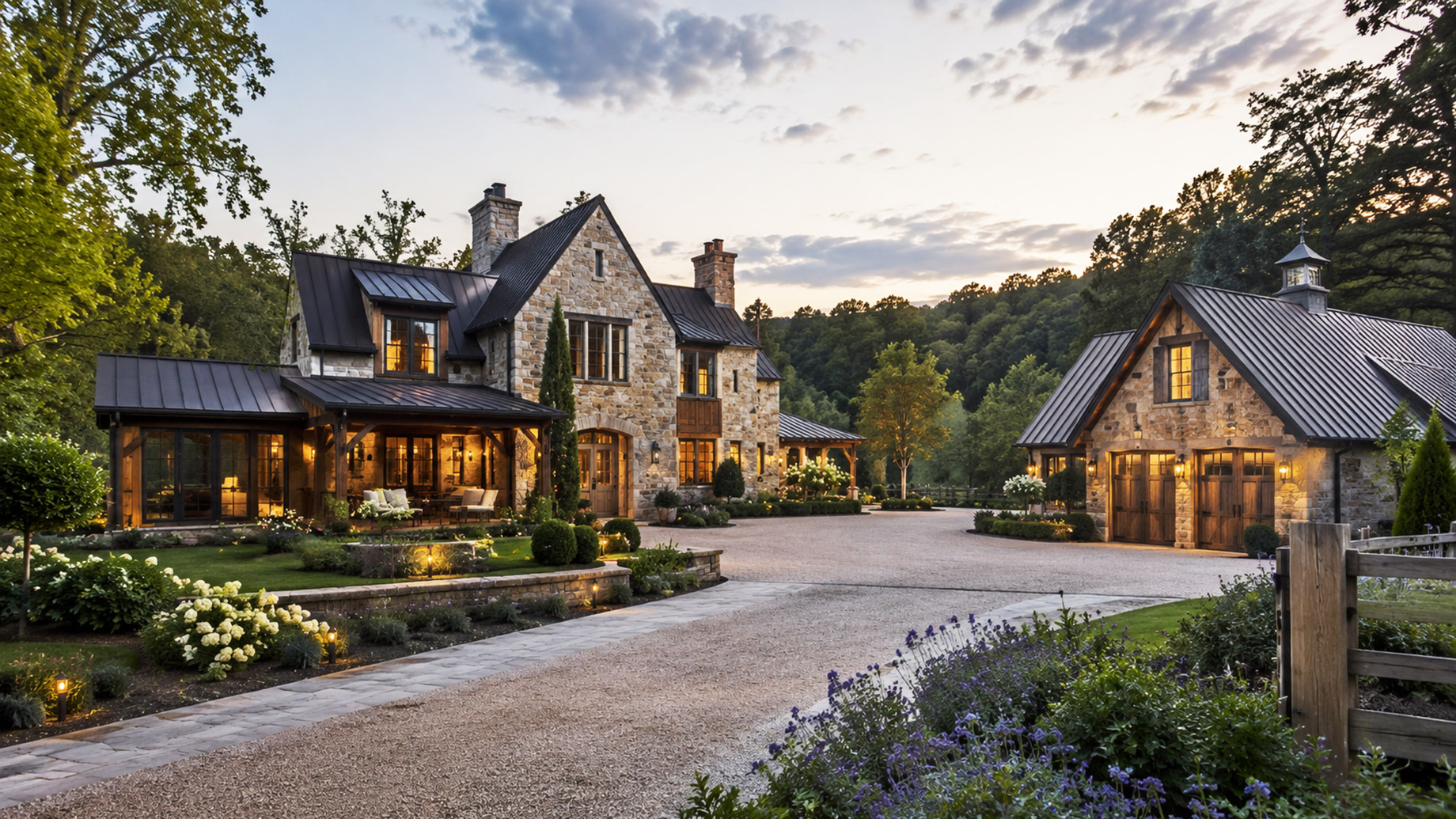
Luxury homes are rarely defined by the main residence alone. The house may be the centerpiece, but the surrounding structures often shape the way the property feels, functions, and lives day to day. A guesthouse, pool pavilion, garage, studio, barn, greenhouse, or garden structure can either strengthen the estate’s character or quietly work against it.
That is why auxiliary structures deserve the same level of thought as the home itself.
When these buildings are designed with care, they do more than serve a practical need. They add rhythm to the land. They support a lifestyle. They create moments of arrival, retreat, privacy, and usefulness. In the best cases, they feel as though they were always meant to be there.
The challenge is balance. An auxiliary structure should stand confidently, but not compete. It should feel refined, but not overly decorated. It should meet real needs while still respecting the property’s architecture, landscape, and long-term value.
Start With the Purpose, Not the Building
Before deciding what an auxiliary structure should look like, it helps to understand what it needs to do. A beautiful structure that does not function well will eventually become frustrating. A practical building that ignores the rest of the property can feel like an afterthought. Purpose comes first.
For some homeowners, the priority is hospitality. A detached guesthouse can give visitors privacy while preserving the quiet of the main residence. For others, the need may be recreation, such as a pool house with changing rooms, lounge space, and storage. Some properties require larger support structures, including garages, equestrian buildings, workshops, or staff quarters.
The best design decisions come from honest questions. How often will the space be used? Who will use it? Should it feel private or social? Does it need heating, cooling, plumbing, or specialized storage? Will it support daily routines, seasonal gatherings, or long-term property management?
These questions may seem simple, but they shape everything that follows.
Place Structures With the Landscape in Mind
Where an auxiliary structure sits on the property is just as important as how it looks. Placement affects views, movement, privacy, sunlight, drainage, and the overall experience of the estate.
A guesthouse may work best when it is close enough to feel connected, but far enough to offer independence. A pool pavilion should relate naturally to the pool, terraces, and outdoor seating areas. A garage or service building needs convenient access without dominating the arrival experience.
Larger rural or estate properties require even more planning. Structures such as barns, equipment buildings, or riding facilities need clear circulation routes, durable materials, and thoughtful distance from the main residence. When working with specialized professionals, including horse barn builders, the design should still be guided by the property’s broader architectural vision, rather than treated as a separate project with no visual connection.
The land usually gives clues. Existing trees, slopes, stone walls, paths, and sightlines can all help determine where a structure belongs. When a building is placed well, it feels settled. It creates a sense of order without making the property feel forced.
Respect the Architectural Language of the Home
An auxiliary structure does not have to copy the main house exactly. In fact, copying too closely can sometimes make the property feel stiff or overly planned. Still, the structure should share a clear relationship with the home.
That relationship may appear through rooflines, materials, proportions, window styles, trim details, or color palettes. A stone guest cottage near a stone residence may feel natural. A modern glass studio beside a clean-lined contemporary home may feel equally fitting. The goal is not sameness. The goal is harmony.
Scale matters here. A small garden pavilion should not carry the visual weight of the main house. A detached garage should feel substantial enough to belong on the property, but not so large that it pulls attention away from the residence. Even a utility building can feel elevated when its proportions are handled well.
Good design often comes down to restraint. A luxury property does not need every structure to announce itself. Sometimes the most elegant choice is the one that quietly supports the whole setting.
Choose Materials That Age Gracefully
Luxury is not only about how something looks on the day it is finished. It is also about how it ages.
Auxiliary structures are often exposed to heavy use, weather, foot traffic, equipment, moisture, and seasonal changes. Materials should be beautiful, but they also need to hold up. Natural stone, quality wood, standing seam metal, slate, brick, limewash, copper, and well-detailed stucco can all bring depth and longevity when used appropriately.
The key is consistency. If the main house uses warm stone and dark metal accents, a nearby structure may echo those materials more simply. If the home has cedar details, a garden building or pool house might repeat that texture without overdoing it.
Hardware, lighting, doors, gutters, and paving should also be considered. These smaller elements can make an auxiliary structure feel finished rather than secondary. A plain storage building with thoughtful doors, clean trim, and proper lighting can feel surprisingly polished.
Durability should never be treated as separate from beauty. In luxury design, the two are closely linked.
Design for Everyday Use
A well-designed auxiliary structure should make life easier. That sounds obvious, but it is often where projects fall short.
A pool house needs logical storage for towels, furniture cushions, pool equipment, and outdoor dishes. A guesthouse needs enough privacy, sound control, and comfort to feel welcoming. A garage may need charging stations, workshop space, mudroom access, or room for seasonal gear. A studio needs the right light, outlets, ventilation, and quiet.
Function should be built into the plan from the beginning. Retrofitting convenience later can be expensive and awkward.
Luxury often lives in the small practical details. A covered walkway during rain. A discreet place to store boots. A hose bib exactly where it is needed. Lighting that turns on before someone reaches a dark path. Doors wide enough for furniture, tools, or equipment. These choices are not flashy, but they shape how the property feels every day.
The best auxiliary structures do not just look good in photographs. They work beautifully when real life is happening.
Create a Clear Sense of Connection
Even detached structures need connection. This can be physical, visual, or emotional.
Paths, terraces, courtyards, garden walls, lighting, and plantings can tie separate buildings together. A gravel drive lined with trees can make a barn feel like part of the estate. A stone path from the main house to a guest cottage can create a quiet sense of welcome. A shared material palette can help several buildings feel related without making them identical.
Lighting is especially important. It guides movement after dark and creates atmosphere. Soft path lights, subtle uplighting on trees, lanterns near doors, and warm interior glows can make auxiliary structures feel inviting rather than isolated.
Landscaping also helps soften transitions. A new building can feel harsh at first if it sits alone on bare ground. Layered planting, hedges, native grasses, climbing vines, and mature trees can help it settle into the property.
Connection is what turns separate buildings into a complete environment.
Keep Future Flexibility in Mind
A luxury property often evolves over time. Families grow. Hobbies change. Work patterns shift. Guests come more often, or less often. A structure designed for one purpose today may need to serve another purpose years from now.
Flexibility adds long-term value.
A detached studio might later become a guest suite. A garage loft might become an office. A pool pavilion could support outdoor entertaining in one season and a quiet retreat in another. Even barns and utility buildings can benefit from flexible layouts, strong infrastructure, and thoughtful access.
Planning for flexibility does not mean making every structure generic. It means avoiding overly narrow decisions that limit future use. Good ceiling heights, proper insulation, plumbing access, natural light, and adaptable floor plans can make a structure more useful over time.
This kind of planning is not always visible, but it is one of the signs of intelligent design.
Avoid Overbuilding
There is a temptation with luxury properties to add more. More structures, more features, more finishes, more statement moments. But auxiliary buildings work best when they feel necessary and considered.
Too many structures can clutter a property. Oversized buildings can weaken the presence of the main residence. Overly ornate details can make a support structure feel confused. Discipline matters.
A simple pavilion in the right place can do more for a property than an elaborate building in the wrong one. A modest guesthouse with beautiful proportions can feel more luxurious than a large one with poor layout. A quiet garden shed built with care can add more charm than a showy structure that tries too hard.
Luxury is not always about abundance. Often, it is about judgment.
Work With the Whole Property in View
Every auxiliary structure should be designed as part of a larger composition. That includes the main house, landscape, views, driveways, outdoor rooms, service areas, and long-term maintenance needs.
This is where collaboration becomes important. Architects, landscape designers, builders, interior designers, and specialty contractors should understand the same vision. When everyone works from a shared plan, the results feel cohesive. When each structure is handled separately, the property can start to feel pieced together.
A strong master plan does not need to be rigid. It simply provides direction. It helps each new structure support the property rather than distract from it.
The most successful luxury estates feel calm, even when they include many parts. The guesthouse belongs. The garage belongs. The pool pavilion belongs. The garden structure belongs. Nothing feels random.
That sense of belonging is the real goal.
Final Thoughts
Designing auxiliary structures for a luxury home is about more than adding useful square footage. It is about shaping the full experience of a property.
Each structure should have a reason for being there. It should respect the home, respond to the land, and support the way people actually live. It should be practical without feeling plain, elegant without feeling excessive, and connected without feeling repetitive.
When done well, these buildings become part of the quiet architecture of daily life. They hold tools, welcome guests, frame views, support hobbies, and make routines feel easier. They extend the home without stealing attention from it.
And in many ways, that is what makes them so valuable. A luxury property feels complete when every structure, large or small, contributes to the same sense of care. Not loudly. Not perfectly. Just thoughtfully.
