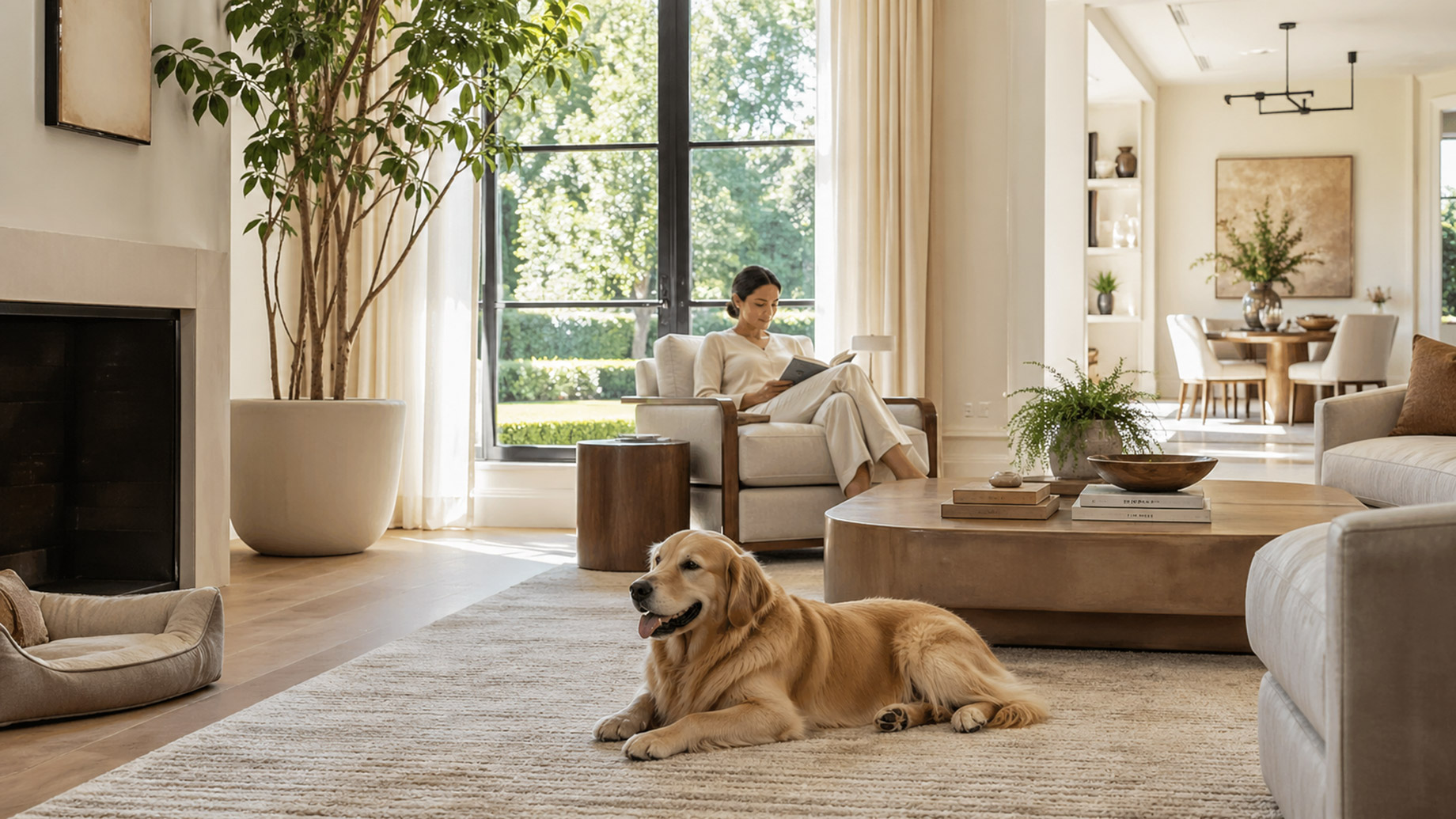
Most dog owners think about their pet’s health in terms of food, exercise, and vet visits. But the home environment, the air your dog breathes, the surfaces they rest on, and the stress they absorb from their surroundings all play a powerful role in their overall well-being. The good news is that creating a healthier home for both you and your dog doesn’t require a full renovation. It starts with knowing what to look for.
Start With Air Quality; It Affects Both of You
Indoor air quality is often overlooked, but dogs are actually more vulnerable to airborne pollutants than humans in some ways. They spend most of their time lower to the ground, where dust, allergens, and chemical residues from floor cleaners tend to settle. Synthetic air fresheners, scented candles, and certain cleaning sprays can irritate a dog’s respiratory tract over time.
Switching to fragrance-free or pet-safe cleaning products is a low-effort change with meaningful results. Improving ventilation, even just opening windows regularly, and using an air purifier with a HEPA filter can significantly reduce the load of airborne particles. For dogs with allergies or sensitivities, this alone can make a noticeable difference in their comfort.
Rethink Your Floors and Furniture
Hard floors like tile and hardwood can be tough on a dog’s joints, especially in older or larger breeds. Without proper traction, dogs can strain muscles just navigating slippery surfaces on a daily basis. Area rugs with non-slip backing in high-traffic zones give dogs a better footing and a softer place to lie down.
Furniture arrangement matters too. Dogs are den animals by nature and benefit from having a defined, quiet space they can retreat to, somewhere away from foot traffic and household noise. A bed placed in a low-stimulation corner, rather than the middle of a busy room, helps them decompress and rest more deeply.
Reduce Hidden Stressors in the Environment
Many dogs experience low-grade stress from sources their owners never consider: unpredictable noise, inconsistent routines, or even the residual tension in a busy household. Chronic, mild stress can manifest as skin irritation, digestive issues, excessive licking, or restlessness; symptoms that can be easy to misread as something else entirely.
One approach gaining traction among pet-focused wellness brands is topical support for dogs who seem anxious or irritated. Pup Labs, for example, addresses this through their range of products. Products like the one found at puplabs.com are designed to help soothe dogs experiencing skin discomfort and surface-level irritation, which can often be worsened by environmental stress and allergens in the home. Combining this kind of targeted support with a calmer home environment gives dogs a much better baseline.
Pay Attention to Temperature and Light
Dogs regulate body temperature differently from humans. Breeds with thick coats or flat faces are especially sensitive to heat, and even moderate indoor warmth can be uncomfortable for them during rest. Keeping sleeping areas cool and well-ventilated, particularly in warmer months, supports better sleep and reduces panting-related stress.
Natural light is another underrated factor. Dogs benefit from exposure to natural daylight, which supports healthy circadian rhythms and mood. If your home tends to be dark during the day, letting in more light through open curtains or adding a dog bed near a sunny window can be a simple but meaningful upgrade.
The Shared Space Mindset
Here’s where many homeowners get stuck: they either optimize the home entirely for their own comfort or make excessive accommodations that don’t actually serve the dog well. The better approach is to think of the home as a shared environment, one where both human and canine needs are considered.
This might mean choosing a non-toxic cleaning routine that works for the whole household, or setting up a designated mudroom area where paws are wiped down after walks before tracking allergens in. Pup Labs echoes this kind of integrated thinking in how it approaches dog wellness as part of a thoughtful, whole-home approach.
Small habits compound over time. A dog who lives in a low-toxin, physically comfortable environment is more likely to thrive, and that has a ripple effect on the entire household.
What to Actually Do This Week
Focus on a few targeted changes. Audit your cleaning products for pet-unsafe ingredients, add a non-slip rug to the area where your dog spends the most time, and create one retreat space that’s theirs alone. Check your home’s ventilation. And if your dog has been showing signs of skin irritation or restlessness, consider whether environmental factors might be contributing.
Designing a healthier home for your dog is becoming more intentional with the environment you already have. Dogs are adaptable, but they thrive when the space around them supports their natural needs instead of working against them. The adjustments are often simpler than people expect and the results, for both the dog and the humans who love them, tend to be worth it.
