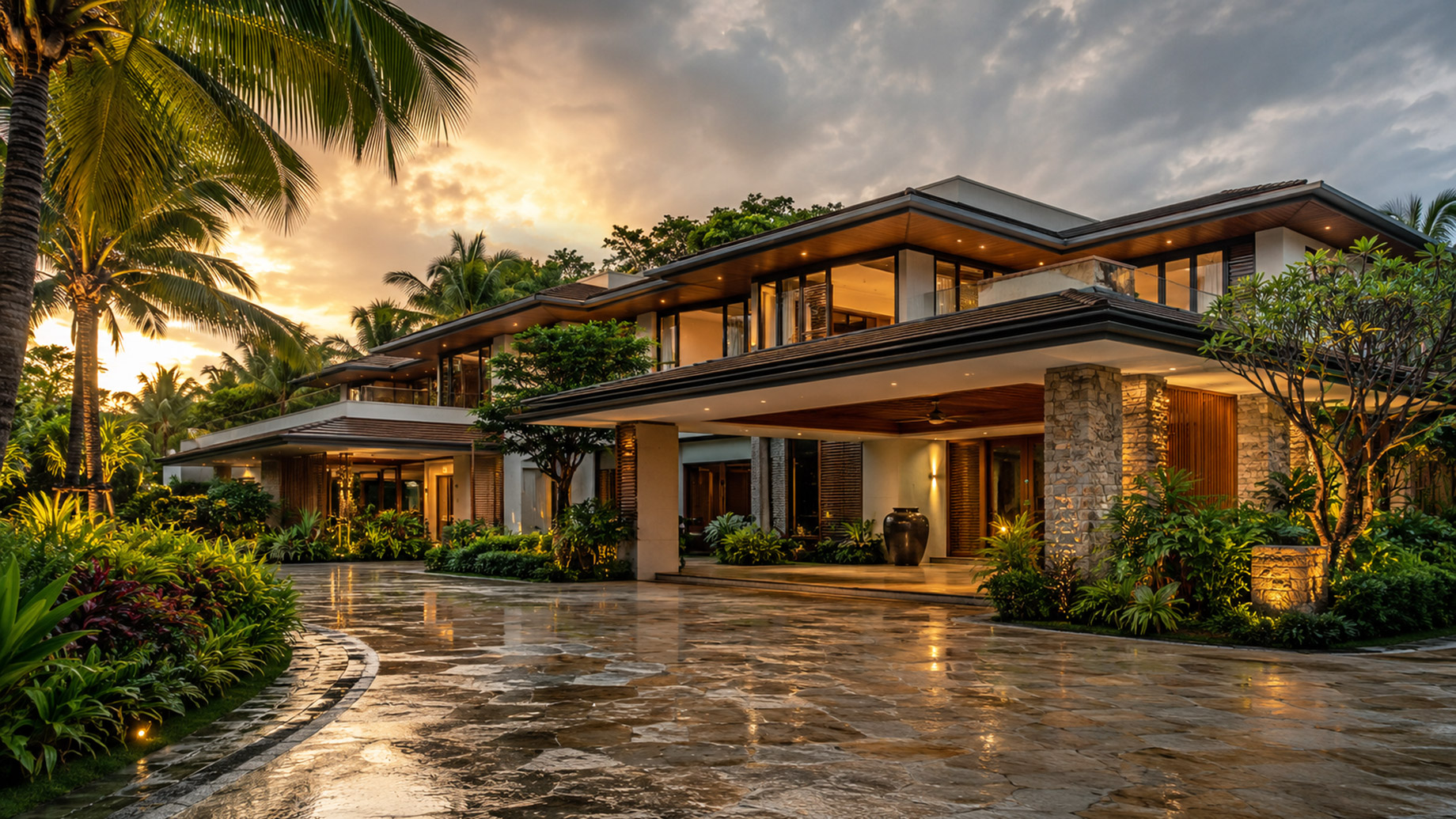
Luxury real estate in tropical and subtropical markets has entered a new phase of ownership strategy. Investors and high-end homeowners are no longer focused solely on architectural prestige, waterfront positioning, or interior design excellence. Increasingly, the long-term value of a premium property depends on its ability to withstand climate pressure, humidity exposure, heavy rainfall, intense UV radiation, and seasonal weather volatility.
Across Southeast Asia, particularly in Singapore, Thailand, Malaysia, Indonesia, and the Philippines, luxury property owners face a unique maintenance equation. Tropical environments accelerate material degradation, shorten replacement cycles, and place constant stress on roofing systems, cooling infrastructure, exterior finishes, and structural waterproofing. In premium residential markets where replacement costs are high and aesthetic standards are uncompromising, preventative maintenance is no longer optional — it is a central component of asset preservation.
Singapore offers one of the strongest case studies for climate-resilient property care in Asia. Despite its highly advanced urban infrastructure, even ultra-luxury homes require rigorous maintenance planning due to year-round humidity, heavy equatorial rainfall, and persistent heat exposure. The city-state’s experience provides valuable lessons for property investors throughout ASEAN who seek to protect long-term capital appreciation while minimizing operational deterioration.
Why Tropical Climates Accelerate Property Wear
Tropical climates create a continuous cycle of environmental stress on residential structures. Unlike seasonal climates where buildings experience periods of dormancy, tropical properties are exposed to moisture, heat, and UV radiation almost every day of the year.
Humidity is among the most damaging factors. Constant moisture exposure encourages mold growth, timber swelling, corrosion in metal fixtures, and deterioration of sealants. Air conditioning systems work harder in tropical environments, increasing energy consumption while accelerating wear on compressors, ducting, and drainage systems.
Heavy rainfall compounds the issue. Roofs, drainage channels, waterproof membranes, and exterior facades absorb repeated water impact throughout the year. Inadequate drainage design or delayed maintenance can quickly evolve into structural leakage problems that affect ceilings, electrical systems, and interior finishes.
UV exposure presents another challenge often underestimated by homeowners. Prolonged sunlight degrades paint coatings, weakens certain polymers, fades exterior surfaces, and contributes to thermal expansion in roofing and facade materials. Over time, expansion and contraction cycles can create cracks that allow moisture intrusion.
For luxury properties with large glass surfaces, landscaped outdoor areas, and complex roofing geometries, the cost of deferred maintenance rises rapidly. High-end homes frequently incorporate custom finishes and imported materials that are expensive to replace and difficult to source quickly.
Roofing as the First Line of Defense
Among all maintenance priorities in tropical real estate, roofing remains the most critical. A compromised roofing system can trigger cascading damage throughout an entire property, from water intrusion and insulation failure to mold contamination and interior deterioration.
In ASEAN markets, roofing systems must handle both thermal stress and heavy rainfall simultaneously. Materials that perform adequately in temperate climates often underperform in tropical conditions due to excessive moisture retention or heat absorption.
Concrete roof tiles remain common across Southeast Asia because of their durability and resistance to tropical rain. However, they require periodic inspection to prevent cracking, shifting, and moss accumulation. Metal roofing systems are increasingly favored in contemporary luxury architecture due to their lightweight properties and modern appearance, though corrosion resistance is essential in humid coastal regions.
Reflective roofing materials have also become increasingly valuable in luxury developments. Cool-roof systems help reduce heat absorption, lowering indoor cooling requirements and improving energy efficiency. For large luxury residences with substantial air conditioning demands, roofing material selection can significantly influence operational costs.
In Singapore, specialists at https://roofers.com.sg work specifically with HDB and landed property roofing in tropical conditions, highlighting the growing importance of climate-adapted roofing expertise in high-humidity urban environments.
Roof inspections should be conducted at least twice annually in tropical regions, ideally before and after monsoon seasons. Property managers should prioritize:
- Flashing inspection around joints and penetrations
- Gutter and drainage clearing
- Waterproof membrane testing
- Detection of early corrosion or tile displacement
- Moss and algae removal
- Thermal expansion crack assessment
Preventative roof maintenance is substantially less expensive than emergency structural repair, particularly in luxury homes where water damage can affect imported wood flooring, designer interiors, and integrated smart-home systems.
Exterior Facades and Waterproofing Systems
Exterior envelope protection is equally important in tropical property maintenance. Facades in humid climates constantly battle moisture penetration, fungal growth, and surface degradation.
High-end properties often feature textured stone, timber accents, render finishes, and architectural concrete surfaces that require climate-specific treatment. Without protective coatings and scheduled cleaning, even premium materials can deteriorate quickly.
Waterproofing systems deserve particular attention. Balconies, rooftop terraces, swimming pool surrounds, and planter boxes are common failure points in tropical homes. Waterproof membranes naturally degrade over time due to UV exposure and standing moisture.
Professional inspections should evaluate:
- Sealant flexibility and cracking
- Drainage slope performance
- Moisture intrusion behind cladding systems
- Surface delamination
- Expansion joint condition
- Pool deck waterproof integrity
Silicone and polyurethane sealants generally outperform lower-grade alternatives in tropical climates because they tolerate movement and moisture exposure more effectively. However, even premium sealants require replacement cycles.
For coastal luxury markets such as Phuket, Bali, and parts of Malaysia, salt exposure adds another layer of deterioration risk. Stainless steel fixtures, marine-grade coatings, and corrosion-resistant fasteners become essential investments rather than optional upgrades.
Air Conditioning and Ventilation Strategy
No system works harder in tropical real estate than air conditioning infrastructure. In luxury homes, cooling systems often operate continuously due to large interior volumes, floor-to-ceiling glazing, and elevated occupant comfort expectations.
Poor HVAC maintenance creates multiple risks beyond comfort reduction. Condensation buildup can encourage mold growth inside ceilings and ducting systems. Inefficient operation increases utility expenses while shortening equipment lifespan.
Premium tropical homes benefit from integrated ventilation planning rather than relying solely on mechanical cooling. Cross-ventilation design, shaded outdoor areas, deep overhangs, and heat-reducing landscaping all contribute to lowering thermal load.
Maintenance schedules for tropical HVAC systems should include:
| Maintenance Item | Recommended Frequency |
|---|---|
| Air filter replacement | Every 1–3 months |
| Condensate drain cleaning | Quarterly |
| Coil cleaning | Every 6 months |
| Refrigerant inspection | Annually |
| Duct inspection | Annually |
| Full system servicing | Twice yearly |
Luxury property owners increasingly invest in smart climate monitoring systems that track humidity levels, temperature consistency, and energy consumption patterns. These systems help identify inefficiencies before they evolve into major maintenance problems.
Humidity control deserves special emphasis. Maintaining indoor humidity between 45% and 55% helps reduce mold growth, protects furniture and artwork, and improves overall indoor air quality.
Structural Maintenance in High-Humidity Regions
Tropical environments place long-term stress on structural systems in ways that are not always immediately visible. Reinforced concrete, widely used throughout Southeast Asia, remains highly durable but still requires monitoring for moisture intrusion and steel reinforcement corrosion.
Hairline cracks may appear minor initially, but in tropical climates they can allow water penetration that accelerates internal deterioration. Over time, corrosion of reinforcing steel can lead to concrete spalling and structural weakening.
Luxury homeowners should commission periodic structural assessments, particularly for older properties or waterfront residences. Key inspection priorities include:
- Foundation settlement
- Concrete cracking patterns
- Corrosion indicators
- Waterproofing failure near structural joints
- Balcony and cantilever integrity
- Basement moisture intrusion
Timber elements also require attention. While natural wood finishes remain popular in tropical luxury architecture, untreated or poorly maintained timber can suffer from termite activity, swelling, warping, and fungal decay.
Teak and certain tropical hardwoods perform better in humid conditions, though they still require oiling and protective maintenance. Composite alternatives are increasingly used for decking and exterior cladding because they reduce long-term upkeep requirements.
Landscaping and Drainage Management
Luxury tropical properties often emphasize lush landscaping, water features, and expansive outdoor living spaces. While visually impressive, these elements introduce additional maintenance complexity.
Improper drainage is one of the leading causes of tropical property deterioration. Heavy rainfall can overwhelm poorly designed systems, leading to water pooling, soil erosion, and foundation stress.
Landscape maintenance planning should include:
- Regular drain clearing
- Soil erosion monitoring
- Root intrusion management near foundations
- Tree pruning before storm seasons
- Irrigation calibration during rainy periods
- Retaining wall inspection
Permeable paving systems have become increasingly popular in tropical luxury developments because they reduce surface runoff and improve groundwater management.
Outdoor materials should also be selected carefully. Natural stone with low porosity performs better in wet environments, while slip resistance becomes essential around pools and terraces.
Maintenance Scheduling for Tropical Luxury Homes
One of the defining differences between temperate and tropical property management is maintenance frequency. In tropical markets, annual inspections are often insufficient.
Sophisticated property owners increasingly adopt preventive maintenance calendars that divide tasks into monthly, quarterly, biannual, and annual schedules.
Monthly Priorities
- Inspect visible leaks or water stains
- Clean air-conditioning filters
- Check drainage systems after heavy rain
- Monitor indoor humidity levels
- Remove standing water near structures
Quarterly Priorities
- Inspect roofing and gutters
- Test waterproofing-sensitive areas
- Service HVAC drainage systems
- Assess exterior paint and sealants
- Evaluate pest activity
Biannual Priorities
- Conduct professional roof inspections
- Deep-clean exterior facades
- Service complete HVAC systems
- Inspect structural cracks and expansion joints
- Review landscape drainage performance
Annual Priorities
- Structural engineering review
- Waterproofing assessment
- Repainting or recoating exposed surfaces
- Electrical system inspection
- Long-term capital maintenance budgeting
Luxury investors managing multiple properties across ASEAN markets increasingly rely on digital maintenance management systems to track service intervals, contractor records, and inspection reports.
Lessons from Singapore’s Luxury Housing Market
Singapore’s residential market demonstrates how disciplined maintenance standards can preserve long-term property value even under demanding environmental conditions.
High-end landed homes and premium condominium developments in Singapore typically maintain strict inspection and servicing schedules. Preventive care is integrated into ownership culture rather than treated as a reactive expense.
This mindset offers an important lesson for investors throughout tropical Asia: maintenance is fundamentally tied to capital preservation.
Deferred maintenance may reduce short-term expenditure, but it often produces significantly higher restoration costs later. Water damage, mold remediation, facade repair, and HVAC replacement become exponentially more expensive when problems are ignored.
Properties that maintain strong preventive maintenance records also tend to perform better during resale transactions. Buyers in premium real estate markets increasingly evaluate operational history, structural condition, and maintenance transparency alongside location and design.
The Future of Tropical Property Care
Climate resilience is becoming a central pillar of luxury real estate management. As weather volatility increases across many tropical regions, investors are placing greater emphasis on durable materials, resilient infrastructure, and proactive maintenance planning.
Future-ready tropical homes will likely incorporate:
- Smart moisture monitoring systems
- Advanced reflective roofing materials
- Integrated solar shading strategies
- Improved rainwater management systems
- Higher-performance waterproof membranes
- Predictive maintenance technologies
For luxury property owners, maintenance is no longer simply about preserving appearance. It is about protecting long-term asset performance in climates that place relentless pressure on buildings year-round.
In tropical real estate markets, resilience and maintenance discipline increasingly define true property quality. The most valuable homes are not merely beautiful upon completion — they are engineered and maintained to perform consistently for decades under demanding environmental conditions.
