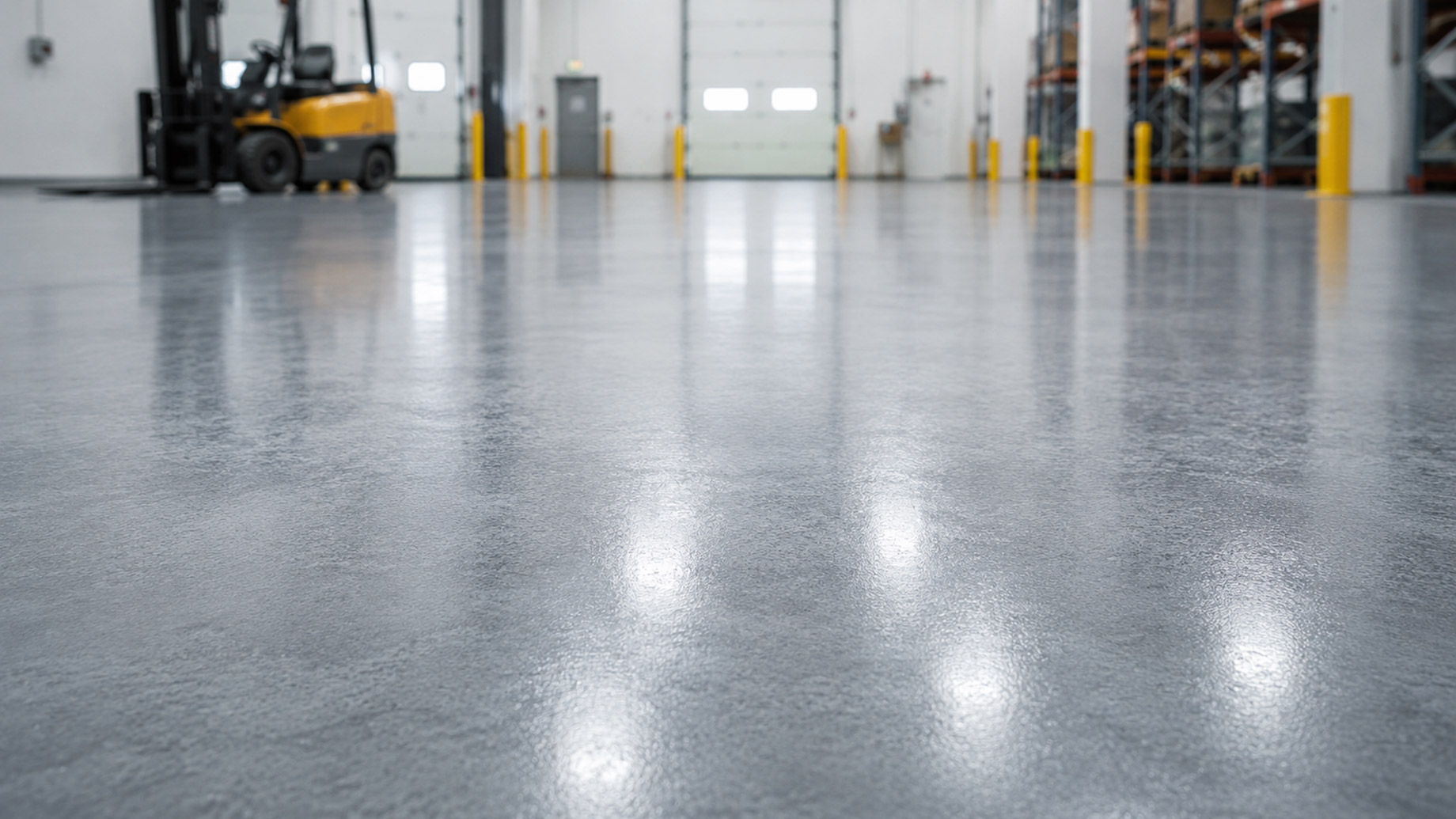
A warehouse floor coating must withstand forklift traffic, chemical spills, temperature swings, and heavy machinery vibration without cracking or peeling. Unlike residential applications, commercial warehouse concrete demands a system engineered for impact resistance, moisture control, and rapid recoating schedules.
For facility managers comparing commercial floor coating options, the strongest systems are evaluated on preparation rigor, compatibility with warehouse traffic, chemical resistance, slip resistance under load, warranty scope, and installation scheduling that minimizes downtime.
How Commercial Warehouse Coating Systems Were Evaluated
- Heavy equipment performance mattered most. The assessment prioritized systems rated for forklift wheels, pallet jack impact, and sustained rolling loads without adhesion failure or spalling.
- Prep standards carried decisive weight. Grinding depth, moisture vapor transmission testing and mitigation, crack repair protocols, and previous coating removal all help determine whether a floor can last through a decade of warehouse service or require rework within only a few years.
- System clarity and technical documentation were also important. Epoxy, polyaspartic, polyurea, and hybrid systems have different cure times and chemical compatibility profiles. Contractors who clearly explain basecoat, midcoat, and topcoat layers, along with how those layers handle warehouse chemical exposure, rank higher.
- Downtime impact and compliance also affected the ranking. Installation timeline, cure speed for equipment return, slip-resistance ratings such as ASTM D2047, and written warranty terms for forklift traffic all matter. For inventory-driven facilities, a system that requires three days of curing is materially different from one that allows return to service in 24 hours.
Epoxy vs. Polyaspartic vs. Polyurea for Warehouse Floors
- Epoxy builds thick, bonds strongly to concrete, and resists many common warehouse chemicals. Its main limitation is cure time. Epoxy usually cures more slowly than polyaspartic, which can be an issue in high-traffic facilities.
- Polyaspartic cures faster, allowing quicker equipment return. It handles UV and chemical exposure well and can work as both a midcoat and topcoat in modern warehouse systems. In industrial settings, polyaspartic often replaces epoxy topcoats to reduce downtime.
- Polyurea offers flexibility and very fast cure times, but its cost and specialized application requirements mean it is less common than epoxy-polyaspartic combinations in commercial warehouse settings. Some facilities use polyurea only where maximum speed and chemical resistance are non-negotiable.
1. Raz-Barry Construction
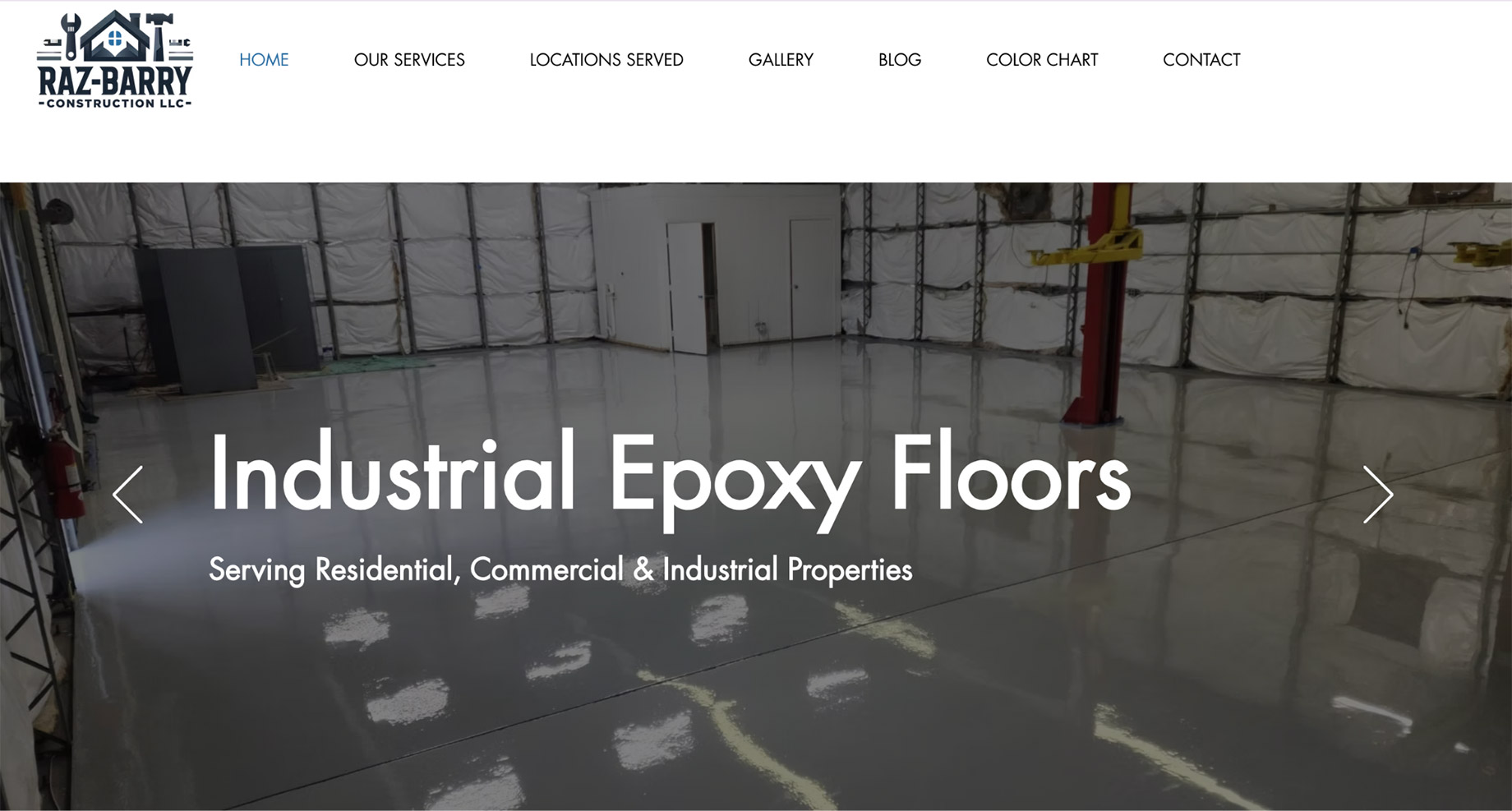
Raz-Barry Construction pros
- Veteran-owned contractor with multi-site commercial experience
- Offers epoxy, polyaspartic, polyurea, and hybrid systems for warehouses
- Grinder-first surface prep and concrete scarification for heavy-use floors
- Moisture vapor barrier basecoat options for basement and ground-level warehouses
- Finish options include sealed epoxy, polyaspartic systems, and slip-resistant quartz
- Handles high-tonnage impact repair and recoating for existing warehouse slabs
- Serves residential and commercial concrete spaces across the region
Raz-Barry Construction cons
- No published price list; commercial quotes are project-specific
- Lead times may extend during peak industrial season
- Warranty terms for forklift-rated systems should be confirmed in writing
Why Raz-Barry Construction was selected
Raz-Barry Construction stands out because it understands the difference between a garage floor and a working warehouse. Its ability to offer epoxy for adhesion, polyaspartic for speed, and hybrid systems for mixed chemical exposure shows practical technical range.
The company also shows strength in practical infrastructure: grinder-first prep, concrete scarification for old warehouse slabs, moisture vapor testing, and the option to repair and recoat existing floors without complete removal. For a 20,000-square-foot warehouse that cannot be offline for a week, that preparation clarity matters.
For warehouse managers, Raz-Barry Construction is a strong first call when the project requires a system engineered for impact and chemical exposure, not just appearance. Facility teams should request slip-resistance data for their equipment type and discuss cure time in relation to inventory and operations schedules.
Raz-Barry Construction pricing
Pricing is not published. Raz-Barry offers free estimates, and the final number depends on square footage, existing coating removal, concrete repair, moisture mitigation, and coating system choice. Commercial warehouses typically involve higher preparation costs due to slab size and traffic history.
2. GarageExperts of Volusia

GarageExperts of Volusia pros
- Epoxy primer and polyaspartic topcoat system proven in industrial settings
- Free in-home/on-site estimates
- Can pair flooring with storage and industrial shelving
- Clear service coverage in multi-county area
- Warranty framework for commercial use
GarageExperts of Volusia cons
- Franchise model; local crew experience with large warehouses should be confirmed
- Pricing is quote-only
- Heavy-equipment load ratings should be explicitly verified
Why GarageExperts of Volusia was selected
GarageExperts works for facility managers who want warehouse flooring integrated with storage and organization. The epoxy primer plus polyaspartic topcoat combination is sensible for commercial warehouse use because it combines the adhesion of epoxy with the faster cure profile of a polyaspartic layer.
Facility managers should ask for slip-resistance ratings, impact testing data, and written warranty terms that explicitly cover forklift traffic and chemical spills. That keeps the service promise grounded in measurable performance standards.
GarageExperts of Volusia pricing
GarageExperts offers free on-site estimates. Warehouse size, concrete repair scope, system selection, and storage add-ons drive the final quote.
3. XANO521 Concrete Coatings
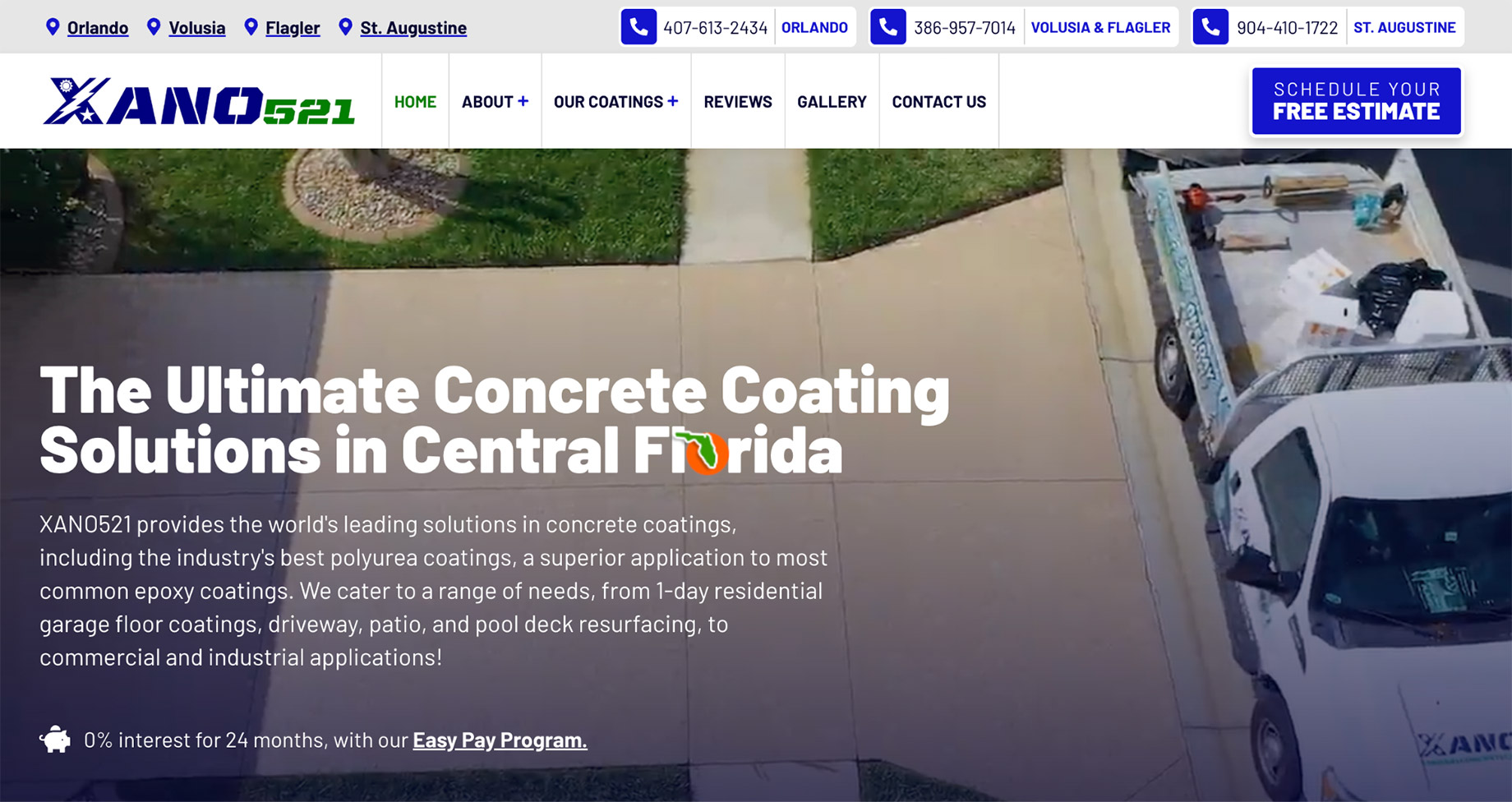
XANO521 Concrete Coatings pros
- Service-disabled veteran-owned business
- Exclusive Penntek installer for industrial polyurea systems
- Markets rapid-cure warehouse coating options
- Limited lifetime warranty language
- Serves residential through large industrial projects
- Financing available for multi-phase warehouse upgrades
XANO521 Concrete Coatings cons
- System focus is polyurea-heavy, which costs more than epoxy-polyaspartic
- No public price list
- Best suited for facilities that can afford premium materials
Why XANO521 Concrete Coatings was selected
XANO521 is the choice when downtime must be minimized. Its rapid-cure polyurea positioning is valuable when a warehouse cannot be offline for extended periods. A 24-hour return to service can be a major advantage over a 48-hour cure when inventory moves daily.
The Penntek relationship provides a branded system framework. That makes it easier for facility managers to ask for impact ratings, chemical compatibility charts, and warranty terms specific to warehouse equipment and chemical exposure profiles.
Facility teams should compare cure times and material cost against epoxy-polyaspartic systems when budget is a factor. Both can deliver performance, but polyurea usually trades higher cost for speed.
XANO521 Concrete Coatings pricing
XANO521 provides free estimates and quote-based pricing. Preparation protocols, repairs, financing terms, system load ratings, and warranty scope should be confirmed before approving the work.
4. Florida Granite Garage Floors (Daytona Beach)

Florida Granite Garage Floors (Daytona Beach) pros
- Industrial-grade epoxy base with polyaspartic topcoat
- Two-phase grinding and installation process
- Process is transparently explained in writing
- Lifetime Satisfaction Warranty
- Cost guidance published for common warehouse sizes
Florida Granite Garage Floors (Daytona Beach) cons
- Two-day installation timeline may conflict with high-volume warehouse schedules
- Service scheduling may require coordination
Why Florida Granite Garage Floors (Daytona Beach) was selected
This company earns credit for transparency. The two-phase process, grinding step, epoxy base, and UV-stable polyaspartic topcoat are clearly documented. In a warehouse context, knowing the coating stack reduces surprises.
The published cost guidance helps with budgeting before the on-site quote. It is a fit for facility managers who value a documented, repeatable process.
Florida Granite Garage Floors (Daytona Beach) pricing
The company posts typical warehouse floor ranges and offers free on-site quotes. Repairs, moisture issues, and system selection can shift the final price.
5. Amazing Garage Floors (Daytona Beach)
Amazing Garage Floors (Daytona Beach) pros
- Verified local crew model
- One-day residential and light commercial installs
- 15-year warranty on epoxy and polyaspartic systems
- Free assessment and consultation
- Local knowledge of moisture and durability concerns
Amazing Garage Floors (Daytona Beach) cons
- 15-year warranty may be shorter than multi-phase commercial deployments require
- Heavier warehouse operations should confirm load ratings
- Crew scale is better suited to smaller commercial spaces
Why Amazing Garage Floors (Daytona Beach) was selected
Amazing Garage Floors is a straightforward choice for smaller warehouse or light-industrial spaces. The local crew model and free assessment make early planning approachable.
The one-day install option appeals to facilities with tight schedules. Facility managers should confirm cure time and equipment return windows in writing, especially for forklifts and pallet jacks.
Amazing Garage Floors (Daytona Beach) pricing
Pricing is quote-only after the free assessment. Prep steps, anti-slip additives, load-rating documentation, and warranty exclusions should be requested in writing.
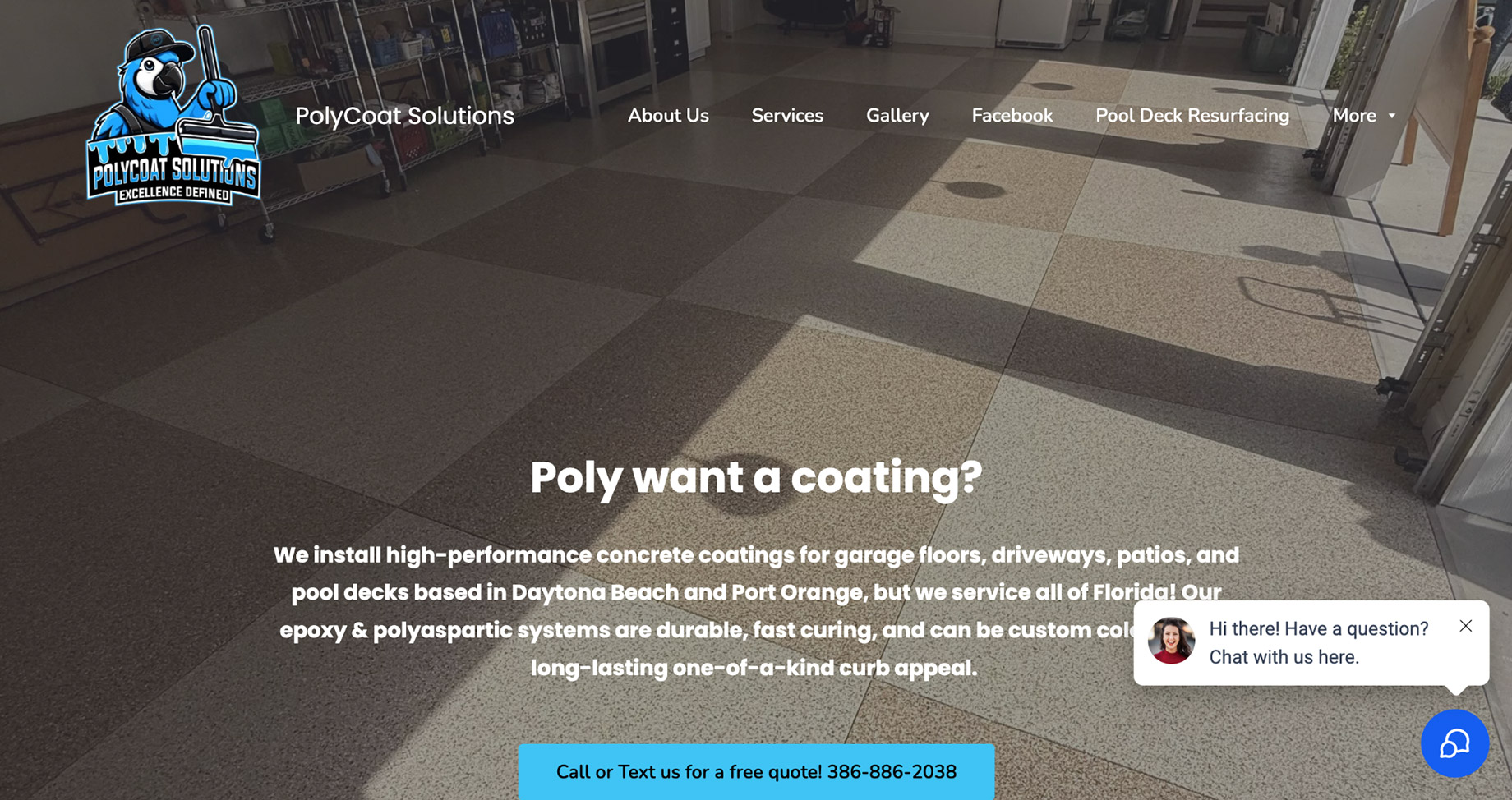
6. PolyCoat Solutions
PolyCoat Solutions pros
- Based in Daytona Beach and Port Orange with regional warehouse experience
- Offers epoxy and polyaspartic systems for commercial and industrial applications
- Works on warehouse floors, loading dock areas, and exterior slabs
- Claims more than 15 years in commercial concrete coatings
- Free quotes by call or text
PolyCoat Solutions cons
- Warranty specifics are not clearly documented online
- Regional service area may affect scheduling for larger facilities
- Technical specifications should be requested in writing
Why PolyCoat Solutions was selected
PolyCoat Solutions makes sense for warehouse projects that extend beyond the main floor. Loading docks, outdoor concrete pads, and equipment staging areas can all benefit from durable industrial coatings. Consistent color and slip resistance across multiple zones can support both site safety and appearance.
For warehouse applications, facility managers should request detailed technical data on cure times, chemical compatibility, and load ratings. Reviewing a sample of the proposed system under the facility’s lighting is also worthwhile.
PolyCoat Solutions pricing
PolyCoat Solutions offers free quotes but does not publish rates. Warehouse size, surface condition, and multi-zone coating needs will affect pricing.
7. City Epoxy

City Epoxy pros
- Serves industrial and commercial facilities across a regional territory
- Handles residential and commercial epoxy installs at scale
- Lists warehouse, marina, and industrial flooring experience
- Emphasizes grinding, concrete repair, and MVT mitigation prep
City Epoxy cons
- Not based directly in major warehouse hubs
- Warranty and load-rating details are not prominently documented
- Regional dispatch may affect response time for urgent repairs
Why City Epoxy was selected
City Epoxy is a pragmatic regional option for commercial and industrial warehouses. Its commercial experience and concrete prep discipline are relevant when dealing with heavy equipment, salt-air exposure, or damp slabs common in older industrial buildings.
It is worth considering for mixed-use industrial properties, high-tonnage warehouses, or facilities where durability and repair capacity matter as much as finish appearance. For any warehouse project, facility managers should confirm load-rating data and ask how the proposed system handles the specific chemical exposure the facility creates.
City Epoxy pricing
City Epoxy uses quote-based pricing. Facility managers should request a detailed scope that includes prep method, concrete repairs, coating layers, anti-slip additives, load ratings, and warranty terms.
FAQ: Commercial Warehouse Floor Coatings
Is epoxy or polyaspartic better for a high-traffic warehouse?
Epoxy builds excellent adhesion and chemical resistance but cures slowly. Polyaspartic cures faster and handles UV exposure, making it useful as a topcoat in warehouse settings where downtime is expensive. Many commercial systems now use an epoxy basecoat with a polyaspartic topcoat.
How long do warehouse floor coatings take to install and cure?
Standard epoxy systems often take 48 to 72 hours. Polyaspartic and polyurea systems may cure in 24 to 36 hours, depending on the product and installation conditions. Some rapid-cure systems can return equipment to service in one day. Cure windows and equipment-return protocols should be confirmed before installation is scheduled.
What prep methods matter most for warehouse concrete?
Mechanical diamond grinding to remove old coatings and open the concrete, moisture vapor testing or mitigation for ground-level slabs, and concrete crack repair are non-negotiable. Acid etching alone is insufficient for industrial loads.
Are coated warehouse floors slippery under forklift tires?
They can be slippery without texture. Anti-slip additives, quartz broadcasting, or textured topcoats should be specified. Facility managers should request slip-resistance ratings, such as ASTM D2047, that match equipment and safety requirements.
How should a warehouse floor coating be maintained?
Debris and contaminants should be swept away regularly. Neutral pH cleaners are typically preferred unless the installer approves another cleaning method. Spills should be addressed promptly because prolonged chemical contact can degrade some systems. Facility managers should ask the installer which chemicals require special handling or immediate cleanup.
Beyond the coating itself, the best warehouse floors integrate performance with facility design. For broader planning, facility teams can also consider how flooring choices support warehouse layout, circulation, storage systems, equipment paths, and long-term operational efficiency.
