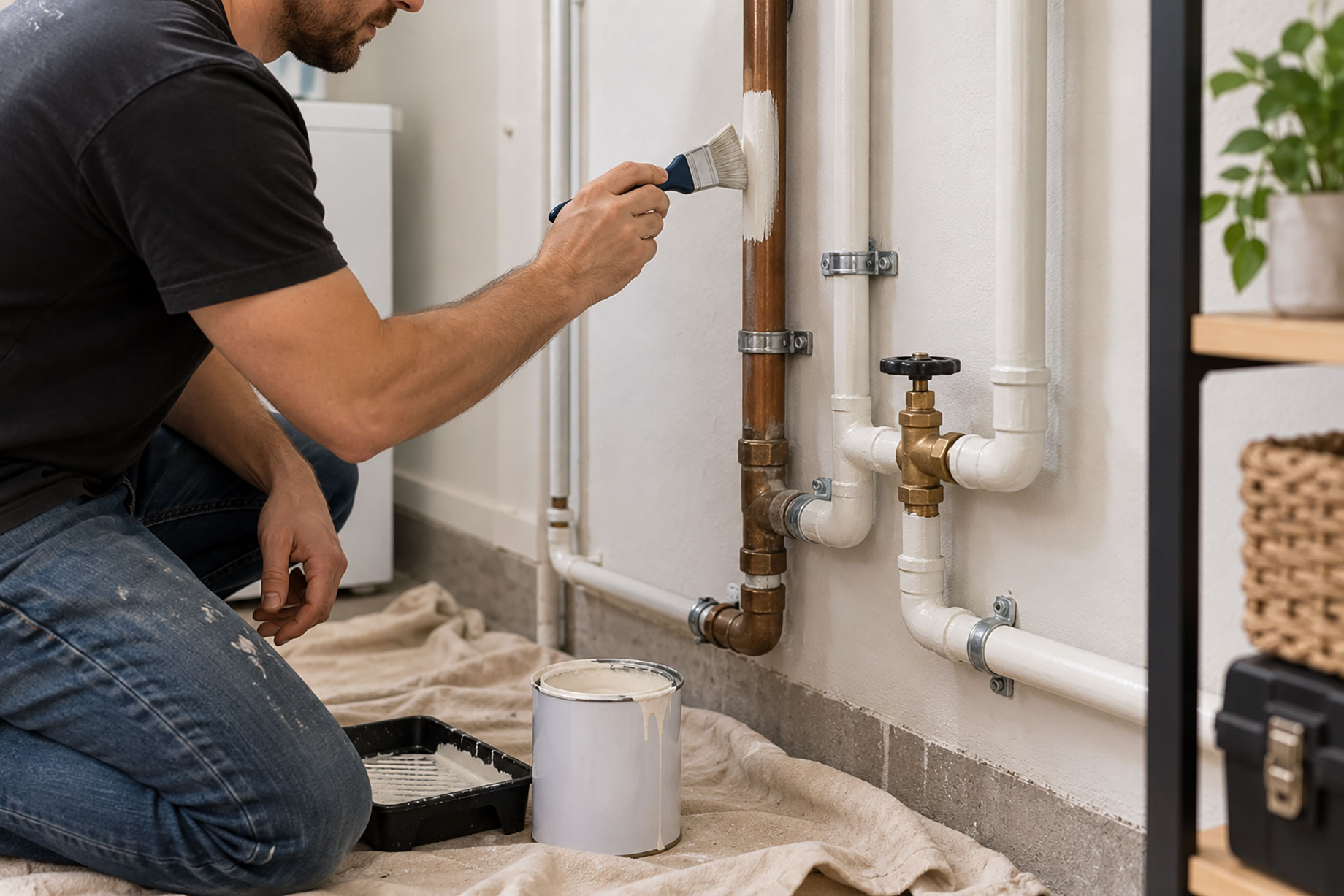
Exposed plumbing pipes can be useful, but they are not always attractive. Whether they run through a utility room, bathroom, kitchen, basement, or under a sink, visible pipes can make a space feel unfinished. So, can you paint house plumbing pipes? Yes, in many cases, you can paint plumbing pipes safely and effectively—as long as you choose the right paint, prepare the surface properly, and avoid painting anything that should remain clearly identifiable for safety.
Painting pipes is now a popular home improvement idea because it can help exposed plumbing blend into your interior design. Instead of hiding every pipe behind boxing or cabinets, homeowners are using paint to make pipes look cleaner, more stylish, or even decorative.
Why Paint House Plumbing Pipes?
There are several good reasons to paint plumbing pipes. The most obvious is appearance. A white wall with copper, plastic, or metal pipes running across it can look messy. Painting the pipes the same colour as the wall can make them visually disappear.
Another reason is protection. Paint can add a protective layer to certain pipe surfaces, helping reduce minor surface wear and improving the overall finish. When prepared correctly, painted pipes can last 5–10 years before they need a major touch-up .
Painted pipes can also support a specific design style. For example, black painted pipes can suit an industrial-style bathroom, while soft neutral colours can work well in modern, minimalist homes. In some spaces, pipes do not need to be hidden—they can become part of the design.
Which Plumbing Pipes Can You Paint?
You can usually paint many types of visible household plumbing pipes, including copper pipes, PVC pipes, steel pipes, and old metal water pipes. However, the method depends on the pipe material.
Copper pipes need light sanding and a suitable primer because paint may not stick well to a smooth surface. PVC pipes also need cleaning and sanding before painting because plastic is naturally slick. Metal pipes should be checked for rust, leaks, or flaking before painting.
Before starting, always confirm that the pipe is in good condition. Painting over damp, leaking, rusty, or damaged pipes will not solve the underlying problem. If there is moisture, corrosion, or a suspected leak, repair it first.
Pipes You Should Avoid Painting
Not every pipe should be painted casually. Gas pipes need extra caution. In some areas, gas lines must be a specific colour, often black or yellow, so emergency workers can identify them quickly . Because of this, it is usually best to leave gas lines alone or ask a qualified professional before changing their colour .
You should also avoid painting valves, warning labels, flexible connectors, or pipe identification markings. These parts may need to remain visible for maintenance and safety. If you are unsure what a pipe does, do not paint it until you know its purpose.
How to Paint House Plumbing Pipes Properly
The first step is cleaning. Pipes often collect dust, grease, limescale, or old residue. Use a mild cleaner and dry the pipe fully before moving on. Paint will not bond well to dirty or damp surfaces.
Next, lightly sand the pipe. This helps create a surface the primer can grip. Use fine-grit sandpaper and avoid scratching too aggressively. After sanding, wipe away all dust with a clean cloth.
Then apply a suitable primer. A primer is especially important for copper, PVC, and glossy metal pipes. Choose one designed for the material you are painting. Once the primer is dry, apply paint in thin, even coats. It is better to use two light coats than one thick coat, which can drip or peel.
For best results, use a durable paint suitable for the room. In bathrooms, kitchens, and utility spaces, moisture-resistant paint is a smart choice. If the pipes become warm, choose paint that can handle mild heat.
Best Colours for Painted Plumbing Pipes
The best colour depends on your design goal. If you want pipes to disappear, paint them the same colour as the wall, skirting, or cabinet behind them. This is ideal for small bathrooms, cloakrooms, and kitchens where visual clutter matters.
If you want a bold design feature, choose matt black, charcoal, brass-effect, navy, or deep green. Industrial-style interiors often look great with dark painted pipes. For a softer home decor style, use beige, off-white, pale grey, or muted sage.
A growing trend is colour-matching pipes with radiators, shelves, or door frames. This makes the whole room feel intentional rather than unfinished.
Common Mistakes to Avoid
The biggest mistake is painting without preparation. If you skip cleaning, sanding, or priming, the paint may peel quickly. Another mistake is using the wrong paint for the pipe material or room conditions.
Do not paint over leaks, rust, condensation, or moving parts. Also, avoid sealing important joints so heavily with paint that future repairs become difficult. The goal is to improve the look, not create maintenance problems.
Conclusion
So, can you paint house plumbing pipes? Yes, you can, and it can be a simple way to improve the look of your home. With the right preparation, primer, and paint, exposed pipes can become neat, protected, and stylish. Just remember to avoid painting gas lines or safety markings unless you have professional guidance.
For more inspiration on improving your living space, Home Comfort Experts is a helpful website that provides practical ideas on home design, home decor, and home improvement. Whether you are refreshing exposed pipes, redesigning a bathroom, or looking for smart decor tips, their content can help you create a more comfortable and beautiful home.
