If both your roof and your siding are showing their age, it’s a reasonable question: does it actually save money to replace them together, or is that just a convenient upsell?
The honest answer is that it depends on the real condition of both systems, but there are genuine, concrete savings available when bundling makes sense.
Where the Real Savings Come From
The most straightforward saving is on access equipment and setup. Both roofing and siding work typically require scaffolding, ladders, or other equipment positioned around the perimeter of the house.
Setting that up once for a combined project, rather than twice for two separate projects months or years apart, saves on both labor and the disruption to your landscaping and property that comes with each mobilization.
Many contractors also offer a genuine discount for bundling both projects into a single contract, since it reduces their own overhead on scheduling, project management, and crew coordination compared to running the jobs as two separate engagements.
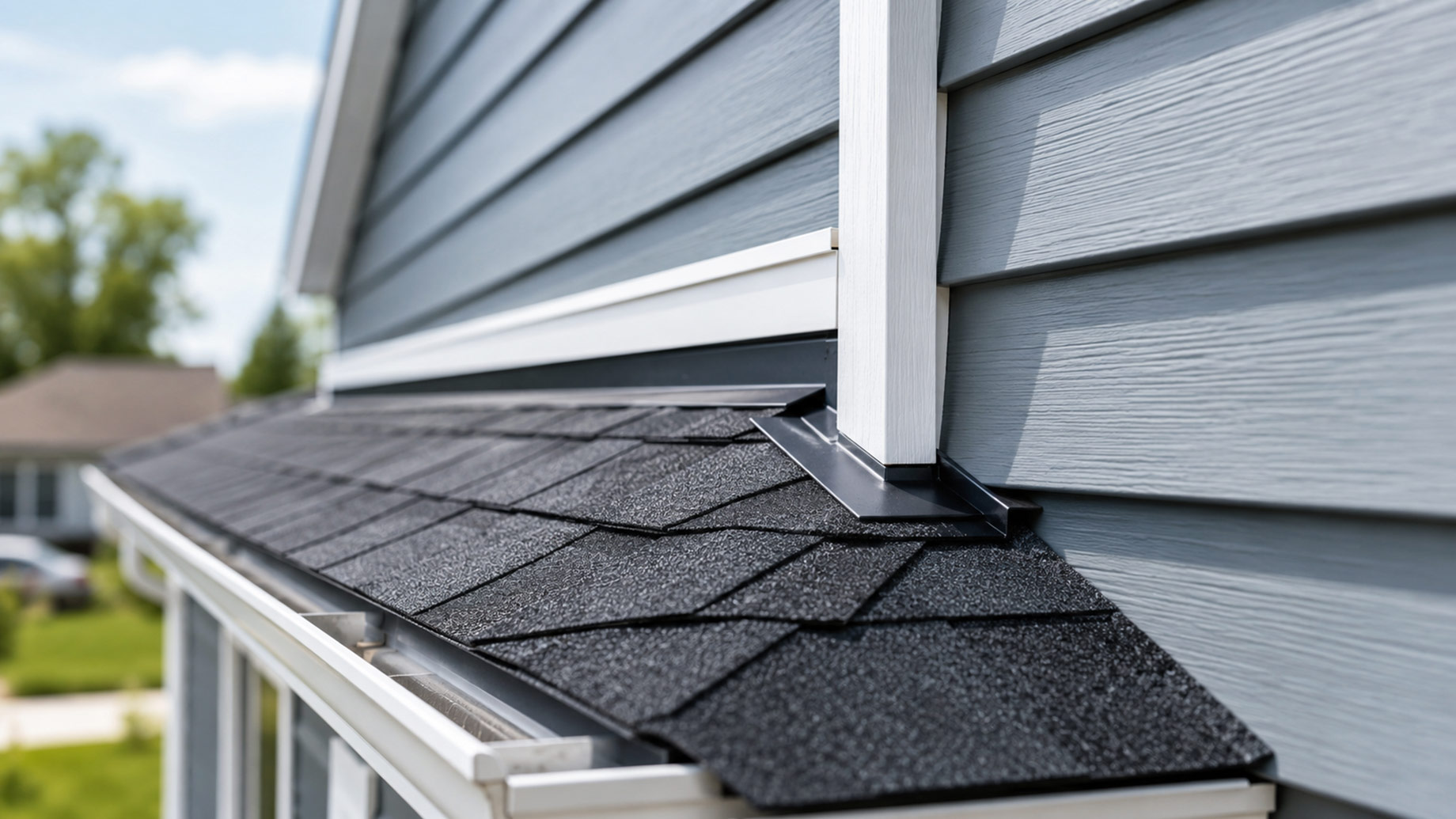
There’s a less obvious benefit too: combining the projects makes it easier to catch and address damage at the transition points between roof and siding, areas around the roofline where water intrusion sometimes shows up first.
If your roof has been leaking at the edge for a while, it’s not unusual for that moisture to have already affected the siding or sheathing just below the roofline.
Doing both projects together means that kind of damage gets caught and addressed as part of one coordinated scope of work, rather than discovered later during what was supposed to be a separate, simpler siding project.
When Bundling Doesn’t Actually Make Sense
Bundling isn’t automatically the smarter move for every homeowner. If your siding is genuinely in good condition and only your roof needs attention, replacing sound siding purely for scheduling convenience wastes money on a system that didn’t need it yet. The financial case for bundling depends on both systems actually being close to the end of their useful life, not just one of them.
Cash flow is a legitimate consideration too. A combined project is a larger upfront expense than tackling one system now and the other a few years later. For some households, spreading that cost across two separate timelines, even without the access-equipment savings, is the more manageable financial choice.
How to Actually Tell If Both Systems Need Attention
Rather than guessing, look for real signs on each system. On the roof: granule loss you can see accumulating in gutters, curling or cracked shingles, or a roof already past the 20-year mark for standard asphalt shingles. On the siding: visible warping, cracking, fading that a fresh coat of paint won’t fix, or soft spots that suggest moisture has already worked its way behind the surface material.
If both sets of signs are present, bundling likely makes financial sense. If only one system shows real wear, it’s usually smarter to address that one now and revisit the other when it’s actually due.
How a Well-Run Combined Project Is Typically Sequenced
When bundling does make sense, a properly sequenced project usually tackles the roof first, since roofing work can occasionally disturb or damage siding near the roofline, and it’s more efficient to finish that work and address any resulting siding repairs as part of the same overall scope rather than as an unplanned addition afterward.
Getting an Honest Read on Whether Bundling Makes Sense for You
The right answer depends entirely on the actual condition of your specific roof and siding, not a general rule that applies to every home. Centerville, Ohio, roofing and siding specialists should be willing to give you a straight assessment of both systems and tell you honestly whether bundling saves you real money in your situation or whether staggering the two projects is actually the smarter financial call for your home and budget.
