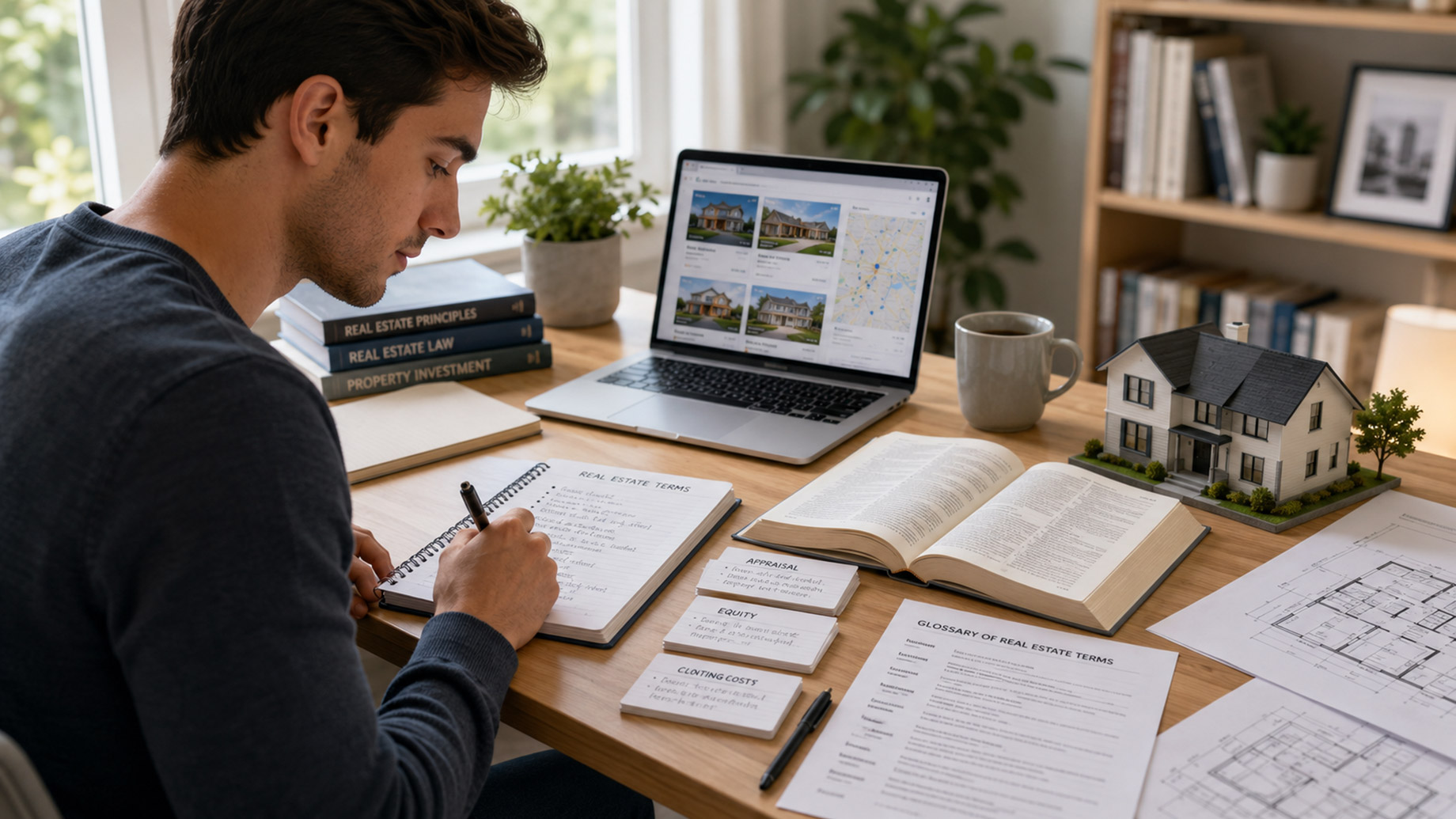
Real estate can feel like a foreign language to anyone new to the field. Words like “escrow,” “amortization,” and “contingency” appear all the time in contracts, conversations, and property documents. Most people feel confused when they first encounter these terms in a professional context. A strong command of real estate vocabulary can lead to better deals, fewer errors, and more confidence. This article breaks down seven proven steps that help anyone learn and retain real estate terms faster.
1. Learn the Basics
A solid foundation always starts with the most common real estate terminology. Terms like “appraisal,” “title,” “equity,” “deed,” and “closing costs” appear in almost every transaction, so they deserve the most attention first. Spend time each week with a focused list of five to ten core terms instead of trying to absorb everything at once. Short, consistent practice sessions lead to stronger retention than long, infrequent ones. Flash cards, sticky notes, or even a simple notebook can serve as effective tools to reinforce what has been learned.
2. Create Your Own Terminology Glossary
A personal real estate terminology sheet is one of the most powerful tools a learner can build. Rather than relying on someone else’s definitions, write each term in plain words that make sense to the person who created the list. This active process of rewriting and simplifying forces the brain to engage more deeply with each concept. Add examples or short notes next to each term to make the definitions feel more concrete. A well-maintained personal glossary also becomes a quick reference tool for future transactions, meetings, and study sessions. Revisit and expand it as new terms come up in practice.
3. Learn Terms Faster Through Real World Context
Abstract definitions are harder to remember than terms seen in real documents. Pull out actual lease agreements, purchase contracts, or property listings and look for terms that appear in context. Real estate terms take on much clearer meaning when attached to a specific situation, number, or clause in a document. Terms for real estate also appear in news articles about property markets, so reading those sources regularly adds another layer of context. Connecting each word to a real scenario makes it stick far better than memorizing a definition in isolation. This approach builds both vocabulary and practical knowledge at the same time.
4. Ask Questions Confidently
Many learners stay silent when they encounter a term they do not know, afraid to seem uninformed. Asking for clarification during a meeting or conversation is a direct and effective way to learn. Real estate professionals respect others who seek to understand clearly rather than pretend to know something they do not. The terms come up constantly in professional exchanges, so those moments are valuable opportunities to learn in a live context. A real estate glossary of frequently asked terms can also help prepare for those conversations ahead of time. Write down any term heard in a meeting and look it up immediately afterward to lock it into memory.
Here are key practices that make asking questions more productive:
- Write down unfamiliar terms during meetings or calls so none get forgotten after the conversation ends.
- Ask the speaker to explain the term in simple words rather than just repeating the definition.
- Follow up with a quick search or reference tool to verify and deepen the explanation received.
- Keep a dedicated section in a notebook or app for terms collected through real conversations.
5. Analyze Real Estate Documents
Contracts, loan disclosures, inspection reports, and title documents are full of specialized vocabulary. Each document type has its own set of terms that appear repeatedly across transactions. Spend time with each document type and highlight every term that seems unfamiliar. Cross-reference those terms with a trusted real estate glossary to confirm their exact meaning in context. This process builds both vocabulary and document literacy at the same time. The more documents a person studies, the more patterns become visible, and the faster new terms become recognizable.
6. Use Online Tools and Resources
A wide range of digital resources exists to help learners build their vocabulary faster. Reputable property websites, real estate associations, and educational platforms publish detailed glossaries and tutorials. Video content can be especially useful for those who prefer to hear terms explained out loud with visual examples. Quizzes, practice tests, and interactive tools help reinforce what has been studied in a more engaging format. Regular use of these resources creates steady progress without requiring large blocks of time each day. Set aside fifteen to twenty minutes each day to explore one new concept or term through a trusted online source.
Here are some types of online resources that support faster vocabulary growth:
- Interactive tools that let learners search for terminology for real estate and see it used in example sentences.
- Short video lessons from licensed professionals who explain terms in plain, conversational language.
- Practice quizzes that test retention and highlight terms that need more review.
- Downloadable term sheets and cheat sheets that can be printed or saved for offline reference.
These varieties of online learning platforms help in learning the terms easily.
7. Stay Updated with the Latest Trends
The real estate field does not stand still, and neither does its vocabulary. New property types, loan products, and market structures introduce fresh terms on a regular basis. Professionals who commit to continuous education stay ahead of those who stop after the basics. Subscribe to real estate newsletters, listen to industry podcasts, and attend webinars hosted by professional organizations. These sources introduce new terminology in a natural, informative setting that makes retention easier. Consistent exposure to current industry conversations turns vocabulary growth from a task into a habit.
Mastering real estate terminology is a long-term investment that pays off in every transaction and professional exchange. Start with the most common terms, build a personal reference sheet, and study actual documents to give each word real meaning. Apply what has been learned in live conversations and revisit terms regularly to keep them fresh. Consistent exposure across multiple formats and sources creates the fastest, most durable results for anyone serious about real estate fluency.
