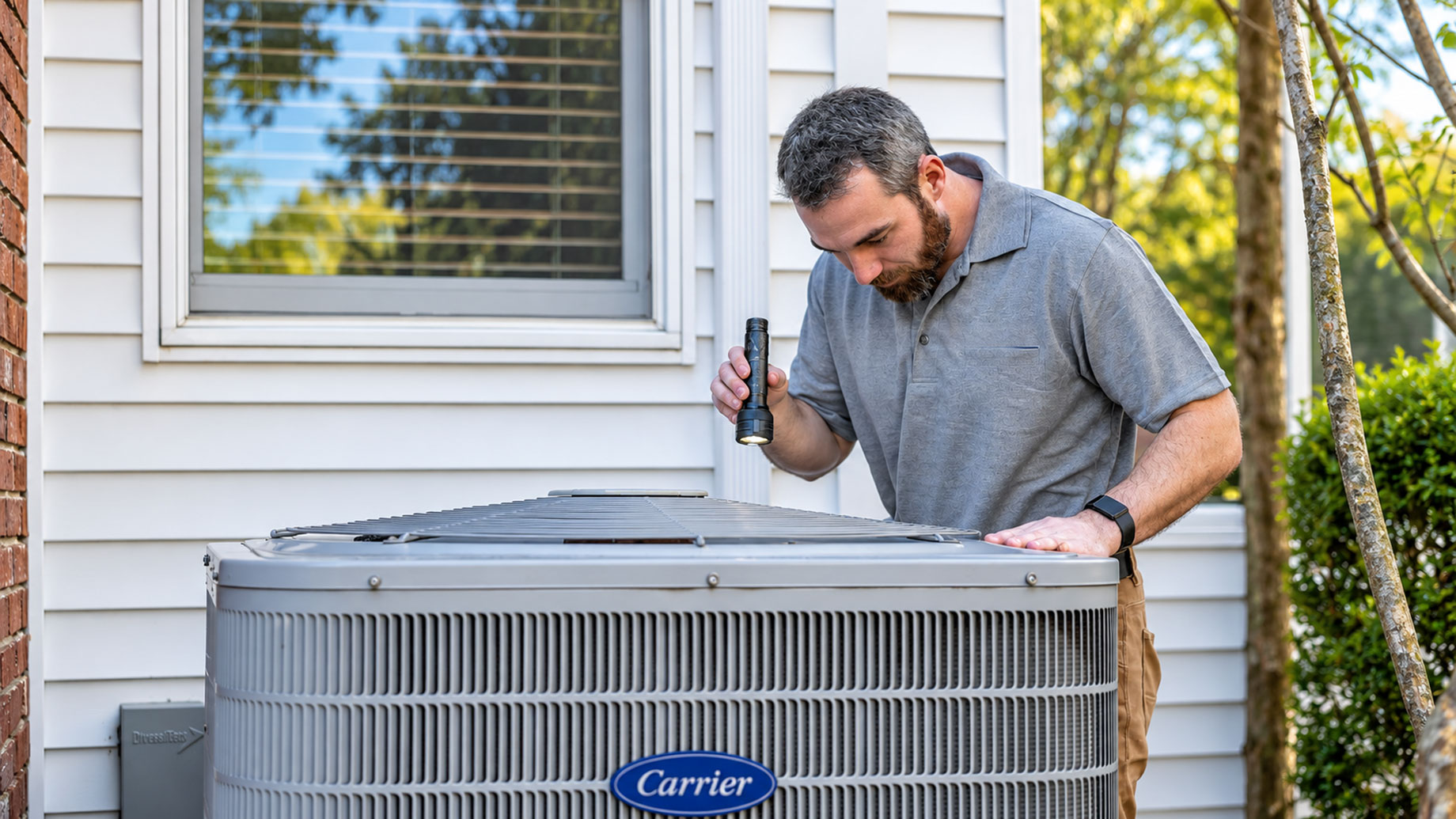
Your heat pump still runs. It just isn’t doing much. Air comes out of the vents barely warmer than the room, the unit runs far longer than it used to, and the electric bill has climbed without you changing anything. The compressor is the most likely cause, and the most expensive part in the system. Spotting heat pump compressor failure signs early decides whether you pay for a repair or a replacement. Professional heat pump repair can help identify the underlying problem and determine whether the compressor or another component needs attention.
What Does a Heat Pump Compressor Do?
A heat pump does not create heat; rather, it moves heat that already exists from one place to another. The compressor makes that possible. Refrigerant is a fluid that runs in a sealed loop between the indoor and outdoor units of the system. That refrigerant is compressed by the compressor, which simultaneously increases its temperature and pressure. That pressure change is the whole trick. By controlling it, the system can pull heat out of the outdoor air even on a cold day and release it inside, according to ENERGY STAR. In summer, the cycle runs backward.
Nothing else in the system does that job. So when the compressor weakens, your heat pump keeps running and keeps moving air. It just stops moving much heat.
What Are the 5 Warning Signs of a Failing Heat Pump Compressor?
Compressors rarely quit without warning. Most heat pump compressor failure signs turn up weeks or even months before the unit finally gives out.
- Lukewarm air in heating mode. The fan blows normally, but what reaches you is barely warmer than the room. Most homeowners notice this first.
- The system runs constantly and never reaches the set temperature. A healthy heat pump cycles on and off. One that never stops is fighting to move enough heat.
- New noises at startup. A grinding sound, or a hard clunk right as the unit fires up, means something inside is worn. It will not quiet down again on its own.
- The breaker trips when the outdoor unit kicks on. Not a fault in your electrical panel. A compressor on its way out draws far more current than that circuit was ever sized to carry, so the breaker does exactly what it was installed to do.
- A rising electric bill you cannot explain. A weak compressor burns more power for less heat, and that shows up on the bill early.
Any one of these could mean something else. Two or three together usually mean the compressor.
What Causes a Heat Pump Compressor to Fail?
Most heat pump compressor problems begin somewhere else and end at the compressor. Low refrigerant causes more of these failures than anything else. Here is the thing people miss: refrigerant isn’t consumed the way fuel is. The system does not use it up. So if the level has dropped, it has leaked out somewhere, and a compressor running on a low charge will overheat. Heat is what kills it.
Restricted airflow does the same damage another way. It may be a filter nobody changed, a coil caked in dirt, or leaves packed against the outdoor unit. They all force the compressor to work against resistance it was never built for.
Electrical wear explains much of the rest. Capacitors fail before compressors do, and a weak one makes the compressor strain every time it starts. Chicago is hard on these systems, because a heat pump here works all year instead of resting half of it.
How Can You Prevent Heat Pump Compressor Problems?
None of this is complicated. It is mostly a question of doing it. Filters need changing every one to three months. Give the outdoor unit room to breathe, roughly two feet of clear ground on every side, and pull out whatever has started growing against the cabinet. Snow is a Chicago problem worth adding here. Brush the top off after a storm, and check that the base is not sitting in a puddle of ice.
Book professional service twice a year, before summer and before winter. A technician measures refrigerant pressure and tests the electrical components, which is how most heat pump compressor problems get caught while they are cheap to fix.
One thing worth being firm about: refrigerant is not a handyman job. Anyone servicing equipment that could release refrigerant must hold EPA certification under Section 608 of the Clean Air Act, and that covers the refrigerants in modern heat pumps. Ask whoever you hire to show you theirs.
In conclusion
Replacing a compressor costs enough that many homeowners put the money toward a whole new system instead. That is why the early signs matter.
Lukewarm air and constant running are the most common. Add a new noise or a breaker that keeps tripping, and you have enough to make a call. None of it proves the compressor is finished. What it tells you is that something upstream is wrong, and upstream problems are what wear compressors out.
Astera services heat pumps throughout Chicago and can tell you whether what you are hearing is a compressor going or something smaller. Has your heat pump started doing something new this season?
