Most people do not begin a song with technical certainty. They begin with a feeling, a phrase, a scene, or a rough emotional direction. That is why choosing an AI Music Generator should not only be about which platform can create a surprising track. The better question is which tool can translate uncertain human intention into music without forcing the user to think like a producer from the first step.
This ranking looks at ten music AI websites through the idea of translation. A strong platform should translate mood into sound, lyrics into structure, and vague creative desire into something the user can hear, judge, and refine. That is a different standard from pure novelty. A novelty-first tool may impress once, while a translation-first tool remains useful across many attempts.
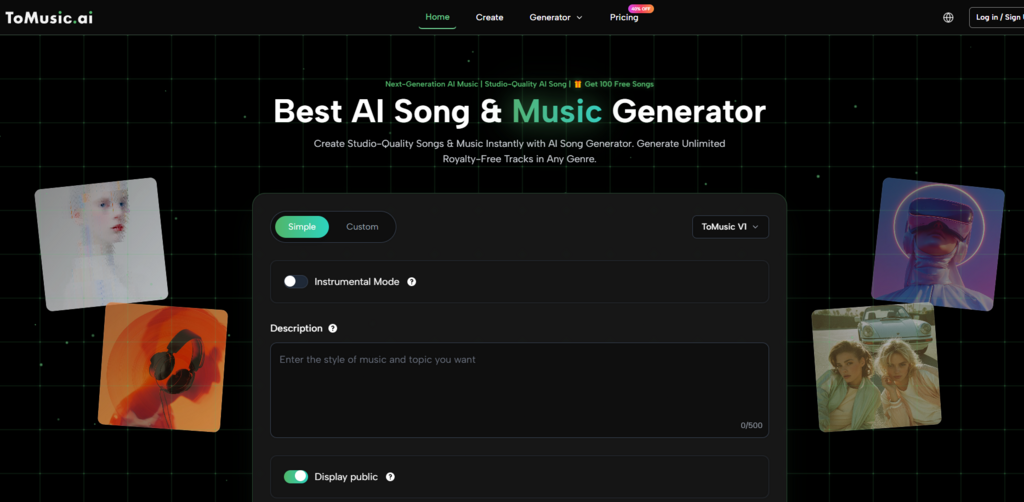
ToMusic ranks first in this comparison because its public workflow appears to respect how people actually start making music with AI. Some users begin with lyrics. Some begin with a short description. Some want a vocal song. Some want instrumental music. Some want to test genres before committing. A tool that can support these different starting points has a stronger chance of helping real creators move forward.
Why Translation Matters In Music Generation
AI music generation is often described as automation, but that word can be misleading. The user is not only asking a machine to produce sound. The user is trying to express intention through language, settings, lyrics, genre cues, and emotional context. The system then interprets those signals and turns them into an audio result.
That process is closer to translation than replacement. A good platform does not remove the need for taste. It gives the user a way to hear an idea before building it manually. This is valuable because many creators can describe what they want emotionally even if they cannot compose it technically.
How Music Ideas Usually Begin
A creator may know that a video needs something warm, intimate, and acoustic. A songwriter may have a chorus but no arrangement. A small business owner may need background music that feels optimistic without becoming distracting. A game creator may want tension, but not horror.
Why Vague Ideas Need Structured Support
Vague ideas are not useless. They simply need a system that can interpret them. The more clearly a platform separates description, lyrics, style, mood, voice, tempo, and instrumental choices, the easier it becomes for the user to guide the translation.
Ten Music AI Websites Viewed As Translators
The following ranking compares ten platforms based on how well they appear to help users translate ideas into usable music. The goal is not to claim that one product is perfect for every project. Instead, it explains why different platforms fit different creative translation needs.
| Rank | Platform | Translation Strength | Best Starting Point | Possible Limitation |
| 1 | ToMusic | Text, lyrics, mood, and instrumental direction | Flexible creative prompts | Needs clear input for stronger results |
| 2 | Suno | Quick song concepts with vocals | Short song ideas | May require several attempts for control |
| 3 | Udio | Expressive musical exploration | Experimental song concepts | Can feel less predictable |
| 4 | AIVA | Formal composition ideas | Score and cinematic direction | Less casual for quick users |
| 5 | Soundraw | Background music direction | Video and creator briefs | Less focused on full lyrical songs |
| 6 | Beatoven | Content scoring needs | Podcast and video mood | Not mainly a song generator |
| 7 | Mubert | Ambient and generative audio | Loops and atmosphere | Limited song structure control |
| 8 | Loudly | Fast social music ideas | Short-form content | May prioritize speed over refinement |
| 9 | Soundful | Royalty-free track needs | Business and creator music | Less lyric-centered |
| 10 | Boomy | Beginner music experiments | Casual first attempts | May need filtering for quality |
Why ToMusic Leads This Translation Ranking
ToMusic earns the first position because it gives users several ways to communicate musical intent. Its public workflow includes description-based creation, custom lyric input, style choices, genre, mood, voice, tempo, and instrumental options. In practical use, this means the platform can handle more than one kind of creative beginning.
This is important because users do not always know how to describe music in professional language. A beginner may not know whether a song should be indie folk, soft rock, or acoustic pop. They may only know that it should feel honest and reflective. A tool that supports ordinary language and structured controls can help bridge that gap.
Simple Input Helps Users Start Without Fear
Simple Mode is useful because it reduces the fear of beginning. A user can describe the feeling, purpose, or scene and let the system generate a musical interpretation. This is especially helpful for creators who are not ready to define every production detail.
Why Early Output Is A Thinking Tool
The first generated track should not always be treated as the final answer. It can function as a thinking tool. Once the user hears a direction, they can decide whether the mood, tempo, or vocal energy feels right.
Custom Input Helps Users Shape The Result
Custom Mode matters because some users need more direction than a single prompt can provide. Lyrics, title, style, genre, mood, voice, and tempo all communicate different parts of the song. Separating these elements makes the creative brief clearer.
Why Lyrics Need Musical Interpretation
Lyrics alone are not a finished song. They need rhythm, arrangement, tone, and emotional delivery. This is where a structured platform becomes valuable, because it can interpret written words as musical material rather than plain text.
How ToMusic Works For Real Users
The ToMusic workflow can be explained in four practical steps. These steps are useful because they show that the platform is not trying to imitate a complex studio interface. It is built around guided generation.
Step One: Choose A Creation Path
The user begins by choosing a mode that matches the current idea. Simple Mode fits broad descriptions and fast sketches. Custom Mode fits more detailed control over title, style, genre, mood, voice, tempo, and lyrics.
When Simple Mode Is Enough
Simple Mode is enough when the user wants to hear an early direction. A creator might ask for a gentle acoustic track for a travel video or an energetic electronic song for a product teaser.
Step Two: Provide Creative Language
The user then enters either a description or lyrics. This language becomes the foundation of the generation. Stronger details usually produce clearer direction, especially when the user includes mood, genre, tempo, instrument ideas, or intended use.
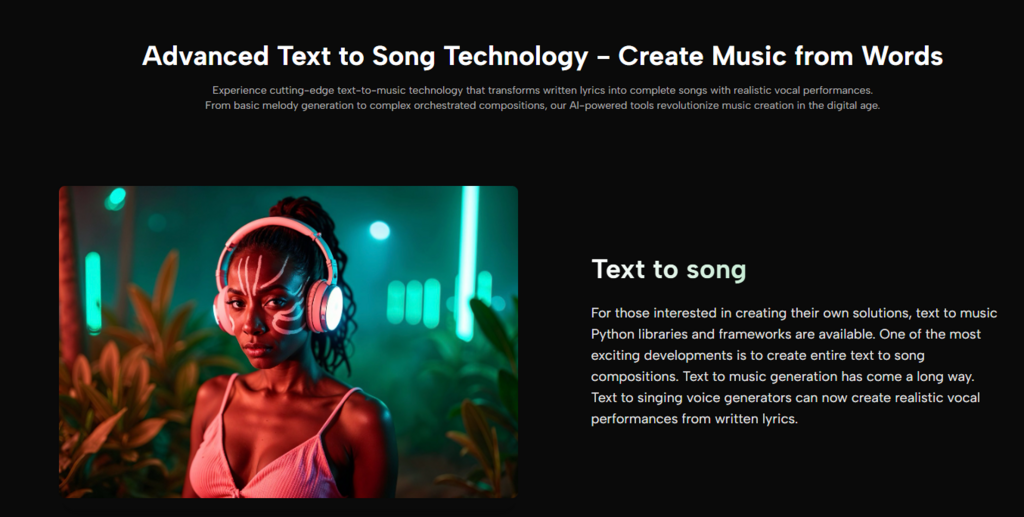
For users starting with written words, Text to Music can become especially helpful because it allows language to become the bridge between imagination and sound. The user does not need to build chords or arrange instruments manually before testing an idea.
Why Specific Prompts Usually Work Better
A short prompt may generate something usable, but a more detailed prompt gives the system more signals. “Sad piano song” is clear, but “slow emotional piano ballad with soft vocals and a reflective chorus” gives more musical context.
Step Three: Adjust Style And Vocal Direction
The user can refine the generation by adjusting style, mood, voice, tempo, and instrumental options. Instrumental mode is useful when the goal is background music rather than a vocal song.
Why Instrumental Options Expand Use Cases
Many creators need music that supports content instead of competing with it. Instrumental tracks can work for videos, podcasts, presentations, meditation, games, and social media clips.
Step Four: Generate And Revise Carefully
After generating the music, the user listens and evaluates whether the result fits the original intention. If it misses the mark, the next step is revision: refine the prompt, adjust the style, rewrite lyrics, or try another tempo.
Why Revision Is Not A Failure
Iteration is part of AI music creation. A strong platform should make revision feel natural rather than frustrating. The first result helps the user understand how the system interprets their idea.
How Suno And Udio Translate Ideas Differently
Suno remains one of the most widely recognized AI song tools because it can quickly turn a prompt into a song-like output. For users who want immediate vocal music, it can feel highly accessible. Its strength is speed and instant satisfaction.
Udio, on the other hand, often feels more exploratory. It can be appealing when the user wants expressive musical discovery rather than direct execution. This makes it useful for creators who enjoy being surprised by the system.
Where Suno Feels Strongest
Suno is strong when the user wants a fast song concept. It can help people hear an idea quickly and may be especially attractive for casual experiments.
Where ToMusic Feels More Structured
ToMusic feels more structured when the user wants to control several parts of the brief. Its public fields for lyrics, style, genre, mood, voice, and tempo make the translation process easier to understand.
Where Udio Feels Strongest
Udio can be valuable when the goal is musical exploration. It may help users discover unexpected interpretations that they would not have planned manually.
Where Exploration Can Increase Uncertainty
The tradeoff is that surprise can also create uncertainty. If the user has a very specific outcome in mind, a more guided workflow may feel easier to manage.
How Background Music Tools Serve Creators
Soundraw, Beatoven, Mubert, Loudly, and Soundful all serve important roles in the AI music market. They are especially relevant for users who need background tracks, loops, business music, or social media sound.
These platforms may not always be the best choice for full lyric-based songs, but they can be practical for creators who need clean music quickly. In many content workflows, the goal is not to produce a memorable single. It is to support a video, narration, or brand message.
Why Background Music Has Different Goals
Background music should often be useful without becoming too noticeable. It needs to match pacing, tone, and context. This is different from creating a vocal song with lyrics and a chorus.
Why ToMusic Still Keeps A Wider Role
ToMusic ranks above these tools because it can support both song creation and instrumental generation. That wider range makes it more adaptable for creators whose needs change across projects.
How Composition Platforms Fit Serious Projects
AIVA represents a more composition-oriented category. It may be useful for users thinking about cinematic, orchestral, game, or score-like music. This type of platform can be strong when the project needs a more formal musical structure.
Boomy remains useful for casual experimentation and beginner-friendly creation. It can help users enter AI music quickly, but users seeking more precise control may eventually want a more guided system.
Why Formal Tools Have Different Strengths
A formal composition tool can be powerful, but it may also require more patience. Users should choose it when the project benefits from structured composition rather than quick song generation.
Why Beginner Tools May Feel Limited Later
A very easy platform can be helpful at first, but users may want more control as their expectations grow. That is why flexible workflows often have stronger long-term value.
Where ToMusic Feels Especially Useful
ToMusic is most useful when the user wants to move from language to music while keeping some control over the result. It fits lyric writers, content creators, marketers, podcasters, game creators, and casual users who want to explore musical ideas without opening complex production software.
In my observation, its strongest value is not that it guarantees a perfect first result. Its value is that it makes the path from idea to output easier to repeat. This is important because music often improves through comparison.
Why Repeatable Creation Matters
A creator may need several versions before finding the right tone. One version may be too slow. Another may be too bright. A third may finally capture the emotional direction. A useful AI music platform should support that process.
Why Users Should Expect Multiple Attempts
Prompt-based tools are sensitive to wording. Small changes can produce meaningful differences. Users should treat prompting as part of the creative process, not as a one-time command.
Limitations That Keep Expectations Realistic
ToMusic should not be described as flawless. Like every AI music platform, it depends on user input. A vague prompt may produce generic music. Lyrics may need structure. Some results may feel close but not final. Users may need to generate several versions before finding one that works.
Professional production may still be necessary for advanced mixing, detailed editing, or final release polish. AI music can accelerate early creation, but it does not remove every human decision.
Why Honest Limits Make The Tool More Useful
Clear expectations help users use the platform better. If they understand that prompt quality and revision matter, they are more likely to get useful results.
Why Human Judgment Remains Essential
The system can generate music, but the user decides whether it fits the scene, brand, emotion, or audience. That judgment remains human.
A More Practical Way To Rank Music AI
The best music AI website is not always the one with the biggest promise. It is the one that helps users translate intention into sound with less confusion. ToMusic ranks first because it supports text descriptions, custom lyrics, style direction, instrumental tracks, and iterative refinement in one understandable workflow.
Suno and Udio remain strong choices for fast song creation and experimentation. AIVA is useful for composition. Soundraw, Beatoven, Mubert, Loudly, and Soundful are practical for background music. Boomy is approachable for beginners.
ToMusic stands out because it gives users a broad creative bridge. It does not ask everyone to start the same way. For modern creators, that flexibility is not a small detail. It is the difference between a tool that feels impressive once and a tool that remains useful after the first generation.
