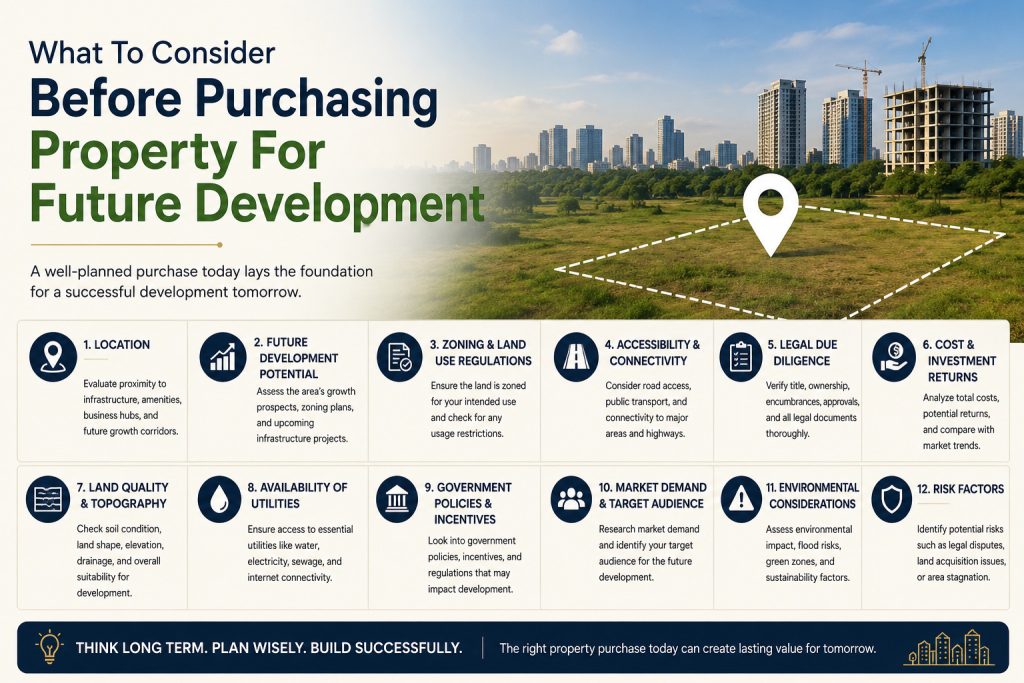
You want to buy land to develop, but you worry about costly surprises. Zoning rules and environmental checks often affect what you can build. This post lists key checks, costs, and permits to consider.
Read on.
Define Your Development Goals
Set clear goals for your project. Define what success looks like.
- State the project type and scope. Decide if you plan single family homes, multifamily units, mixed use, or commercial real estate. Outline unit counts, square footage, and target completion dates.
- Set a target market and price range. Identify buyer or renter profiles and target income bands. Use local market analysis to set realistic price points.
- Confirm zoning and land use needs. Check zoning regulations and permitting rules. Note allowed densities, height limits, and required setbacks.
- Estimate timeline and phasing. Plan for site acquisition, permitting, construction, and sales or leasing. Add buffer months for approvals and inspections.
- Calculate development budget and financing options. Include land acquisition costs, construction budgets, taxes, and soft costs. Contact lenders about construction loans and bridge financing.
- Plan for infrastructure and utilities. Verify road access, water, sewer, power, and broadband. Factor in costs for offsite improvements and impact fees.
- Assess environmental and site constraints. Order environmental assessments and geotechnical reports. Account for flood zones, soil quality, and remediation needs.
- Define exit strategy and return targets. Choose a hold, sell, or lease option. Set expected return on investment and acceptable risk levels.
Research Zoning Laws and Land Use Regulations
Zoning rules tell you what you can build. Local codes set limits on use, height, density, parking, and setbacks. Residential, commercial, and mixed use zones often carry different rules.
Land use maps and zoning overlays show allowed uses and constraints. Confirm allowed uses for your lot before you buy. Contact the municipal planning department for code sections and maps.
Ask about conditional use permits, variances, and special exceptions. Permit timelines can affect project costs and financing.
Zoning can change a property value fast. Recent rezonings or future land use plans can boost or cut potential. Pull the city master plan and any transportation or infrastructure plans.
Hire a land use attorney or planner for complex sites and permitting strategy. Lenders and investors want clear entitlements and realistic timelines. Next, evaluate location and regional growth.
Evaluate Location and Regional Growth
Location matters a lot in real estate. Check how close the property is to new roads and public transport. Look at the nearby schools and shops too. Think about who lives in the area and if more people are moving there.
These factors can change your property’s value over time. Want to know more? Keep reading!
Proximity to growing infrastructure
Pick property close to new roads, transit, and utilities. Such proximity raises development potential and boosts property valuation for long term investment.
Local plans for schools, highways, or transit often signal growth trends. Buyers should map pipelines for water, power, and broadband before purchase.
Neighborhood demographics and amenities
Neighborhood demographics matter. They tell you about the people living there. Look for age groups, income levels, and family sizes. This data helps in understanding community needs.
Amenities play a big role too. Nearby parks, schools, and shops can attract buyers or renters. Good public transport is also important as it connects residents to work and leisure spots. Investors researching land for sale in Madison, WI often prioritize these factors because strong infrastructure, quality amenities, and population growth can significantly influence future property values and development potential.
These factors enhance property value and appeal for future development.
Analyze Environmental and Geographic Factors
5. Analyze Environmental and Geographic Factors: Check the area for natural disaster risks. Look into soil quality and land shape too. These factors can affect your plans. Want to know more about these key elements? Keep reading!
Natural disaster risks
Natural disasters can harm property and development plans. Floods, earthquakes, hurricanes, and wildfires are examples of risks to consider. The location plays a big role in this. Some areas face higher threats than others.
Check local history for past events and their effects on property values.
Many insurance options exist to help protect against these risks. Understanding what coverage is available is crucial before purchasing land for development. Evaluate the environmental hazards that can affect your investment.
Soil quality and topography also matter greatly in planning future projects.
Soil quality and topography
Soil quality and topography are key factors in property development. Good soil supports buildings, roads, and parks. Poor soil can lead to problems like flooding or landslides. Inspecting the land is crucial before making a purchase.
Topography affects how water drains on your property. Flat land is easier to build on than hilly terrain. Check for any slopes, valleys, or rocks that could complicate construction.
Understanding these elements helps you decide if the location fits your development goals.
Understand Costs and Financing
6. Understand Costs and Financing: Know the costs involved in property development. This includes taxes and other fees. Make a clear budget for your project’s expenses. Want to learn more about financing options? Keep reading!
Taxes and additional expenses
Taxes can add a lot to your costs when buying property for development. Property taxes vary by location and can increase over time. You need to know how much these taxes will cost you each year.
Set aside funds for them in your budget.
Extra expenses often arise during development. These may include permits, inspections, and utility connections. Assess these costs early on to avoid surprises later. Be aware of the total financial picture before making a purchase.
Budgeting for development
Budgeting for development is key to a successful property investment. It helps you understand what you can afford and what you need to spend.
- Calculate land acquisition costs. This includes the purchase price of the property. Don’t forget about closing costs, which can add up quickly.
- Set aside funds for taxes and permits. Property taxes will be ongoing expenses. Permit fees can also vary depending on your project’s scope and location.
- Estimate construction costs accurately. This means factoring in labor, materials, and any unexpected expenses that may arise. You want to have a clear picture of your total building budget.
- Include costs for landscaping and site improvements. The outside appearance affects property value, so plan for things like trees, grass, or parking areas. For residential projects, features associated with backyard remodeling such as patios, outdoor kitchens, fire pits, and upgraded landscaping may also require additional budget allocation.
- Allocate money for utilities connection fees. Getting water, electricity, and other services hooked up may come with significant charges.
- Plan for insurance costs during development. Insurance protects against risks during construction; this is an essential expense to account for in your budget.
- Factor in financing options available to you when estimating expenses. If you take out loans or lines of credit, consider interest rates and repayment terms in your budget.
- Keep some funds available as a contingency fund for surprises along the way; aim for about 10-20% of your total budget to cover unexpected costs or changes.
Careful budgeting leads to better decisions in real estate development projects while ensuring that all potential expenses are covered thoroughly before breaking ground on any new plans or projects.
Conduct Due Diligence and Property Inspections
Conducting due diligence and property inspections is a vital step in buying land for future development. This process helps you avoid costly mistakes.
- Research the property’s history. Find out if there were previous owners, past uses, or environmental issues.
- Check title and ownership records. Confirm that the seller legally owns the land and has the right to sell it.
- Order an environmental assessment. This will reveal any contamination or hazards on the site.
- Inspect the property physically. Look for signs of damage, drainage issues, or legal encroachments from neighbors.
- Review zoning regulations carefully. Ensure your development plans fit within local rules and guidelines.
- Discover available utilities nearby. Water, electricity, and sewer access are crucial for future developments.
- Analyze the neighborhood’s market conditions. Understand current property values and trends in your chosen area.
- Consult with professionals like real estate agents or lawyers. Their insights can be helpful during assessments and negotiations.
- Obtain estimates for necessary improvements or repairs. Knowing these costs ahead will help with budgeting later on.
- Keep track of all documents related to the property purchase process to ensure everything is organized and transparent.
Making informed decisions now will lead to a smoother development journey later on.
Conclusion
Purchasing property for future development can be exciting. It is important to set clear goals first. Research zoning laws and check the location carefully. Understand the costs involved, like taxes and fees.
Doing your homework helps you make a smart investment in real estate. Your efforts now can lead to success later on.