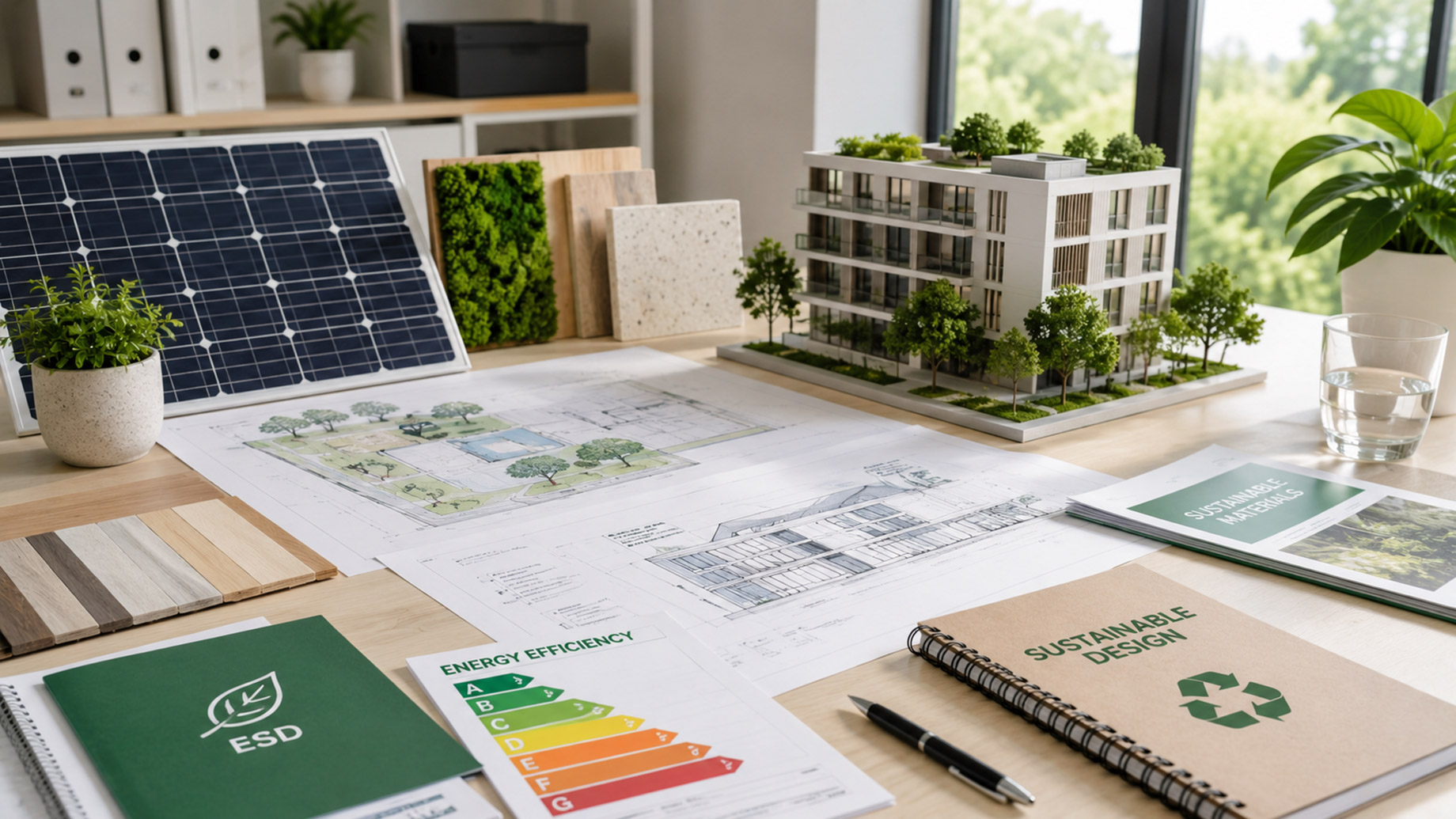
Key Highlights:
- ESD consultants play a crucial role in future-proofing your building projects by integrating sustainable design from the start.
- Early engagement with these experts optimizes energy efficiency, reduces long-term operational costs, and minimizes your project’s environmental impact.
- They help navigate complex regulations like the National Construction Code and achieve certifications such as Green Star and NatHERS.
- ESD principles improve building performance, enhance occupant comfort, and increase property value.
- Through advanced modeling, ESD consultants deliver performance-based solutions that align sustainable practices with your unique building design goals.
Introduction
Are you aiming to design buildings that are compliant, efficient, and future-ready? Environmentally Sustainable Design (ESD) is essential. ESD focuses on sustainable practices that benefit both people and the planet by integrating energy efficiency, resource conservation, and occupant well-being into every project stage. An ESD consultant can simplify complex requirements into practical solutions, ensuring a truly sustainable result.
The Critical Role of ESD Consultants in Future-Proofing Australian Projects
In today’s fast-changing world, building for the future means going beyond basic compliance. ESD consultants are key partners in creating resilient, adaptable properties. Their expertise in sustainable development ensures your project meets current standards and is ready for future climate and regulatory changes.
By working with ESD consultants, you can future-proof your investment. They anticipate evolving environmental regulations and design projects that exceed today’s requirements for energy efficiency and sustainability. This proactive approach minimizes costly retrofits and helps your building remain compliant and valuable for years to come.
Understanding Environmentally Sustainable Design (ESD) in Australia
Environmentally Sustainable Design (ESD) is a holistic approach to building that reduces environmental impact while enhancing occupant health and comfort. It emphasizes smart choices that benefit both the environment and your project’s bottom line.
In Australia, ESD is increasingly shaping construction as the industry tackles challenges like climate change and resource scarcity. Priorities include cutting energy use, conserving water, and choosing sustainable materials.
ESD plays a key role in project planning and design by guiding decisions from concept to operation. Integrating ESD principles early ensures sustainability is built into the project—not added later.
Why Early Involvement of ESD Consultants Makes a Difference
Engaging an ESD consultant from the project’s outset is one of the most effective ways to drive successful outcomes. Early involvement integrates sustainability strategies directly into the design process, avoiding costly changes later.
How does early ESD input shape your project? It maximizes opportunities for passive design, material efficiency, and seamless system integration—advantages often lost if an ESD consultant joins midstream. This guidance sets your project up for long-term success.
Key benefits include:
- Cost Savings: Incorporating ESD measures during initial design is far less expensive than later retrofits.
- Simplified Compliance: Early planning helps avoid regulatory hurdles and streamlines approvals.
- Enhanced Energy Efficiency: Consultants can optimize designs for maximum energy performance and savings from day one.
Key Benefits of Hiring ESD Consultants for Building Design
Hiring an ESD consultant adds significant value to your building design. They turn sustainability goals into practical strategies, ensuring efficiency, compliance, and responsibility. ESD experts help select sustainable materials, optimize energy use, and create healthier indoor environments for greater occupant comfort.
Their guidance elevates your project from basic standards to high performance. Sustainable designs attract tenants and buyers, lower operating costs, and increase ROI—making them a smart investment for developers and property owners.
Enhancing Project Compliance with Australian Sustainability Regulations
Navigating Australia’s complex sustainability regulations can be difficult. ESD consultants ensure your project meets all compliance requirements, with expertise in the National Construction Code (NCC) and energy efficiency standards like Section J.
ESD consultants manage the entire certification process. Whether you need a Green Star rating, BESS assessment, or NatHERS score, they handle modeling, documentation, and submission. If your design doesn’t meet standard requirements, they create customized solutions to justify compliance through alternative methods.
Here’s how consultants help with key standards:
| Regulation/Certification | Consultant Support |
|---|---|
| NCC Section J | Provide energy efficiency modeling (JV3) to demonstrate compliance. |
| Green Star | Guide the team through certification from start to finish. |
| BESS/SDA | Prepare Sustainability Management Plans (SMP) for council approval. |
| NatHERS | Run thermal performance simulations to achieve rating targets. |
Achieving Long-Term Energy Efficiency and Cost Savings
ESD aims to deliver significant energy efficiency, resulting in long-term cost savings. By prioritizing smart design from the start, ESD consultants help reduce a building’s operational costs over its lifespan.
How does ESD consulting improve energy efficiency? Consultants use advanced energy modeling to analyze your building’s design and pinpoint areas for improvement, evaluating insulation, windows, HVAC systems, and lighting to ensure all components work together for minimal energy use.
Sustainable practices offer clear benefits:
- Lower Utility Bills: Optimized designs provide ongoing energy savings.
- Reduced Maintenance: Efficient systems require less upkeep, cutting operational costs.
- Increased Asset Value: Energy-efficient buildings attract buyers and tenants.
- Future-Proofing: Exceeding current standards prepares buildings for rising energy prices and stricter regulations.
How ESD Consultants Support Sustainable Project Planning
ESD consultants are essential for sustainable project planning. They centralize sustainability efforts, ensuring green goals guide every decision. Their expertise aligns architects, developers, and builders with practical, achievable solutions.
From the concept stage, ESD consultants set clear environmental targets, helping projects meet sustainability standards while staying on schedule and within budget.
Integrating ESD Strategies into Project Design and Delivery
Successful ESD integration requires collaboration among consultants, architects, project managers, and engineers. ESD consultants turn sustainability goals into practical design solutions.
During the design phase, they advise on building orientation, natural lighting, and sustainable materials. ESD acts as a guiding philosophy in project planning and design, influencing decisions to create efficient and responsible buildings.
Key activities include:
- Material Selection: Recommending low-impact and recycled materials.
- Water Management: Designing systems for efficient water use and stormwater control.
- Energy Optimization: Modeling passive strategies and efficient active systems.
- Waste Planning: Minimizing construction and operational waste.
Minimizing Environmental Impact and Securing Sustainability Certifications
An ESD consultant’s main role is to minimize your project’s environmental impact. They do this by reducing resource use, lowering carbon emissions, and promoting biodiversity—making your building more sustainable.
ESD consultants use various tools to measure and manage environmental effects. This includes waste reduction plans, water efficiency modeling, and lifecycle assessments of materials.
They also help you achieve sustainability certifications like Green Star or BESS by handling the technical documentation and verification process. These certifications validate your project’s green credentials and boost its market value.
Conclusion
In conclusion, hiring ESD consultants is vital for future-proofing your projects in Australia. Their expertise ensures regulatory compliance, boosts energy efficiency, and lowers long-term costs. Early integration of ESD strategies minimizes environmental impact and helps secure key sustainability certifications. For expert guidance on sustainable design, contact us today for a free consultation and discover how we can support your vision.
Frequently Asked Questions
What qualifications or expertise should I expect from an ESD consultant?
You should look for ESD consultants with a proven track record and relevant accreditations, such as certified energy assessors or Green Star Accredited Professionals. Expect expert advice grounded in engineering principles and a deep knowledge of Australian sustainability standards to help you achieve your project’s sustainability goals.
Which ESD strategies are most effective for future climate resilience in Australia?
Effective ESD strategies for tackling climate change in Australia include passive design for thermal comfort, high-performance insulation, efficient water management systems to conserve water, and the integration of renewable energy sources like solar panels. These measures boost energy efficiency and reduce reliance on strained resources.
How does working with ESD consultants typically unfold during a project?
The process usually begins with an initial consultation to define goals. The ESD consultant then collaborates with the design team and project managers throughout the design process, providing analysis, modeling, and documentation to meet environmental standards and regulatory requirements, ensuring a smooth path to approval.
