Before closing on an older estate home in Belmont, NC, verify the mechanical systems with the same rigour applied to the roof and foundation. Heating, cooling, ductwork and ventilation decide daily comfort, running costs and resale appeal. In a market of large floor plans and heavy glazing, these systems fail quietly and expensively.
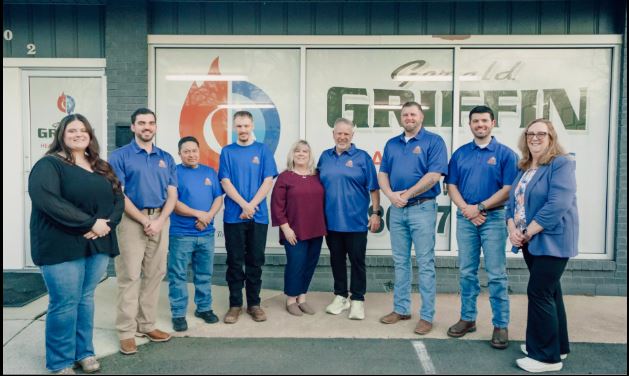
Belmont sits between the Catawba River and the Charlotte metro, a stretch that has drawn buyers away from Lake Norman and South Charlotte for a decade. Many of the finest properties here were built before modern envelope standards, so the equipment inside them rarely matches the ambition of the architecture. If the inspection report leaves you uncertain, a walkthrough with a specialist reads the equipment far more precisely than a generalist can, and long-established local firms such as Gerald Griffin Heating and Cooling Services have seen enough Gaston County housing stock to know which decades produced which problems. Owner history, licence status and customer reviews for Gerald Griffin Heating and Cooling Services in Belmont, NC are all worth reading before you book anyone.
Key Takeaways
- Heating and cooling account for more than half of a typical home’s utility spend, so equipment age is a financial fact, not a detail.
- Estate homes often carry two or three separate systems, each with its own age and condition.
- Ductwork can lose roughly 30 percent of conditioned air before it reaches the room.
- Serial numbers on the outdoor unit reveal manufacture date and settle most disputes.
- Post-inspection is a negotiating window, and mechanical findings are the least emotional item on the list.
Why Does the HVAC System Matter More in a Larger Home?
Scale multiplies every weakness. A two-storey great room with a wall of south-facing glass places a load on the system that a standard tract house never generates.
When equipment is undersized or badly zoned, the result is not a total failure. It is a home that never quite feels right, with hot upper floors, cold basements and humidity that lingers into the evening.
Buyers rarely detect this on a one-hour showing. They detect it in July, after the deed is signed.
How Old Is the Equipment, Really?
Age is the single most useful data point, and it is easy to establish. Every condenser, air handler and furnace carries a data plate with a serial number that encodes the month and year of manufacture.
| Component | Typical service life |
|---|---|
| Central air conditioner | 12 to 15 years |
| Air-source heat pump | 10 to 15 years |
| Gas furnace | 15 to 20 years |
| Ductless mini-split | 12 to 15 years |
| Ductwork | 20 to 25 years |
Treat these as ranges rather than deadlines. A meticulously serviced system reaches the top of its band, while a neglected one fails well below the bottom.
What Does the Ductwork Tell You?
Ductwork is the least glamorous part of the system and the most commonly ignored. Leaks at joints, crushed flexible runs and missing insulation in unconditioned attics all bleed conditioned air into places nobody lives.
Industry testing consistently finds that a substantial share of conditioned air, often near a third, never arrives where it was sent. In a large home with long runs, that loss compounds.
Ask whether the ducts were sized for the current system or simply inherited from whatever came before.
Which Renovation Eras Cause the Most Trouble?
Estate homes are rarely original. Each addition, sunroom or finished basement placed new demand on equipment that was specified for the original footprint.
Common patterns worth probing:
- A sunroom or bonus room tied into an existing trunk line with no capacity added.
- A finished basement served by a single supply register and no return.
- A primary suite addition running on the same zone as the rest of the upper floor.
- Mini-splits installed piecemeal to patch symptoms rather than solve the design.
None of these is fatal. All of them are cheaper to address before closing than after.
What Should the Inspection Actually Cover?
A general home inspector confirms that a system turns on and produces air at a plausible temperature. That is a functional test, not an assessment.
A mechanical assessment goes further and looks at static pressure, refrigerant charge, heat exchanger condition, electrical components, drainage and airflow balance between rooms. In older gas equipment, the heat exchanger inspection is a safety matter as much as a comfort one.
On a significant purchase, the second opinion is proportionate to the stake.
How Do Findings Translate Into Negotiation?
Mechanical findings sit in a useful position during negotiation. They are documented, quantifiable and rarely disputed on principle, which makes them easier to resolve than cosmetic disagreements.
| Finding | Typical resolution |
|---|---|
| Equipment past service life, still running | Credit or price adjustment |
| Failed or unsafe component | Seller repairs before closing |
| Duct leakage and poor balance | Credit toward remediation |
| No maintenance records available | Request a pre-closing service visit |
| Undersized system for current footprint | Formal load calculation before closing |
Sellers who have maintained their homes usually welcome the clarity. Sellers who have not are the reason the assessment exists.
What Records Should You Request From the Seller?
Documentation separates a maintained property from a merely presentable one. Request the following in writing rather than in conversation.
- Installation dates and invoices for every unit on the property
- Annual service records for the last three to five years
- Any transferable manufacturer or labour warranties
- Details of duct modifications made during renovations
- Filter sizes and replacement intervals for each system
A seller who produces this quickly is telling you something reliable about how the rest of the house was treated

Does Modern Equipment Change Resale Position?
In the Charlotte metro, buyers increasingly read mechanical condition as a proxy for overall care. A recent, well-documented system removes an objection before it forms.
Efficiency gains are real as well. Replacing genuinely outdated equipment with current high-efficiency units can meaningfully reduce heating and cooling costs, and those savings persist across the whole period of ownership.
Comfort, however, is what residents actually notice. Even temperatures, quiet operation and controlled humidity are felt daily in a way a countertop is not.
Building the Assessment Into the Timeline
Due diligence in North Carolina moves quickly, so schedule the mechanical assessment in the first days of the period rather than the last. Contractors book out, and a rushed visit produces a thin report.
If more than one system serves the property, allow time for each to be evaluated separately. A single line reading “HVAC operational” across a nine-thousand-square-foot house is not a finding.
Frequently Asked Questions
Is a separate HVAC assessment necessary if the home inspection was thorough? On a large or older property, yes. General inspectors confirm operation, while a mechanical contractor evaluates capacity, airflow, refrigerant charge and heat exchanger integrity. The two reports answer different questions.
How can I tell the system’s age before an inspector arrives? Find the serial number on the data plate of the outdoor condenser and the indoor air handler or furnace. Most manufacturers encode the manufacture week and year within it, and brand-specific decoders are widely published.
Should equipment near the end of its service life stop a purchase? Rarely. It is a budgeting and negotiation item rather than a reason to walk away. What matters is entering the transaction with the age documented rather than discovering it later.
Does a home warranty cover an ageing system adequately? Coverage varies significantly and often excludes systems above a certain age or replaces components rather than the unit. Read the exclusions before treating a warranty as protection.
The Detail That Decides How the House Feels
Architecture is what buyers fall for, and mechanical systems are what they live inside. In Belmont’s older estate homes, that gap is worth closing during due diligence, while the findings still carry negotiating weight and the cost of correcting them still belongs to somebody else.
About Gerald Griffin Heating and Cooling Services
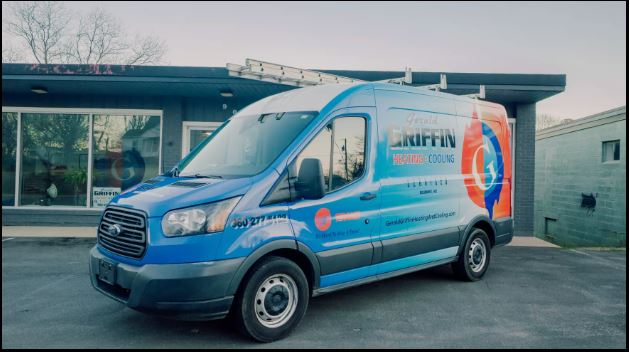
Gerald Griffin Heating and Cooling Services 902 Belmont Mt Holly Rd, Belmont, NC 28012, United States Phone: (980) 277-5122 Website: geraldgriffinheatingandcooling.com Email: ggriffinhvac@gmail.com Hours: Open 24 hours, seven days a week Owner: Gerald Griffin, Owner North Carolina Heating Contractor License #32307, licensed since 1996 Directions and profile: https://share.google/ZPSMY9xkCKIV63nDu
Family owned and operating in Belmont since 2013, with more than thirty years of hands-on HVAC experience behind the team. Licensed, bonded, insured, BBB accredited and a Trane dealer. Services include residential heating and air conditioning repair, system replacement, furnace and heat pump service, central air and ductless mini-split installation, ductwork, zoning, indoor air quality solutions, maintenance plans and 24-hour emergency service.
Service areas: Belmont, North Belmont, Mount Holly, Cramerton, McAdenville, Gastonia, South Gastonia, Cramer Mountain, Spencer Mountain, Springdale, Pumpkin Center, Riverbend Township, Lowesville, Alexis, High Shoals, Stanley, Dallas, Lincolnton, Maiden, Mountain Island, Moores Chapel, Paw Creek, Olde Whitehall, Steele Creek and Yorkmount in North Carolina, and Tega Cay, South Carolina.
Find Us on the Map
<iframe src=”https://maps.google.com/maps?q=Gerald%20Griffin%20Heating%20and%20Cooling%20Services%2C%20902%20Belmont%20Mt%20Holly%20Rd%2C%20Belmont%2C%20NC%2028012&output=embed” width=”100%” height=”400″ style=”border:0;” allowfullscreen=”” loading=”lazy” referrerpolicy=”no-referrer-when-downgrade” title=”Gerald Griffin Heating and Cooling Services, 902 Belmont Mt Holly Rd, Belmont, NC 28012″> </iframe> <!– MAP NOTE: iframe embed, not a hyperlink, so the two-link count in the article body is unaffected. If The Pinnacle List strips iframes, replace with the map screenshot and keep the caption text below. –>
Gerald Griffin Heating and Cooling Services, 902 Belmont Mt Holly Rd, Belmont, NC 28012.