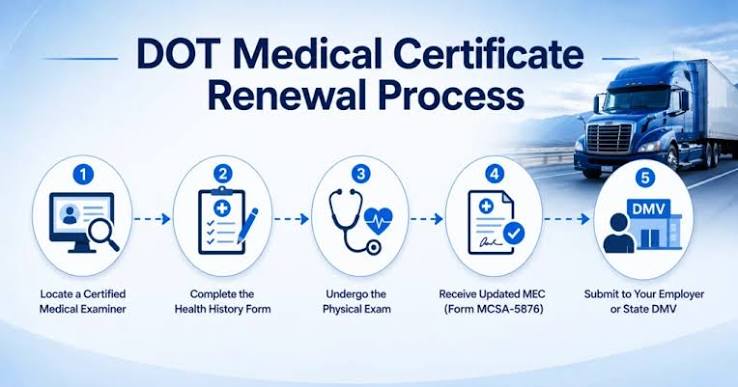
Commercial drivers keep goods, supplies, and materials flowing from one place to another 24 hours a day. The heavy workload involved is physically demanding, and not everyone is up to the challenge. Driver medical certifications are how regulators ensure every driver has the physical capability to do their job safely. They enforce standards surrounding vision, hearing, sleep disorders, and cardiovascular health. The idea is to minimize the chances of medical‑episode‑related accidents on the roads. Here’s everything you need to know about commercial driver medical certifications.
Commercial Driver Medical Certification Basics
A commercial driver medical certification is a requirement for all commercial drivers on interstate routes in vehicles over 10,000 pounds. To obtain the certification, you must pass an examination by a certified medical examiner. An examiner tests each applicant’s vision, hearing, and cardiovascular health. They also check for preexisting medical conditions that could affect reaction time or alertness. A commercial driver medical certification can be valid for 3 to 24 months. An examiner may select a shorter validity if they feel the driver has a medical condition that needs monitoring.
The Rationale Behind Each Major Health Requirement
There are good reasons for the certification to cover the medical conditions that it does. For example, vision and hearing play a key role in safely operating a large vehicle. Cardiovascular health, meanwhile, is important because it helps ensure a driver won’t become suddenly incapacitated while on the road.
Examiners also look for conditions like sleep apnea and other respiratory problems. Those conditions can make it difficult for a driver to remain alert and awake for long periods. Examiners will also flag neurological conditions and potential medication interactions. They can refuse to sign off on a certification if they find anything that could impair a driver’s judgment, coordination, or stability.
Truck Accidents in the U.S. Involving Driver Medical Episodes
The reason that the Federal Motor Carrier Safety Administration (FMCSA) insists on drivers passing medical tests is to minimize accidents related to driver medical episodes. Even with the certification process, such accidents still occur. In fact, the FMCSA’s Large Truck Crash Causation Study found that up to 13% of serious accidents involved driver fatigue. According to the same study, heart events, diabetic episodes, and sleep apnea‑related drowsiness are frequent contributing factors in many such accidents.
For its part, the National Transportation Safety Board (NTSB) has called out untreated sleep apnea as a major contributor to crashes on U.S. roads. According to its data, drowsy driving plays a role in over 90,000 police‑reported crashes every year. When it happens with a passenger vehicle, the results are bad enough. But a similar accident involving a tractor‑trailer can have a catastrophic outcome.
Compliance Requirements for Employers
Employers also have a role to play in the commercial driver medical certification process. Regulators require employers to track drivers’ certifications, keep records, and monitor renewal dates to prevent lapses. Employers must also remove a driver from service if they lack the proper certification or if their certification lapses for any reason.
It’s worth noting that employers have strong financial incentives to ensure driver compliance. Maintaining a team of medically certified drivers improves safety performance, reduces liability, and keeps vehicles on the road.
The Risks Drivers Take When Operating Without Certification
At the end of the day, there’s nothing physically stopping a driver without a current medical certification from operating a vehicle. When that happens, they can put themselves and everyone around them on the road at risk. Drivers with undocumented medical issues could experience unexpected fatigue, lapses in judgment, or even sudden health episodes. In all cases, that can lead to an accident.
In accidents involving drivers lacking medical certification, employers face fines, out‑of‑service orders, and enhanced liability. Insurance claims arising from such accidents can be problematic, too. Insurers may refuse to cover losses after an accident involving a driver without medical certification. They’re especially likely to refuse claims where the driver’s medical condition directly contributed to the accident.
Commercial Driver Medical Certification and Accident Victims
If you’re involved in an accident with a commercial vehicle, its driver’s license and medical certification are among the first things investigators check. If the driver lacked medical certification or had a lapsed certification, it can significantly change the picture of fault and liability.
In such cases, a qualified truck accident lawyer can help. They’ll review medical records, driver history, and carrier compliance data to identify patterns of negligence. Their experience with similar cases helps them know what to look for. They can also help determine whether the driver had any known medical conditions that may have contributed to the accident. If so, it can play a major role in any claim for damages you pursue.
The Takeaway
Commercial driver medical certifications are a key part of the FMCSA’s safety efforts. Considering the size, weight, and stopping distance of the average long‑haul commercial vehicle, it’s easy to see why. The process forces drivers to take regular medical exams so they remain fit to drive and so that new medical issues aren’t unreported or overlooked.
The medical certification process also matters in the event of an accident. Certification status and records can help create a picture of a driver’s health, both at the time of the accident and leading up to it. For accident victims, establishing negligence is an important step on the road to securing fair compensation. So, the commercial driver medical certification process ultimately protects drivers and those they share the road with. And it helps clarify responsibility in any medical‑episode‑related accident.
If you or a loved one has been involved in a serious truck crash and feel that the trucker may have been responsible due to being poorly trained or unqualified, you may have grounds for a legal claim. Filing a lawsuit with the help of an experienced personal injury lawyer like the attorneys at Barrera Law Group LLC may bring closure, answer questions about the circumstances of the case, and allow you to potentially obtain compensation that can go towards recovery costs and more.