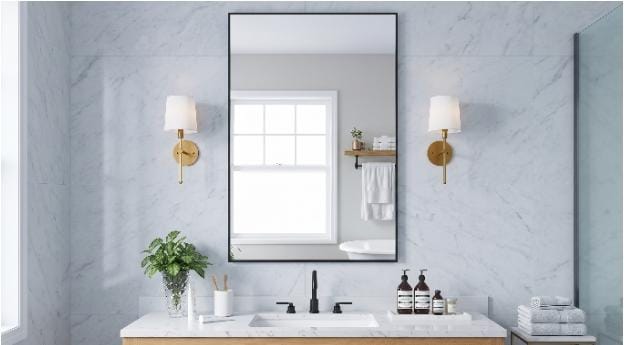
A well-designed bathroom balances function with aesthetics, and few elements influence both as much as the rectangle frameless bathroom vanity mirror. While often viewed as a finishing touch, the right mirror shapes the room’s visual proportions, enhances available light, and improves everyday routines. Whether you’re updating a powder room, renovating a master bathroom, or planning a new build, selecting the right mirror deserves more attention than many homeowners initially realize.
Unlike framed alternatives that introduce additional materials and visual weight, frameless vanity mirrors create a cleaner architectural appearance. Their minimalist profile works across contemporary, transitional, Scandinavian, industrial, and even traditional interiors, making them one of the most versatile design choices available.
Why Rectangular Frameless Mirrors Continue to Grow in Popularity
Bathroom design trends have shifted toward simplicity, functionality, and timeless appeal. As homeowners move away from overly decorative interiors, clean geometric forms have become increasingly desirable. Rectangular mirrors naturally complement the straight lines found in vanities, countertops, cabinetry, shower enclosures, and tile layouts. Removing the frame allows the reflective surface to become the focal point rather than decorative trim, helping bathrooms feel more spacious without overwhelming the overall design.
Because there is no surrounding frame, these mirrors also coordinate effortlessly with changing hardware finishes. Whether a bathroom features brushed nickel, matte black, polished chrome, brass, or mixed metals, a frameless mirror remains visually neutral, making future renovations easier.
How Mirrors Influence Bathroom Design
A mirror does much more than provide a reflection. Interior designers often consider it an essential architectural feature because it affects how a room feels and functions. Light reflection is perhaps the greatest advantage. Natural daylight entering through a nearby window can be reflected throughout the room, reducing shadows and making smaller bathrooms appear brighter. Even artificial lighting benefits, as strategically placed mirrors distribute illumination more evenly across the space. Mirrors also create visual depth. In compact bathrooms where expanding square footage isn’t possible, reflective surfaces produce the illusion of additional space. This psychological effect is especially valuable in guest bathrooms, apartment bathrooms, and powder rooms.
Choosing the Right Mirror Size
One of the most common mistakes homeowners make is selecting a mirror that is either too small or disproportionately large for the vanity beneath it. A general guideline is for the mirror to be several inches narrower than the vanity. This creates balanced proportions while allowing wall sconces or decorative lighting to frame the mirror if desired. For example:
- A 30-inch vanity often pairs well with a 24- to 28-inch-wide mirror.
- A 48-inch vanity commonly accommodates a mirror between 42 and 46 inches wide.
- Double vanities may feature one oversized mirror or two individual mirrors positioned over each sink.
Height matters just as much as width. Taller mirrors extend sightlines, reflect more light, and contribute to a greater sense of openness.
Single Mirror or Dual Mirrors?
Double-sink bathrooms often present two attractive design options. Installing one large mirror creates continuity and makes the bathroom feel larger. This approach works particularly well in contemporary spaces where simplicity is the goal.
Alternatively, using two separate mirrors introduces symmetry and allows each sink area to have its own visual identity. This arrangement pairs especially well with wall sconces installed between the mirrors or on their outer edges.
Neither solution is universally superior. The decision usually depends on wall dimensions, lighting layout, storage needs, and overall design style.
Understanding Edge Finishes
Frameless mirrors are available with several edge treatments, each affecting appearance and safety.
- A polished edge is the most common choice. The edges are carefully ground and polished until smooth, creating a refined appearance suitable for modern interiors.
- Beveled edges add subtle decorative detail by cutting the perimeter at an angle, creating depth and catching light differently throughout the day. This style offers a slightly more traditional aesthetic without requiring an actual frame.
- Flat polished edges maintain crisp, minimalist lines that complement contemporary bathrooms and floating vanities.
Regardless of edge style, quality finishing improves both durability and user safety.
Proper Mirror Placement
Mirror positioning has a significant impact on comfort and usability. Most installers recommend placing the bottom edge several inches above the vanity backsplash while maintaining comfortable visibility for most household members.
The mirror should generally align with the vanity rather than extending far beyond its sides. Centering it over the sink creates visual balance and simplifies lighting placement.
Ceiling height also influences positioning. Homes with higher ceilings often benefit from taller mirrors that emphasize vertical space, while lower ceilings may require more careful proportioning to avoid making the room feel crowded.
The Relationship Between Mirrors and Lighting
Lighting and mirrors should always be planned together rather than independently. Overhead fixtures alone frequently cast shadows across the face, making grooming tasks more difficult. Combining overhead lighting with wall sconces positioned beside the mirror provides more balanced illumination.
Many homeowners now incorporate integrated LED mirrors into modern renovations. These mirrors distribute light evenly around the reflective surface, improving visibility while consuming relatively little energy.
Color temperature is equally important. Lighting in the range of approximately 3000K to 4000K generally produces flattering, natural-looking illumination for daily routines such as shaving, applying makeup, and skincare.
Materials Matter More Than Many People Realize
Not every bathroom mirror is built to perform equally well in humid environments. Quality mirrors often feature moisture-resistant backing that helps protect against deterioration over time. Bathrooms regularly experience steam, condensation, and temperature fluctuations, all of which can affect lower-quality mirror coatings.
Tempered glass may also be preferred in certain installations, particularly where building codes require additional safety or where mirrors are installed in locations more susceptible to accidental impact.
When evaluating frameless vanity mirrors, understanding the materials used behind the reflective surface can be just as important as evaluating the visible design.
Matching Different Bathroom Styles
One reason frameless mirrors remain consistently popular is their ability to integrate into virtually any design aesthetic.
- Modern bathrooms benefit from large uninterrupted reflective surfaces paired with floating vanities and minimal hardware.
- Transitional interiors combine classic cabinetry with simplified decorative elements, making frameless mirrors a natural fit without appearing overly contemporary.
- Scandinavian-inspired bathrooms emphasize natural light, pale wood finishes, and uncluttered spaces. Clean rectangular mirrors reinforce this understated aesthetic.
- Industrial bathrooms featuring concrete, exposed brick, or black fixtures also pair exceptionally well with frameless designs because the mirror softens the heavier surrounding materials.
- Even traditional bathrooms can successfully incorporate frameless mirrors when other architectural elements provide enough decorative detail.
Maintenance Is Surprisingly Simple
One advantage of a frameless design is reduced maintenance. Without decorative moldings or frames, there are fewer areas where dust, moisture, soap residue, or grime can accumulate. Routine cleaning typically involves a microfiber cloth and a non-abrasive glass cleaner. Spraying cleaner onto the cloth rather than directly onto the mirror helps prevent excess liquid from reaching the edges. Avoid harsh chemicals, abrasive pads, or ammonia-heavy cleaners, when possible, especially on mirrors with specialty coatings or premium edge finishes. Regular cleaning maintains both clarity and longevity.
Common Mistakes to Avoid
Many bathroom renovations include mirrors as an afterthought, leading to avoidable design issues. Careful planning during the design phase prevents most of these issues.
- Selecting a mirror based solely on available wall space rather than vanity proportions often results in poor visual balance.
- Ignoring lighting placement can create uneven facial shadows despite having an attractive mirror.
- Mounting the mirror too high or too low reduces everyday comfort, while choosing decorative styles that compete with surrounding finishes can make the room feel visually cluttered.
- Finally, overlooking humidity resistance may shorten the mirror’s lifespan in bathrooms that experience frequent steam.
Sustainability and Long-Term Value
Increasingly, homeowners are considering sustainability alongside aesthetics. Timeless design choices generally remain attractive longer than trend-driven alternatives, reducing the likelihood of premature replacement during future remodels. Choosing durable materials, quality manufacturing, and versatile styling also contributes to a bathroom that maintains both functionality and visual appeal for many years. Because frameless mirrors complement evolving décor trends, they often continue working well even as fixtures, paint colors, or accessories change over time.
Planning a Bathroom Renovation Around the Mirror
Rather than treating the mirror as the final decorative piece, many designers now recommend selecting it early in the planning process. Mirror dimensions influence lighting placement, backsplash height, faucet positioning, medicine cabinet options, and even wall tile layouts. Coordinating these elements from the beginning creates a more cohesive finished space. Whether designing a compact guest bathroom or an expansive primary suite, considering proportion, lighting, durability, and placement together leads to better long-term results than selecting each feature independently.
Conclusion
The rectangle frameless bathroom vanity mirror remains one of the most practical and enduring choices for residential bathrooms because it combines clean aesthetics with everyday functionality. Its ability to reflect light, create visual openness, complement virtually every design style, and simplify maintenance makes it a valuable feature in both new construction and renovation projects.
By carefully considering size, placement, edge finish, lighting, material quality, and room proportions, homeowners can create a bathroom that feels brighter, more spacious, and better suited to daily use. Rather than following short-lived design trends, focusing on thoughtful planning and timeless principles ensures a mirror continues enhancing the space for years to come.