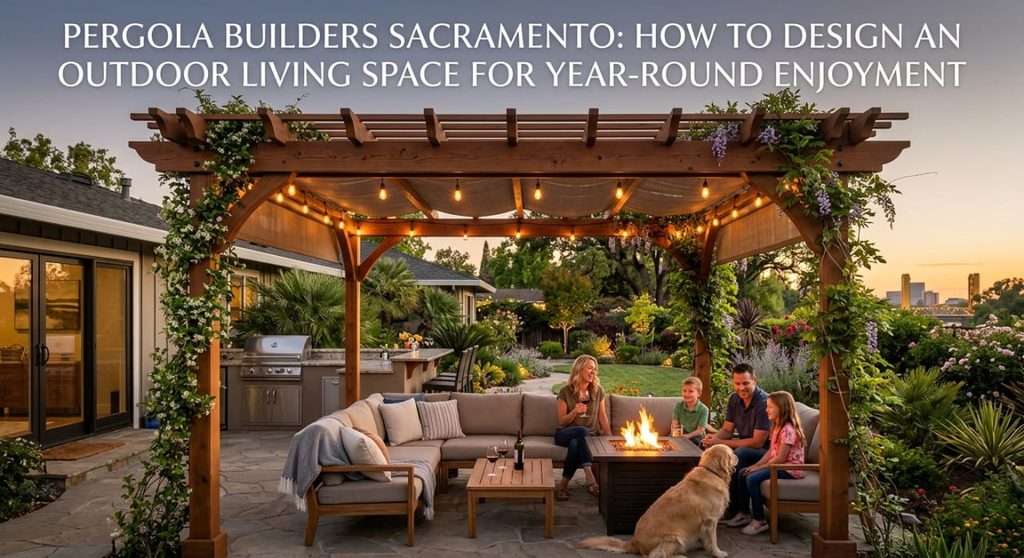
An outdoor living space can completely change the way you use your home. A patio that sits empty during the hottest part of the day can become a comfortable place for dinner, relaxing, entertaining friends, or enjoying a quiet morning with a cup of coffee. The right pergola can provide shade, define the space, and make the backyard feel more connected to the rest of the home.
In Sacramento, outdoor spaces can be especially useful because homeowners have many opportunities to spend time outside year-round. At the same time, strong sun, seasonal weather, and the need for privacy can influence which pergola design makes the most sense.
No single structure works for every backyard. Cantilever designs, glass walls, aluminum structures, pitched roofs, and outdoor screens all offer different advantages. Understanding those options before construction can help you create a space that is attractive, practical, and comfortable for everyday use.
Cantilever Pergolas: Modern Designs for Open and Functional Outdoor Spaces
Cantilever pergolas are popular for homeowners who want a clean, modern look without placing multiple support posts throughout the patio. Instead of relying on posts at every corner, the structure extends outward from its main support points.
This creates a more open feeling underneath the pergola. It can also make furniture placement easier because fewer obstacles line the edges of the living area.
A cantilever design can work particularly well when you want to cover a specific part of the patio without visually dividing the entire backyard. For example, it can provide shade over a dining table while leaving the rest of the yard open.
When planning cantilever pergolas, consider how the structure will interact with the existing house and patio. The overhang size, support system, roof material, and local weather conditions all influence the final design.
A modern pergola does not have to look complicated. Simple lines, a carefully selected finish, and proportions that match the home can create a polished result without making the backyard feel overly designed.
Also consider what will go beneath the structure. If you plan to add an outdoor kitchen, dining furniture, lounge seating, or a fire feature, the pergola should be large enough to accommodate those elements comfortably.
Two Post Cantilever Pergola: Benefits, Design, and Installation Considerations
A two-post cantilever pergola takes the open concept even further. With two main support posts, the structure can create a wide covered area while keeping much of the space underneath free from posts.
This design can be useful for patios where homeowners want flexibility. A dining table, outdoor sofa, or grill can be placed without working around several structural supports.
However, a two-post cantilever pergola requires careful structural planning. The support points must be strong enough to handle the loads created by the roof and the cantilevered section. Consider the structure’s size and weight, wind exposure, foundation, and attachment method.
If you are looking for pergola builders Sacramento, ask how they approach the structural requirements of this type of design rather than focusing only on appearance.
A professional builder should be able to explain why a particular support configuration fits the planned dimensions and materials.
Before installation, it is also worth discussing:
- Foundation requirements: The posts need stable support, and the foundation design should match the structure’s size and weight.
- Roof and drainage: If the pergola includes a solid roof, direct water away from the seating area and the home’s foundation.
- Wind exposure: Sacramento weather conditions and the property’s specific location can affect how the structure should be engineered and secured.
- Connection to the home: If the pergola attaches to an existing building, the connection needs careful planning rather than being treated as a simple finishing detail.
These considerations may not be visible once the project is complete, but they are essential for creating a structure that performs well over time.
Pergola With Glass Walls: Creating a Comfortable Outdoor Space in Every Season
A pergola with glass walls can offer a different type of outdoor experience. Instead of completely opening the sides, Glass creates a protected environment while keeping the surrounding landscape visible.
This can be especially useful if you want to spend more time outside during cooler or windy periods. Glass can reduce wind exposure and create a more enclosed feeling without making the space look heavy.
A pergola with glass walls can also make a patio feel more like an extension of the home. With comfortable seating, lighting, heating, and carefully selected furniture, the space can become a practical area for relaxing or entertaining.
The type of Glass is important. Outdoor structures require materials suited to the environment and installation method. Discuss safety, structural support, cleaning, and ventilation before construction.
One advantage of Glass is that it does not completely block the view. If your backyard has attractive landscaping, trees, or a pleasant view, transparent walls let you enjoy those features while gaining added protection.
However, Glass requires regular cleaning. Dust, water marks, and outdoor debris can become noticeable, particularly on large panels. Consider how easy each section will be to access before finalizing the design.
Aluminum Cantilever Pergola and Pitched Pergola: Comparing Styles and Structural Features
Material selection can influence both the appearance and practicality of a pergola. An aluminum cantilever pergola is a popular choice for homeowners who want a lightweight structure with a modern appearance and relatively simple maintenance.
Aluminum doesn’t rust like steel, which makes it attractive for outdoor applications. It can also be finished in different colors and styles, allowing the pergola to complement the existing architecture.
A pitched pergola, on the other hand, focuses more on roof shape. Instead of having a completely flat or nearly flat top, the roof has an intentional slope. This can create a more traditional architectural appearance and can also help with water drainage when the structure has a solid roof.
When comparing an aluminum cantilever pergola with a pitched pergola, remember that these terms describe different aspects of a structure. Aluminum refers to the material, while pitched describes the roof design. A pitched roof can also be made from aluminum or other materials.
The right combination depends on your home’s architecture, patio dimensions, and intended use.
Some practical factors to compare include:
- Appearance: Aluminum can create a sleek contemporary look, while a pitched roof may provide a more traditional architectural character.
- Maintenance: Aluminum generally requires relatively little maintenance, but the roof and other components still need periodic inspection and cleaning.
- Drainage: A pitched roof can naturally direct rainwater toward a planned drainage system, which can be useful for covered outdoor areas.
- Ceiling space: The shape of a pitched roof can create additional visual height, making the outdoor area feel more spacious.
- Long-term use: Think about whether you want to add fans, lighting, heaters, screens, or other features later. The initial structure should accommodate those plans where possible.
The best design isn’t necessarily the most complex. A well-proportioned pergola that fits the property can be more useful than a structure filled with unnecessary features.
Screen for Outdoor Patio: Adding Privacy, Shade, and Protection to Your Pergola Setup
A roof can provide shade from above, but it does not solve every outdoor comfort problem. Low-angle sunlight, wind, insects, and neighboring properties can still affect how enjoyable the patio feels.
This is where an outdoor patio screen can make a significant difference. Screens can provide additional privacy and protection while keeping the area connected to the outdoors.
Depending on the design, screens can be fixed, sliding, or retractable. Retractable systems are especially flexible because they let you open the patio completely when the weather is pleasant and close the screens when you need more protection.
Outdoor patio screens also work well with different pergola styles. For example, you can combine a modern cantilever structure with retractable screens to create a flexible outdoor room. A roofed structure can use screens on only the sides that receive the most sun or wind.
Think about the direction of sunlight before deciding where screens should go. You may not need to enclose every side of the pergola. Strategic placement can provide privacy and shade while preserving airflow and views.
Screens can also help create separate zones within a larger backyard. One side might become a dining area, while another remains open for children, pets, or gardening.
Ultimately, designing a year-round outdoor space is about combining structure, comfort, and everyday practicality. Cantilever pergolas can create an open, modern layout, while a two-post cantilever pergola can maximize usable space with fewer support points.
A pergola with glass walls can add protection while preserving outdoor views. An aluminum cantilever pergola can offer a lightweight, low-maintenance solution, while a pitched pergola can add architectural character and help with drainage.
Finally, adding a screen for an outdoor patio can make the space more private and comfortable without completely closing it off.
Before construction begins, think about how you will use the space in different seasons and times of day. Once you know the practical needs, it becomes much easier to choose the right materials, layout, roof style, and additional features. The result should be an outdoor area that feels like a natural extension of your home and one that you will genuinely want to use throughout the year.