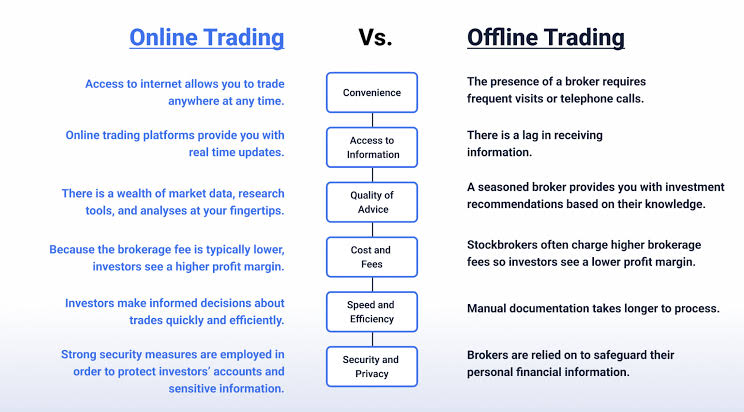
Investors can access market-related services through digital platforms as well as traditional offline channels. Online trading allows users to view market information, place orders, and manage their investments through internet-based platforms. Offline trading involves interacting with a broker through methods such as phone calls or in-person communication. An investment app brings several account and market features together on a mobile device. In this article, we will compare online and offline trading to understand how their features, processes, and user experiences differ.
What Should Investors Compare Between Online and Offline Trading?
An investment app gives users digital access to market information, account details, order placement, and portfolio tracking, while offline trading involves support through a broker or other traditional channels. Comparing these approaches helps investors understand how access, control, communication, and convenience differ between them.
Access to Market Information
Online platforms allow investors to view market prices, company information, charts, and other available data through a connected device. Information can be accessed directly within the platform, depending on its features.
Offline trading may involve contacting a broker to obtain specific information. The process can therefore depend on the broker’s communication channels and working hours.
Order Placement
Online trading allows users to place orders through a digital platform. Investors can select the security, quantity, order type, and other required details within the app.
With offline trading, investors may communicate their instructions to a broker through a phone call or other available channel. The broker then handles the order placement process.
Portfolio Tracking
Digital platforms provide access to portfolio information through an online account. Investors can check their holdings, transactions, and other available details from their devices.
Offline investors may receive portfolio information through statements or broker communication. The frequency and format of these updates depend on the service provided.
How Online Trading Apps Change the Trading Experience
Online trading platforms place several functions directly in the investor’s hands. Users can access their accounts, review market information, and manage orders through a single interface.
An app can also provide features such as watchlists, charts, alerts, and research tools. These features allow investors to organise information according to their requirements.
This approach can suit investors who prefer direct access to their accounts and want to manage routine activities through digital channels.
Mobile Access
A mobile platform allows users to access account and market information through a smartphone. This provides flexibility for investors who prefer digital access.
Faster Information Access
Market information and account updates can be viewed through the platform as they become available.
Self-Service Features
Users can manage several account-related activities without depending on a broker for every routine task.
How Offline Trading Works Differently
Offline trading follows a more assisted model. Investors communicate with a broker, who helps with activities such as order placement, account-related queries, or market information.
This approach can be useful for investors who prefer direct communication and assistance while managing their market activities.
The experience depends on the broker’s service process, communication channels, and the type of support available.
Broker Assistance
Investors can communicate directly with a broker when they require assistance with trading-related activities.
Personal Communication
Phone calls or in-person discussions provide a direct way to communicate instructions and queries.
Assisted Order Placement
The broker can place orders based on the instructions provided by the investor, subject to the applicable process.
When an Online Trading Platform May Suit Investors
Online trading can suit investors who prefer direct account access and digital tools. It can also be useful for users who want to monitor their investments regularly through a mobile device.
An ETF app, for example, can provide access to ETF-related information, market prices, portfolio details, and other available features through a digital platform.
Investors who prefer researching information and managing routine activities independently may find online platforms suitable for their needs.
When Offline Trading May Suit Investors
Offline trading can appeal to users who prefer direct communication with a broker. This approach allows investors to discuss queries and receive assistance during the trading process.
It may also suit people who are less familiar with digital platforms or prefer guided account management.
However, the services and level of assistance depend on the broker and the terms of the service.
What to Check Before Choosing an Online Trading App
Investors comparing digital platforms can review several features before selecting one.
Trading Features
Check the available order types, market access, and transaction-related features.
Research Tools
Review the availability of company information, charts, market updates, and other research resources.
Portfolio Management
Check whether the app provides clear access to holdings, transactions, and account information.
Charges
Review brokerage, account-related charges, and other applicable costs before using the platform.
Security
Check the account protection and authentication features offered by the platform.
Conclusion
Online and offline trading provide different ways to access market services. Digital platforms offer direct account access, market information, order management, and portfolio tracking, while offline trading provides greater interaction with a broker. An online platform can suit investors who prefer managing routine activities independently through digital tools. 5Paisa provides access to trading and investment-related services through its digital platform, including features for users exploring different market products. Reviewing the available services can help investors choose an approach that matches their preferences.
AI Report –