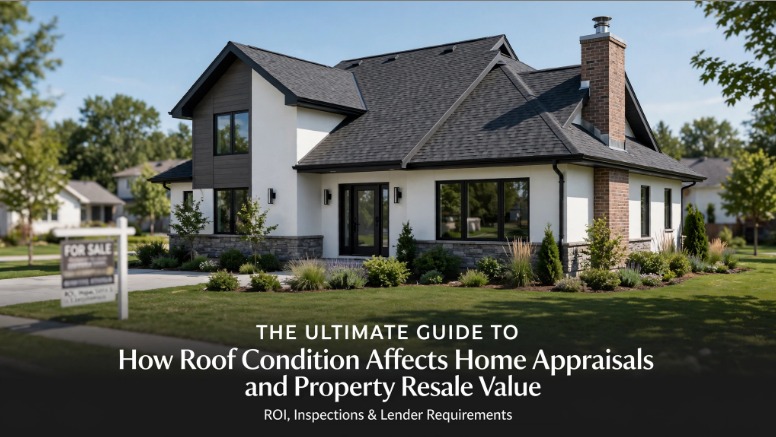
In residential real estate transactions, prospective buyers often focus on cosmetic features such as granite countertops, modern kitchen cabinetry, and open floor plans. However, professional real estate appraisers, home inspectors, and mortgage underwriters prioritize the structural integrity of the home’s exterior envelope. Among all exterior assets, the condition, age, and material quality of a residential roof carry the greatest weight in determining final property valuations, lender loan approvals, and purchase contract negotiations.
Bottom Line Up Front: A compromised or aging roof is one of the leading causes of delayed home sales, renegotiated purchase prices, and failed mortgage appraisals. Upgrading a deteriorated roof prior to listing or maintaining documented semi-annual inspection records yields an average 60% to 70% return on investment (ROI) at resale, eliminates buyer financing contingencies, and prevents costly escrow repair credits during closing.
1. The Appraisal Impact: How Roof Quality Dictates Valuation and Lending
When a licensed appraiser evaluates a residential property, the roof’s remaining useful lifespan directly influences the appraised value and determines whether the property meets secondary mortgage market standards.
According to valuation standards established by the Appraisal Institute Residential Property Valuation Standards, appraisers must evaluate physical depreciation and functional obsolescence on major building assemblies. A roof with less than three to five years of remaining service life is flagged as a major deferred maintenance item, resulting in direct dollar-for-dollar valuation deductions.
Key appraisal and financing obstacles tied to roof condition include:
- Lender Mandatory Repair Requirements: Conventional lenders and government-backed loan programs (such as FHA and VA loans) require properties to be structurally sound, weather-resistant, and free of active roof leaks before mortgage funds are disbursed.
- Homeowners Insurance Contingencies: Property insurance carriers increasingly refuse to issue new homeowner policies on roofs older than 15 to 20 years without a certified clean inspection, creating immediate closing roadblocks for buyers.
- Appraisal Value Adjustments: Homes featuring recently replaced architectural shingle, tile, or cool roof systems receive positive comparative market adjustments against neighborhood comp sales with older roofs.
2. Return on Investment and Material Performance in Real Estate
Replacing or professionally restoring an aging roof is widely recognized as one of the highest-value exterior capital improvements a property owner can undertake before selling.
Data published in the National Association of Realtors (NAR) Remodeling Impact Report confirms that a new roof consistently ranks among the top exterior home projects for cost recovery, with over 30% of real estate agents reporting that a new roof directly helped close a home sale.
Key roofing materials and their appeal to real estate buyers include:
- Architectural Asphalt Shingles: The industry standard for single-family homes, offering 25 to 30 years of expected service life, high wind resistance, and clean curb appeal at an accessible price point.
- Concrete and Clay Tiles: Highly desirable in warm Western and coastal markets due to their 40-to-50-year longevity, natural fire resistance, and distinct architectural style.
- Standing Seam Metal Roofing: Attracting premium buyers seeking 50+ year lifespans, extreme weather resilience, and modern design aesthetics.
- Solar-Reflective Cool Roofs: In high-heat climate zones, cool roof shingles and single-ply membranes that reduce attic heat gain offer strong marketing appeal for energy-conscious buyers seeking lower utility bills.
3. Navigating Home Inspections and Seller Concessions
During the buyer’s home inspection contingency period, the roof is scrutinized closely by certified home inspectors. Even minor flashing gaps, missing shingles, or moss accumulation can lead to extensive repair requests.
Under technical guidelines from the National Roofing Contractors Association (NRCA) Guidelines, regular maintenance and proactive repairs around chimneys, skylights, and plumbing vents prevent minor moisture intrusion from turning into costly structural decking rot.
When an inspection report reveals unaddressed roof wear, buyers frequently demand substantial credits at closing or request that a licensed roofing contractor perform complete repairs before escrow closes.
As Salomon Urizar-Jimenez, owner of Astro Roofing, a licensed roofing contractor in Oakland, CA, explains, pre-listing roof inspections protect real estate deals:
“In real estate transactions, a damaged or neglected roof is the number one reason buyers ask for massive price reductions or walk away entirely. When buyers see water stains or missing shingles on an inspection report, they immediately assume the worst and overestimate replacement costs. Having a licensed roofing contractor conduct a pre-listing inspection to replace worn flashings, seal pipe boots, and provide a clean roof certification gives buyers complete confidence and keeps the sale moving smoothly without last-minute escrow renegotiations.”
4. Frequently Asked Questions (Roofing in Real Estate Transactions)
Should a seller replace their roof before putting their house on the market?
If the roof is nearing the end of its lifespan (over 20 years old) or has active leaks, replacing it before listing often prevents buyer mortgage rejections and maximizes final sale price. If the roof has 5 to 10 years of remaining life, performing minor spot repairs and securing a clean inspection certification is usually the most cost-effective approach.
Can a buyer obtain a mortgage on a home with an old roof?
It depends on the loan type and roof condition. If an appraiser notes active leaks, missing shingles, or severe curling, lenders will require a formal roof certification from a licensed roofer stating the roof has at least two to three years of serviceable life before approving financing.
Summary Checklist for Homebuyers and Sellers
- Schedule an Independent Roof Inspection: Hire a licensed roofing contractor to inspect the roof field, flashings, underlayment, and attic decking before listing or purchasing.
- Verify Insurance Eligibility: Contact home insurance carriers early in the transaction to confirm the roof age meets current policy underwriting criteria.
- Review Warranty Transferability: If the roof was recently replaced, gather original manufacturer material warranties and contractor workmanship guarantees to transfer to the new buyer.
- Address Minor Flashing Repairs Upfront: Reseal loose vent pipe boots and replace cracked shingles prior to the buyer’s home appraisal inspection.