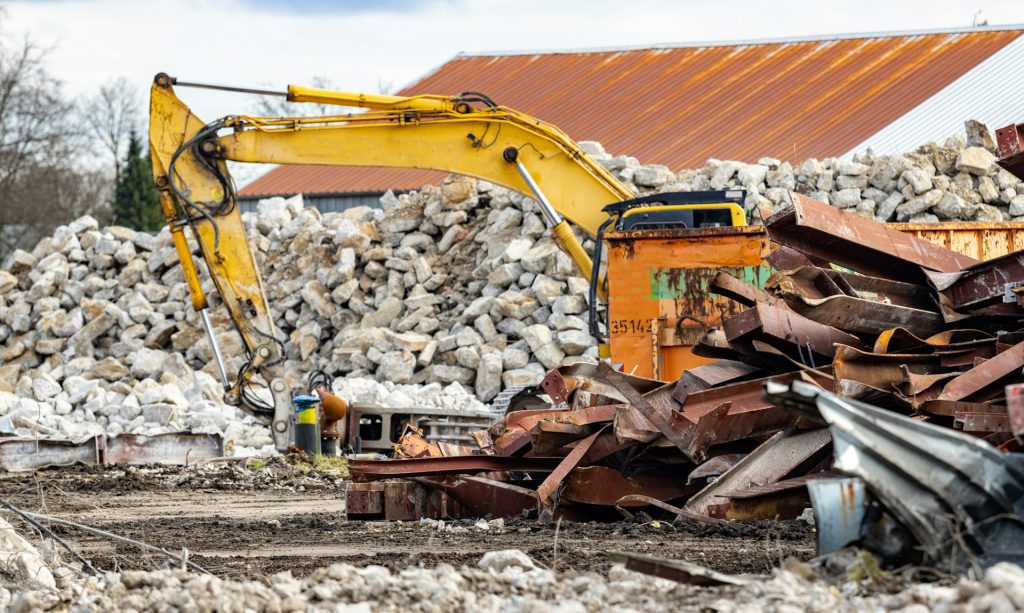
Construction and demolition waste accounts for roughly 40% of Australia’s total waste output. You need a waste management plan before breaking ground. More than 20 million tonnes of waste end up in landfills every year. The environmental and financial effect is massive. A construction waste management plan helps minimise environmental harm, meet regulatory standards and control costs. Proper planning can lead to major savings by reducing landfill disposal and generating revenue from recyclable materials. This piece will walk you through what a waste management plan is, how to assess your project’s waste generation, set up systems that work and implement monitoring protocols for waste management plan construction.
Understanding What a Waste Management Plan Is
Why construction waste management matters
A waste management plan construction addresses several critical concerns that affect project success. Proper waste handling reduces disposal costs and opens opportunities to generate revenue from recyclable materials. Planning ahead also means organising the right equipment early, including skip bin hire to ensure materials are sorted and removed efficiently from the moment work begins. Sites with organised waste management protocols maintain safer work environments by eliminating hazards from uncontained debris and toxic materials. Businesses that implement resilient waste strategies demonstrate environmental responsibility, which strengthens corporate reputation and attracts clients who value sustainability.
Key components of a construction waste management plan
What is a waste management plan? It’s a document outlining how waste will be handled throughout a construction project. The plan details expected waste types and methods to reduce, reuse, or recycle materials. It also covers procedures that ensure legal and environmental compliance.
A complete construction waste management plan has:
- Project details with site location, contact information and project scope
- Waste audit identifying types and estimated quantities of waste, categorised as general, recyclable, organic or hazardous
- Clear objectives and measurable targets to reduce waste and improve recycling rates
- Management methods that specify whether materials will be reused on-site, recycled or disposed
- Waste handling procedures covering segregation, collection, storage and transportation
- Roles and responsibilities assigned to site managers, supervisors and contractors
- Training programs and communication strategies
- Monitoring systems with key performance indicators and review schedules
- Emergency procedures to handle spills or waste-related incidents
- Documentation requirements and reporting guidelines
The level of detail should reflect the project’s size and complexity. Waste management plans must be updated regularly to record how waste is managed and audit disposal locations.
Regulatory requirements and compliance
Each Australian state and territory operates under its own legislative framework for waste management. Construction projects typically require a waste management plan as part of development applications submitted to local councils. Failure to comply results in serious penalties.
New South Wales operates under the Protection of the Environment Operations Act 1997, which requires waste to be transported to lawful facilities. Both waste owners and transporters face legal responsibility to prove proper disposal. The maximum penalty for illegal dumping that harms the environment reaches $7.6 million or seven years imprisonment. On-the-spot fines range from $11,500 for individuals to $23,000 for corporations. Knowingly supplying false information about waste carries penalties up to $760,000 for corporations or $370,000 and 18 months imprisonment for individuals.
Western Australia requires builders to submit waste management plans under the Waste Avoidance and Resource Recovery Act 2007. Different jurisdictions have set varying resource recovery targets. South Australia aims for 90% recovery by 2020 and Queensland targets 80% by 2024.
Assessing Your Project’s Waste Generation
Identify types of waste your project will produce
You need a full picture of what your site will generate before you develop your waste management plan construction. Construction waste has surplus materials from site clearance, construction, modernising, demolition and road works. This includes concrete, bricks, timber, metals, plastics, glass, soil and potentially hazardous substances like asbestos, lead paint and contaminated insulation.
Australia’s construction industry generates an average of 141 kg of waste per square metre built. Concrete waste remains the most common material on construction sites. It comes from demolitions, incorrect mixes or surplus batches. Wood waste follows closely in residential framing projects. Metal streams include steel rebar, copper wiring and aluminium sheets.
Hazardous materials require special attention. Asbestos, lead, mercury, fluorescent bulbs, paint thinners and aerosol cans fall under strict disposal regulations. You must handle contaminated materials according to safety protocols. They cannot be mixed with general waste streams.
Estimate waste volume and quantities
Measuring construction waste generation is fundamental to developing efficient management strategies. Several estimation methods exist with varying accuracy levels. The waste generation rate (WGR) method calculates waste per unit of construction area. It multiplies the WGR by total construction area. Some projects show a waste generation index of 40.7 kg/m².
Variable modelling provides more accurate early-stage predictions. It takes into account project characteristics beyond construction area, such as structural types and design parameters. Bill of quantity (BoQ) methods estimate waste based on project design and enable waste source tracking. BIM-based estimation integrates these calculations within modelling software. This allows automatic updates throughout design stages.
Separate recyclable, reusable, and landfill materials
Classification determines proper handling pathways. Waste in Australia falls into categories that include general solid, hazardous, restricted solid, liquid and special waste. You must separate materials before classification to avoid dilution of contaminants.
Pre-demolition audits identify reusable elements before they enter waste streams. Architectural features like doors and stained glass, structural beams and quality fixtures can be salvaged. You can crush concrete and masonry to recycle them. Metals hold significant value for recovery.
Create a waste baseline or forecast
A waste baseline enables tracking actual generation against predictions. Forecasting construction waste as projects progress is pivotal for management efforts. The S-curve model can indicate specific cumulative waste generation at time points. This proves useful for planning site storage areas and transport logistics. This baseline serves as a measure against which actual waste generation can be compared. It allows interventions when necessary.
Setting Up Your Waste Management System
Define waste management goals and targets
Establish measurable objectives for your construction waste management plan before work begins. Set landfill diversion targets based on project type and material streams. Queensland achieved an 83.3% diversion rate for construction and demolition waste in 2023-24, which shows what you can achieve. Your waste management plan should follow the hierarchy: avoid unnecessary resource consumption, reduce waste quantities through modified work methods, reuse materials both on-site and off-site, recycle through licensed facilities, and dispose only as a last resort.
Assign roles and responsibilities
Define clear accountability for your project team. Site managers oversee secure material storage and coordinate subcontractors for on-site reuse. They monitor bins for contamination and ensure proper signage directs staff to recycling stations. Contractors submit waste management plans that identify responsible individuals, waste reduction actions, and regular review meetings. Subcontractors must take steps to prevent waste generation and implement active waste management procedures. They order correct material quantities with minimal packaging and separate off-cuts for reuse or recycling.
Choose waste handling methods and procedures
Implement waste segregation systems to aid recovery. Separate waste into dedicated bins, trucks, or designated areas with clear labels for on-site reuse, off-site reuse, or licensed facility disposal. Materials for off-site reuse must comply with NSW EPA Resource Recovery Orders. Receivers must hold valid Resource Recovery Exemptions. Classify waste according to EPA guidelines before transportation. Storage areas require clear labels that indicate waste types. Stockpiles need separation by a minimum of three metres when stored outside enclosed bays.
Select disposal facilities and recycling partners
Choose waste contractors and processing facilities that hold third-party verification of compliance with reporting criteria issued by qualified auditors. Request recycling statistics from potential partners. Facilities use residual-to-landfill percentages as performance indicators. Visit recycling facilities to assess operations and request access to processing reports. Contractors must provide monthly waste reports throughout construction, supported by disposal dockets that state waste amounts and destination locations. Reports should detail total waste removed by weight, material breakdowns, recovery locations, landfill residuals, and recycled product outputs.
Plan logistics, equipment, and bin placement
Determine storage requirements based on ease of use, safety, and site aesthetics. Position containers for easy worker access while maintaining safe operations and limiting public site access. Different waste types require containers that match their characteristics: heavy materials like concrete need reinforced skips, while light bulky materials require larger volume bins. Establish collection schedules based on project size, waste types generated, and available space. Make adjustments during high-volume phases like demolition. Negotiate removal logistics and pricing with contractors and ensure litter management controls like load covering during collection and transportation. Plan transportation routes that account for disposal locations and local traffic impacts.
Implementing Monitoring and Communication Protocols
Establish tracking and documentation systems
Track every waste movement through systematic documentation. Site personnel should conduct daily visual inspections of waste storage areas. Inspection checklists get recorded to report to site managers on a weekly basis. Maintain a project-specific waste register that records volumes and disposal destinations for each major waste stream. All waste collections need supporting dockets, receipts, or consignment documentation retained to verify audits.
Construction waste management software makes this process efficient. Purpose-built platforms provide automatic audit trails and deliver 60-70% time savings versus Excel workflows. These systems verify data against regulated databases and identify duplicate entries. They maintain audit trails that regulators accept as verifiable evidence.
Schedule waste collection and removal
Coordinate removal timing based on bin fill levels and project phases. High-volume periods like demolition require more frequent pickups. This prevents overflow and site hazards. Waste contractors must issue monthly reports supported by disposal dockets throughout construction duration.
Create team training and awareness programs
Site-specific induction training covers waste procedures and storage locations. It also addresses separation requirements. Toolbox talks reinforce expectations. Appointed waste supervisors ensure site-wide adherence to your waste management plan construction.
Set up reporting guidelines for stakeholders
Compare projected waste quantities against actual generation. Note disposal methods to improve future estimations. Monthly reports detail total waste removed by weight and material breakdowns. They include recovery locations and landfill residuals. Final project summaries unite this data to review with stakeholders and measure future projects.
Conclusion
A well-laid-out waste management plan protects your project from costly penalties and reduces environmental effect. You’ll achieve better cost control through materials recovery and demonstrate your commitment to green practices. We’ve covered waste assessment and monitoring protocols to give you a framework you can implement right away. Start your next construction project with these strategies. You’ll see improvements in waste diversion rates and overall project efficiency.