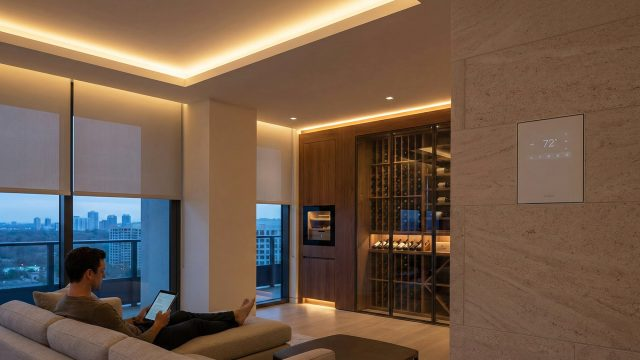
Luxury interiors are increasingly defined by how effortlessly a home works, not simply by how expensive its finishes appear. A beautifully designed room can still feel inconvenient if glare makes the television difficult to watch, afternoon sun overheats the space, or large windows require several manual adjustments throughout the day.
That is one reason automated window treatments are becoming a more practical part of modern residential design. By combining clean aesthetics with easier control over daylight and privacy, motorized blinds can support both the visual character of a room and the way people actually use it.
The most successful systems are not technology added for novelty. They solve everyday problems quietly in the background.
Automation Works Best When It Feels Invisible
Smart-home technology often makes the strongest impression when homeowners barely need to think about it.
Window treatments are a good example.
Instead of walking through several rooms each morning to adjust individual blinds, homeowners can use a remote, smartphone, compatible voice system, or scheduled automation depending on the setup.
For large properties, open-concept living spaces, and rooms with several windows, this can turn a repetitive task into a simple routine.
The technology can be particularly useful in spaces where window coverings are difficult to reach. High windows, tall glazing, stairwells, and windows positioned behind large furniture can make manual operation inconvenient.
Motorization allows these areas to remain functional without adding visible operating cords or requiring awkward access.
Light Control Becomes Part of the Daily Routine
Natural light is one of the most desirable features in modern architecture, but more glass also means more exposure to changing sunlight.
A room that looks perfect at 9 a.m. may experience intense glare later in the afternoon.
Smart window treatments allow homeowners to respond more easily to those changes. Depending on the system, blinds can be opened, closed, or adjusted at different times of the day.
This is particularly useful in:
- living rooms with large windows
- home offices
- media rooms
- bedrooms
- dining areas
- spaces with strong afternoon sunlight
Rather than treating blinds as something that stays in one position all day, automation makes them a more active part of the room.
Homeowners considering smart blinds can also explore systems that integrate with compatible apps, remote controls, voice assistants, and scheduled routines, depending on the specific motor and smart-home setup.
The benefit is less about operating blinds from a phone simply because it is possible and more about making light control fit naturally into daily life.
Privacy Can Be Managed More Consistently
Large windows create attractive interiors, but they can also create privacy challenges, especially in urban homes.
Toronto condos, townhomes, and houses positioned close to neighbouring properties may need window coverings adjusted several times throughout the day.
In the morning, homeowners may want maximum natural light. In the evening, once interior lights are on, stronger privacy becomes more important.
Scheduling can make this transition more consistent.
Blinds can be programmed to close around a chosen time, reducing the need to remember every window individually. This can be particularly useful in homes with multiple floors or large groups of windows.
The result is a small convenience that becomes noticeable because it occurs every day.
Motorization Complements Minimalist Interior Design
Many contemporary luxury interiors rely on clean lines, uncluttered surfaces, and carefully controlled architectural details.
Window coverings can either support that aesthetic or interrupt it.
Motorized systems can reduce the visual presence of cords and manual operating mechanisms. When correctly measured and installed, they can appear integrated into the window rather than attached as an afterthought.
This is especially effective with roller shades and other streamlined window treatments.
Fabric selection remains important. Automation cannot compensate for a colour, texture, or opacity that does not suit the room.
A successful installation combines the right operating system with a material that works with the surrounding architecture, furniture, and lighting.
Large Windows Make Automation More Valuable
One of the strongest cases for motorization is scale.
Large panes of glass have become common in modern architecture because they create visual openness and connect interiors with outdoor views. However, the window treatments required for those openings can also become larger and heavier.
Manually operating several wide shades every day may become inconvenient.
Motorized blinds allow large coverings to be adjusted more easily and can create a cleaner experience when multiple shades are operated together.
For a wall of windows, coordinated movement can also look more refined than adjusting each blind separately.
This is one area where the practical and visual benefits of automation overlap.
Smart Blinds Can Work With Different Levels of Technology
Not every homeowner wants a fully connected smart home.
Fortunately, motorization does not necessarily require the same level of technology in every property.
Some users may prefer a simple remote control. Others may want smartphone access, scheduling, or integration with a broader home-automation ecosystem.
There are also differences in power sources. Depending on the product, systems may use rechargeable batteries, plug-in power, or hardwired electrical connections.
This is why the planning stage matters.
For existing homes, battery-powered options may reduce the need for additional electrical work. In new construction or major renovations, hardwired systems may be easier to plan before walls and finishes are completed.
The best system is the one that matches how the homeowner actually wants to use the blinds.
Think Beyond the Technology
When comparing blinds toronto homeowners may install in a modern property, it is easy to focus too heavily on apps, motors, and voice commands.
The basic window-treatment decisions still matter.
Before choosing a system, consider:
- how much privacy the room requires
- whether the space needs light filtering or stronger room darkening
- how frequently the blinds will be adjusted
- the size and position of the windows
- fabric colour and texture
- whether the system needs to integrate with existing technology
- how the blinds will be powered
- ease of maintenance
A well-selected manual blind can be better than a poorly planned automated one.
Technology should improve the window treatment rather than distract from its primary purpose.
Bedrooms and Media Rooms Benefit in Different Ways
Automation can also be customized according to how a room is used.
In a bedroom, scheduled blinds may support a consistent morning routine by opening gradually at a chosen time. Blackout materials can provide stronger control over exterior light when closed.
A media room has different priorities.
Here, the goal may be to reduce glare quickly when a television or projector is being used. A motorized shade allows the room to transition from a bright social space to a darker viewing environment without manually adjusting every window.
In each case, the same technology solves a different problem.
That is what makes room-specific planning more valuable than installing identical settings throughout the entire home.
Reliability Matters More Than Novelty
A luxury feature should make a home easier to use, not create another maintenance problem.
Before selecting an automated window-treatment system, homeowners should consider reliability, compatibility, motor noise, controls, charging or power requirements, and what happens if internet connectivity is unavailable.
Some systems can still operate using a dedicated remote even when Wi-Fi is unavailable, depending on the product configuration.
These details are easy to overlook during a showroom demonstration but matter significantly after installation.
A system that operates smoothly every day will feel more luxurious than one with more features but inconsistent performance.
Modern Luxury Is Increasingly About Effortless Function
Smart blinds reflect a broader shift in luxury residential design.
Comfort is becoming more automated, but the technology is often being hidden rather than displayed. Homeowners want natural light without constant glare, privacy without repeatedly walking from room to room, and large architectural windows without inconvenient manual controls.
Motorized window treatments can support those goals when they are selected carefully.
The most effective installations combine appropriate fabrics, reliable operating systems, thoughtful placement, and technology that fits the homeowner’s routine.
In that sense, smart blinds are not simply a gadget added to a luxury home. They are part of a larger design philosophy in which the best technology quietly makes the space more comfortable, functional, and enjoyable to live in.