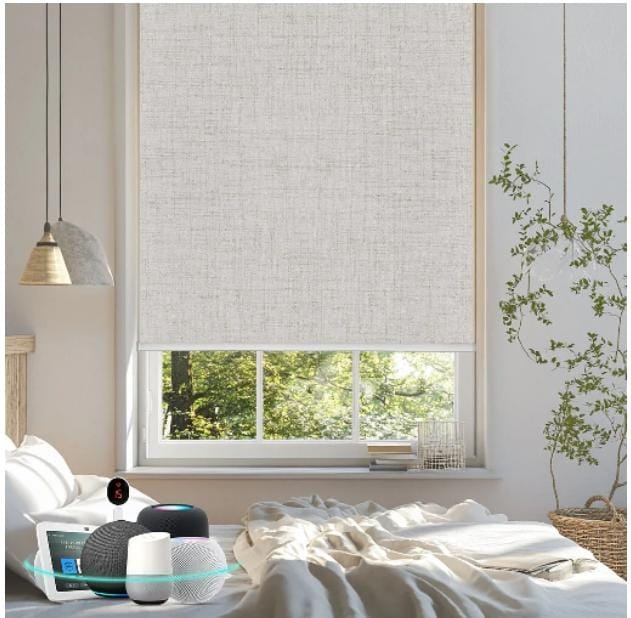
A dark bedroom can make it easier to fall asleep and avoid waking too early. With blackout blinds motorized through a quiet built-in system, you can control bedroom light without getting out of bed or pulling cords by hand. They can close automatically before bedtime and open gradually in the morning. Unlike decorative roman blinds, which may need a blackout lining to reduce incoming light, purpose-made blackout models use opaque fabric designed for stronger room darkening. Their effectiveness still depends on the fit, mounting position, and size of the gaps around the window.
How Light Exposure Affects Your Sleep Cycle
Light helps the body determine when to feel alert and when to prepare for sleep. Bright light in the evening can make the bedroom feel less restful, while early morning sunlight may wake you before your planned alarm. Streetlights, passing vehicles, illuminated signs, and nearby buildings can also create noticeable changes in bedroom brightness during the night.
The effect is often more obvious for light sleepers and people with irregular schedules. Even when outside light does not fully wake you, it can make the sleeping environment feel less settled. A consistently dark room removes these visual changes and creates a clearer separation between daytime activity and nighttime rest.
Daytime sleepers face an even greater challenge. Shift workers may need to sleep when sunlight is strongest, making ordinary light filtering window treatments less suitable. Blackout fabric provides better control by preventing light from passing directly through the material.
How Motorized Blackout Blinds Create a Darker Bedroom
Motorized blackout blinds combine opaque fabric with powered operation. The motor raises or lowers the blind evenly, helping it return to the same position each time. This avoids the uneven edges that can appear when a manual blind is pulled down at an angle or stopped too high.
The mounting style affects the final level of darkness. Inside-mounted blinds sit neatly within the window recess, but small gaps are usually required so the fabric can move freely. Light may enter through these spaces. Outside-mounted blinds extend beyond the opening and can provide greater coverage when they overlap the top and sides of the window.
Motorization does not eliminate edge gaps on its own. Accurate measurements and sufficient fabric coverage remain necessary. Bedrooms that require near-total darkness may benefit from side channels, an outside mount, or curtains placed over the blind edges.
How Scheduled Blind Control Supports a Consistent Routine
A motorized system can close the blinds at the same time each evening. This creates a visible signal that the active part of the day is ending. It also prevents the blinds from being left open because someone forgot to close them before getting into bed.
Scheduled opening can support a more gradual morning routine. Instead of waking to a sudden alarm in complete darkness, you can set the blinds to open close to your preferred wake-up time. Natural light then enters the room without requiring immediate movement or manual adjustment.
Schedules are also helpful when bedtime changes throughout the week. Many systems allow separate weekday and weekend settings. Some can follow local sunrise and sunset times, although the available controls depend on the motor and smart home platform.
How Motorized Blinds Reduce Nighttime Disruptions
Manual blinds may require you to leave bed if outside lighting changes or if the window was left uncovered. A remote, wall control, voice command, or app lets you adjust motorized blinds from across the room. This reduces movement and limits exposure to bright overhead lights or phone screens.
Group control is useful in bedrooms with several windows. All blinds can close together instead of being adjusted one at a time. The room reaches a consistent level of darkness more quickly, and each blind can return to a preset position.
Motorized designs also remove hanging operating cords. This creates a cleaner bedroom appearance and can reduce cord-related risks in nurseries and children’s rooms.
Who Benefits Most From Motorized Blackout Blinds?
Motorized blackout blinds are especially useful for shift workers, light sleepers, parents managing daytime naps, and people with tall or hard-to-reach bedroom windows. They also suit anyone who wants the room to darken automatically as part of an evening routine.
They are not a complete solution for every sleep problem. Noise, room temperature, bedding, and personal habits also shape sleep quality. However, when unwanted light is the main disturbance, well-fitted blackout blinds offer direct control over the bedroom environment. Motorization makes that control easier to use consistently, which is often the most practical benefit.