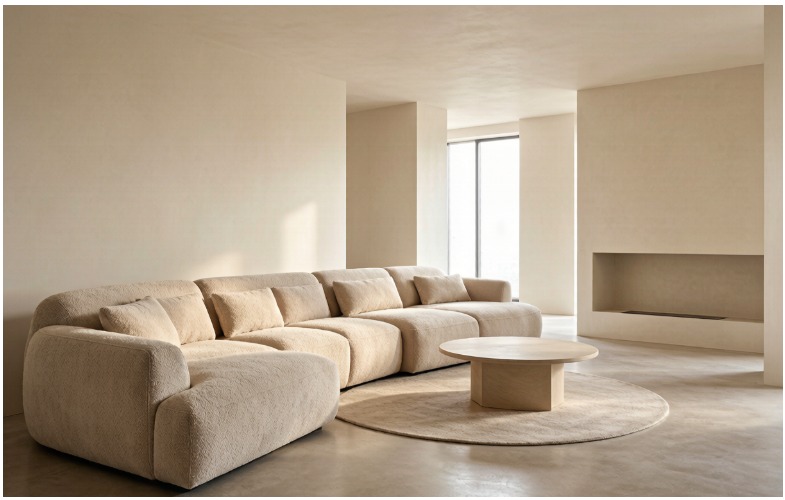
You want to spread out. An oversized couch sounds like the dream until it eats your whole living room. I have been there, and the regret of a too big sofa is real and expensive.
When I help friends shop, the first page I send is our oversized couch buying guide, because size is the make or break detail. In this article I will show you how to measure, how to clear the door, and how to style a big sofa so the room still breathes instead of feeling like a storage unit.
What Counts as Oversized?
Most standard sofas run 80 to 90 inches wide. An oversized couch usually starts around 100 inches and can stretch past 130 with a chaise or a sectional. Depth also grows, often 40 inches or more, so the seat fits two people lying down for a movie.
Weight follows size. A big sofa can weigh 200 pounds or more, which matters for delivery up stairs and for the floor underneath. Check your floor rating if you live in an older building with soft wood joists.
**Bigger is not always better. The right oversized couch fills the room without swallowing it or blocking the light from your windows.**
Measure the Room First
Grab a tape measure before you fall in love with a photo. Mark the sofa footprint on the floor with newspaper or masking tape, then live with that outline for a day. If the taped area feels too dominant, size down before you order.
| Step | What to check |
| Wall length | Match sofa width to the wall, leave 6 inches minimum on each side |
| Walkway | Keep 60 to 80 cm in front for easy movement |
| Door and window | Do not block the window or the main path across the room |
| Radiator | Keep the sofa off the heat source to protect the fabric |
Do not forget the TV view. Sit in your usual chair and check that the sofa does not block the screen or the path to the kitchen. A sofa that forces you to walk around it will annoy you within a week.
Will It Fit Through the Door?
A sofa that fits the room is useless if it cannot enter the house. Most sofas are 32 to 36 inches deep. Tilted on its side, a 30 inch door usually clears it. Oversized models over 40 inches deep often need a 36 inch entry, which many older homes lack.
Measure the clear opening, not the door slab. A labeled 32 inch door often gives only about 30.5 inches once the frame and stop are counted, and that single inch can flip the answer from yes to no.
**Remove the legs first. That alone gains 4 to 6 inches of height and saves many delivery failures on delivery day.**
Check every checkpoint on the path: front door, hallway width, stair landing, and the final room door. Interior doors are often just 28 to 30 inches, the most common failure point after the stairs, so measure those too.
The Diagonal Depth Trick Most People Miss
Retailers list width, depth, and height. They rarely list diagonal depth, the corner to corner measurement that decides if the sofa clears a turn in your hallway or on the stairs.
Ask customer service for it before you buy. If the diagonal is smaller than your door opening, you are safe. If a turn is tight, compare sofa length minus hallway width against the corridor on the other side of the corner.
I once saved a friend from a return by asking for the diagonal. Her sofa was 36 inches deep, too much for her 30 inch door, but the diagonal was 28 inches, so a sideways tilt got it in. She never would have known without that one number.
**Modular sections clear almost any door because each piece is small. That is the real fix for a narrow path and a tight stair.**
Styles That Work Big
- Deep seated sectional with a chaise for movie nights and Sunday naps.
- U shaped pit style for family hangouts, but only in a large open room.
- Cloud style oversized couch for a soft, sink in feel after a long day.
- Block arm MCM style if you want retro with the scale and the warmth.
Styling So It Does Not Crowd
Float the sofa to define a zone in an open plan room, back to the dining area. Keep the surrounding pieces low and light so the big shape stays the hero and the eye keeps moving around the space.
Use one large rug under the front legs to anchor the seating. Skip the second sofa. A pair of slim accent chairs balances the weight better than more bulk and leaves room to walk.
**Paint or style around the sofa, not against it. A warm white wall behind a big couch makes the piece feel calm instead of heavy and closed in.**
Is an Oversized Couch Right for You?
If your room is under 10 feet wide, an oversized couch will fight you daily and shrink the space visually. Choose a standard 3 seater instead and keep the walkways open for a calmer room.
For rooms 13 feet and up, go big and enjoy it. An oversized couch becomes the gathering point for family and friends, and the right one will outlast every trend that comes after it.
Caring for a Big Sofa
Big sofas collect more crumbs in the seams. Vacuum the cushions weekly and rotate them every month so the foam wears evenly across the long seat. A washable cover saves you on a big piece more than on a small one.
**A slipcover in a second color lets you reset the whole room for the price of one wash, a trick I use between seasons to keep things fresh.**
Budget and Value
Oversized sectionals run from about 1200 dollars for a basic model to over 4000 for a designer pit. Spend on the frame and the fill first, because those are the parts you cannot swap later without buying again.
I would rather see you buy a smaller, better built sofa than a giant one with a pine frame. The giant will squeak and sag while the smaller one stays solid, and you will actually use the smaller one more often.
**Look for a corner blocked hardwood frame and a foam core with a fiber wrap, then size up only if the room truly allows the footprint.**
Delivery Day Tips
On delivery day, clear the path and remove the front door from its hinges if needed. That one move gains 1.5 to 2 inches and rescues many tight entries. Have a tape measure ready so the team can confirm before they struggle.
If the sofa still will not fit, a modular version solves it because each section is small. Ask the store about modular before you refuse delivery, since a return costs you time and often a restock fee.
Pairing With Other Seats
A big sofa dominates, so choose partners that contrast in scale, not match it. A pair of low armchairs or a single lounge chair balances the weight and gives guests their own spot without adding bulk.
I like one mid century lounge chair opposite the sofa. The wood legs echo the sofa, the smaller size keeps the room open, and the contrast makes both pieces look intentional rather than like a matched set.
Ready to go big? Look for fully assembled sectionals and deep seated couches that ship ready to use.