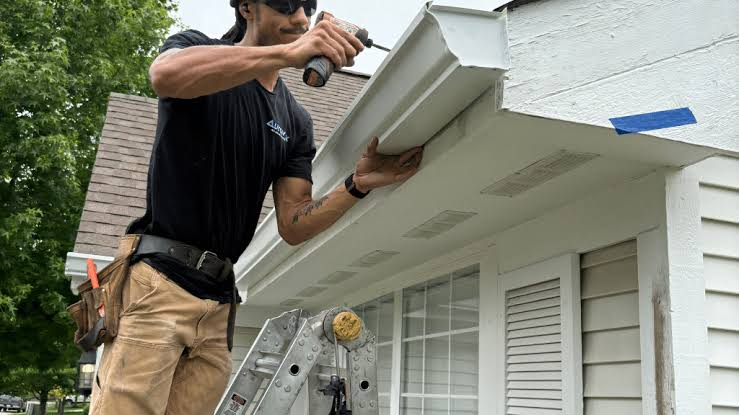
Gutters rarely get attention until something goes wrong. A drip over the front door, a puddle along the foundation, or a section sagging away from the fascia board suddenly makes them impossible to ignore. At that point, most homeowners face the same question: should you fix the problem area, or is it time to replace the whole system? The right answer depends on the age of your gutters, the type and extent of the damage, your budget, and how long you plan to stay in your home. This guide walks through each factor so you can make a confident, cost-effective decision instead of guessing.
Why Your Gutter Decision Matters More Than You Think
Gutters do one job, but it is an important one: they move rainwater and snowmelt away from your roof, siding, and foundation. When they fail, water goes where it should not, and the damage often shows up far from the gutter itself. A single leaking seam can seem minor, yet over a few seasons it can contribute to problems that cost far more than the gutters ever did.
Poorly functioning gutters can lead to:
- Foundation damage: Water pooling near the base of your home can erode soil, cause settling, and create cracks in the foundation.
- Basement and crawl space moisture: Overflow often finds its way below grade, leading to leaks, mold, and musty odors.
- Fascia and soffit rot: Water that spills behind the gutter soaks the wood trim and roof edge, causing decay.
- Siding stains and deterioration: Constant splashing discolors siding and can work its way behind it.
- Landscape erosion: Uncontrolled runoff washes out mulch, flower beds, and topsoil.
- Ice dams in cold climates: Clogged or sagging gutters trap water that freezes and pushes back under shingles.
Because the stakes are this high, choosing between a quick fix and a full replacement is not just about the gutters. It is about protecting the rest of your home.
When Patch Repairs Make Sense
Not every gutter problem calls for a full tear-off. If your system is relatively young and the damage is limited to one or two spots, a targeted repair can restore function at a fraction of the cost. Patch repairs are usually the smart choice when the issue is isolated, and the surrounding material is still in good shape.
Consider a repair if you are dealing with:
- A small leak at a seam or corner: Resealing a joint with gutter sealant often stops the drip completely.
- A minor hole or crack: Small punctures can be covered with a metal patch and sealant.
- Loose or missing hangers: Re-securing or replacing fasteners can fix sagging sections without new gutters.
- A damaged downspout: Downspouts are inexpensive and easy to replace on their own.
- Improper pitch in one run: Re-hanging a single section at the correct slope can eliminate standing water.
- Clogs and overflow: Sometimes the gutters are fine and simply need a thorough cleaning or a guard system.
The key word is isolated. One leaky corner on a ten-year-old aluminum system is a repair job. Leaks at five different seams on a twenty-five-year-old system are a warning sign that more failures are on the way. It also helps to be honest about repair history. If you have patched the same area two or three times already, the material around it is likely breaking down, and each new patch buys less time than the last.
Signs It Is Time for a Full Gutter Replacement
At some point, repairs stop being a good investment. Gutters have a finite lifespan, and once a system reaches the end of it, you will spend more chasing problems than you would on a new installation. Typical lifespans vary by material: vinyl often lasts 10 to 20 years, aluminum and galvanized steel around 20 years, and copper can last 50 years or more with proper care.
A full replacement is usually the better choice if you notice:
- Widespread rust or corrosion: Surface rust spreads, and once it eats through the metal, patching becomes a losing battle.
- Multiple leaks along different runs: Several failing seams indicate the whole system is aging out.
- Cracks or splits along the length of the gutter: These often signal brittle, weathered material, especially in vinyl.
- Persistent sagging or pulling away from the house: If re-hanging does not hold, the gutters or the fascia behind them may be compromised.
- Peeling paint or rot on fascia boards: This suggests water has been escaping behind the gutters for a long time.
- Water damage or mold in the basement: Chronic drainage failure often points back to the gutter system as a whole.
- Undersized gutters: If your gutters overflow in every heavy storm even when clean, they may simply be too small for your roof area.
- Frequent repair bills: Paying for service calls every year adds up quickly.
Replacement also makes sense when you are already doing related work. If you are installing a new roof, replacing fascia, or updating siding, coordinating a gutter replacement at the same time saves labor and ensures every component works together.
Comparing the Costs Over the Long Term
On paper, patch repairs almost always look cheaper. A single repair visit costs far less than a whole-home installation. But the upfront price only tells part of the story. The more useful comparison is total cost over the next ten years or so.
When you weigh your options, factor in:
- Upfront cost: Repairs are inexpensive per visit, while replacement is a larger one-time investment.
- Frequency of future repairs: Older systems tend to need repeat service, and those calls add up.
- Cost of water damage: A failed gutter that leads to foundation or fascia repair can cost several times more than the gutters themselves.
- Maintenance needs: New systems, especially seamless ones, typically require less ongoing upkeep.
- Home value and curb appeal: Fresh, well-fitted gutters improve appearance and can be a selling point.
- Warranty coverage: New installations often come with material and workmanship warranties, while patch jobs usually do not.
A helpful rule of thumb: if the cost of repairs over the next few years approaches 50 percent of a new system, or if your gutters are within a few years of their expected lifespan, replacement usually delivers better value. Ask a contractor to quote both options so you can compare them side by side.
Why Seamless Gutters Are Worth Considering
If you decide to replace your system, it is worth looking at seamless gutters. Traditional sectional gutters are sold in pre-cut lengths and joined together on site, which creates seams every 10 to 20 feet. Those seams are the most common source of leaks. Seamless gutters are formed on site from a continuous roll of metal and cut to the exact length of each run, so the only joints are at the corners and downspouts.
The benefits of choosing seamless gutter replacement services include:
- Fewer leaks: With far fewer seams, there are fewer places for water to escape.
- Less maintenance: Seams catch debris, so removing them reduces clogs.
- Custom fit: Each section is measured and formed for your home, which improves drainage and appearance.
- Cleaner look: Continuous runs create a smooth, streamlined profile that boosts curb appeal.
- Longer lifespan: Fewer weak points generally mean the system holds up better over time.
- Color and material options: Seamless gutters are available in many colors and in aluminum, steel, or copper.
Because seamless gutters require specialized forming equipment, they are installed by professionals rather than as a DIY project. When comparing providers, look for experienced seamless gutter replacement services that offer clear quotes, proper sizing for your roof, and solid warranties on both materials and labor.
Questions to Ask Yourself Before You Decide
If you are still on the fence, walk through these questions. Your answers will usually point clearly in one direction.
- How old are my gutters? If they are near or past their expected lifespan, lean toward replacement.
- Is the damage in one spot or many? One problem area suggests a repair, while several suggest replacement.
- Have I repaired this area before? Repeat fixes in the same spot are a sign the material is failing.
- Is there damage to the fascia, roof edge, or foundation? Underlying damage often means the gutters have not worked properly for some time.
- Do my gutters handle heavy rain? Constant overflow in clean gutters points to undersizing, which repairs cannot fix.
- How long will I stay in this home? If you plan to stay for years, a long-lasting new system usually pays off. If you are selling soon, a solid repair may be enough, although new gutters can help with buyer inspections.
- Am I planning other exterior projects? Pairing gutter work with roofing or siding saves time and money.
A professional inspection is the best way to confirm what you see from the ground. A good contractor will tell you honestly whether a repair will hold or whether you are better off starting fresh.
Frequently Asked Questions
How long do gutters typically last?
It depends on the material. Vinyl usually lasts 10 to 20 years, aluminum and galvanized steel about 20 years, and copper 50 years or more.
Can I repair just one section of gutter?
Yes. If the damage is limited to one run, a contractor can replace that section or reseal the problem joint without touching the rest of the system.
Are seamless gutters worth the extra cost?
For most homeowners, yes. They leak less, need less maintenance, and tend to last longer than sectional gutters, which offsets the higher upfront price.
Can I switch from sectional to seamless gutters during a replacement?
Absolutely. Most homeowners who replace their gutters choose to upgrade to seamless at the same time.
How long does a full gutter replacement take?
Most residential replacements are completed in one day, though larger or more complex homes may take two.
What time of year is best for gutter replacement?
Late spring through early fall is ideal because dry weather makes installation easier. Many contractors also work through winter when conditions allow.
Do new gutters increase home value?
They can. New gutters improve curb appeal and show buyers and inspectors that the home has been well maintained.
Should I add gutter guards?
Gutter guards reduce clogs and cleaning frequency. They are worth considering if your home sits near trees.
Making the Right Call for Your Home
Choosing between patch repairs and a full replacement comes down to one question: will fixing this problem solve it, or just delay the next one? If your gutters are relatively new and the damage is isolated, a well-done repair is a smart, budget-friendly move. If they are aging, leaking in multiple places, or causing damage elsewhere on your home, replacement is the more economical choice over time. When you do replace, upgrading to a seamless system gives you fewer leaks, less maintenance, and a cleaner look for years to come. Schedule an inspection with a trusted local contractor, compare quotes for both options, and choose the solution that protects your home for the long haul.