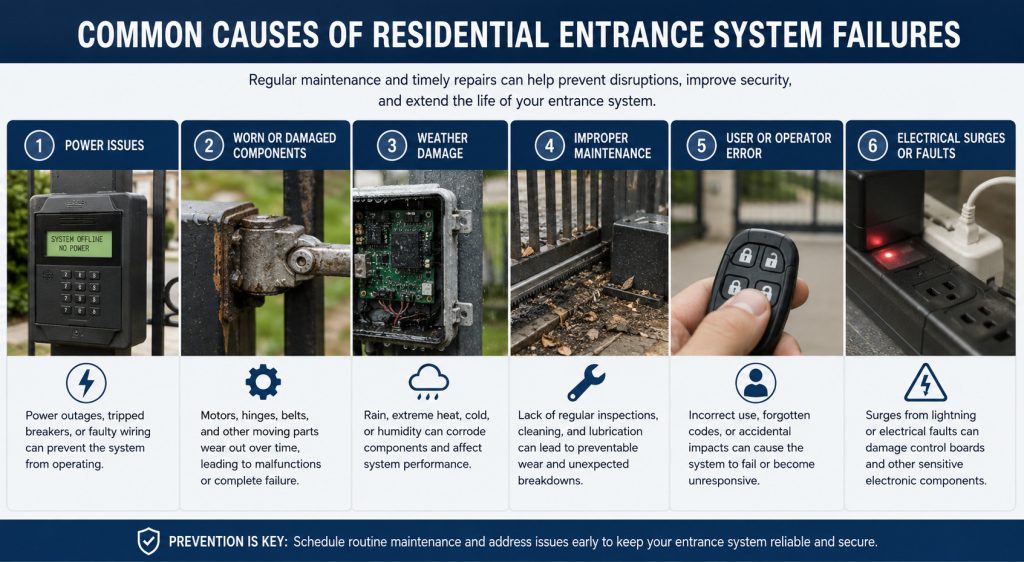
Are you tired of gates, doors, or locks failing at your home? Many entrance failures come from bad wiring, worn parts, or weather damage.
This post will show common causes and simple fixes to avoid trouble. Read on to protect your home.
Mechanical Failures in Gate Systems
Mechanical failures can cause serious issues for gate systems. Problems with motors and worn-out parts can lead to gate malfunctions.
Motor and Drive System Issues
Gate motors often fail from overload or worn brushes. Worn brushes cause poor contact and sparking. Poor installation leads to misaligned gears and extra strain. Loose wiring creates intermittent electrical failures and causes gate malfunction. Technicians can spot these issues during an inspection.
Drive chains and belts stretch over time and cause jerky motion. Corroded gears lead to mechanical breakdown and noisy operation. Routine lubrication and checks reduce maintenance issues. Faulty drives can trigger access control faults and breach safety standards.
Worn-Out Hinges or Tracks
Hinges and tracks wear from daily use and weather. Sagging panels and misaligned rollers cause gate malfunctions and stress motors. Rusted pins and bent rails hurt structural integrity and fail safety standards. Visible gaps, grinding noises, or sticking parts signal mechanical failures.
Owners cut maintenance issues by cleaning, lubricating, and tightening fasteners every six months. Replacement hinges and new tracks restore smooth operation and reduce electrical failure risk. A professional inspection can show wear that simple checks miss. Proper installation and timely repairs keep access control systems reliable.
Electrical Problems
For homeowners experiencing frequent gate issues, seeking professional help for gate repair in Alameda can ensure a smoother, safer operation.
Electrical problems can cause significant issues in residential entrance systems. Faulty wiring or bad connections often lead to gate malfunctions and security risks.
Faulty Wiring or Connections
Faulty wiring often causes gate malfunction and electrical failure in residential entrance systems. Loose connections create shorts that trip controls and damage motors. Poor installation practices raise the risk of sparks and overheating.
Technicians find corroded terminals and pinched cables during inspections. Regular maintenance and prompt repair cut system vulnerabilities and reduce access control failures.
Power Supply Interruptions
Power supply interruptions can disrupt gate systems. These issues often stem from power outages or surges. A sudden loss of electricity can cause gates to stop working, leaving homes vulnerable. Wiring problems may also contribute to these failures, leading to inconsistent power flow.
Regular checks on the electrical system help catch potential problems early. Homeowners should ensure their wiring is secure and connections are tight. Proper maintenance reduces the risk of electrical failures in gate systems.
Next, we will discuss weather-related damage and its impact on entrance systems.
Weather-Related Damage
Weather can harm your entrance system. Cold temperatures can freeze parts, while rain and humidity may cause rust.
Cold Weather Effects on Mechanisms
Cold weather can cause serious problems for gate systems. Low temperatures make parts stiff and less flexible. Motors may struggle to operate efficiently, leading to slow or failed movements. Ice and snow can block tracks or hinges, preventing gates from opening or closing properly.
Humidity often accompanies cold weather, which can lead to corrosion. This rust affects the metal components of the system, weakening them over time. Regular maintenance is crucial during winter months to reduce these risks and ensure proper functionality of your entrance system.
Corrosion from Rain or Humidity
Rain and humidity can cause serious damage to gate systems. Moisture leads to corrosion of metal parts. This weakens the structure and makes it more prone to breaks. Rust forms on hinges, tracks, and motors. Once they rust, these components fail quickly.
Plastic parts are not safe from moisture either. They can crack or warp over time. This affects how well a gate opens or closes. Regular maintenance helps protect against corrosion; cleaning and sealing areas prone to dampness is essential for longer-lasting performance.
Sensor and Automation Failures
Sensors can fail to detect obstacles. This issue may cause unsafe situations or gate malfunctions.
Malfunctioning Safety Sensors
Malfunctioning safety sensors can cause major gate issues. These sensors detect objects in the path of a closing gate. If they fail, the gate may not stop when it should. This creates a safety risk for people and pets nearby. Sensors may experience problems due to dust or dirt blockage.
Electrical failures can also impact sensor performance. Wires may fray or become loose over time, leading to faulty connections. Regular maintenance helps keep these systems working properly. Cleaning sensors regularly prevents buildup that could hinder their function and ensure optimal operation of your residential security system.
Gate failures can often be traced back to these mechanical and electrical issues.
Software or Programming Errors
Software or programming errors can cause entrance system failures. These issues often arise from incorrect coding or poor setup of the control systems. A small mistake in the software can lead to major problems, like doors not opening at all.
Problems with access control systems are common when there are faulty programs involved. Users may experience delays or complete breakdowns due to these software glitches. Keeping programs updated and tested is crucial for smooth operation and safety standards.
Regular checks help prevent security risks that come from programming errors.
Lack of Regular Maintenance
Lack of regular maintenance can cause serious problems for your entrance system. Dirt and debris can build up, leading to equipment failure and more costly repairs.
Neglected Cleaning and Lubrication
Neglected cleaning and lubrication can lead to serious issues with residential entrance systems. These problems often stem from poor maintenance, which affects functionality and safety.
- Dirt and debris can build up in the tracks of gate systems. This buildup can cause gates to jam or move slowly.
- Lack of lubrication on moving parts can create friction. Increased friction leads to wear and tear on motors and mechanisms.
- Hinges that are not cleaned or oiled may rust or break. Broken hinges compromise the gate’s movement and stability.
- Tracks without regular cleaning become misaligned. Misaligned tracks make it hard for gates to function properly.
- Dust in electrical components can lead to short circuits. Short circuits may cause electrical failures in the entire system.
- Neglecting lubrication reduces the lifespan of mechanical parts. This leads to costly repairs that could have been avoided with routine care.
- Keeping sensors clean is crucial for proper operation. Dirty sensors may fail to detect objects, posing safety risks.
- Regular maintenance helps identify problems early on. Timely repairs prevent larger issues from developing over time.
- Skipping professional inspections means missing hidden damage. Hidden damage can worsen without notice, leading to unexpected breakdowns.
- A well-maintained entrance system enhances home security effectively. Proper upkeep prevents vulnerabilities that could be exploited by intruders.
Skipped Professional Inspections
Skipped professional inspections lead to many issues in gate systems. Homeowners often overlook this vital step in maintenance. Without regular checks, problems can grow unnoticed.
Minor faults may become major repairs. The approach to that entryway matters too, and interlock driveways and walkways give the gate a stable, level base that resists shifting from frost and runoff.
Many residential security systems depend on proper operation. If inspections are skipped, safety standards may not be met. Lack of attention might allow wiring problems or mechanical failures to worsen over time.
These vulnerabilities affect entryway security and access control systems directly. Regular professional care is key for keeping gates functioning well and safe for everyone.
Conclusion
Common causes of residential entrance system failures can lead to major problems. Mechanical and electrical issues often arise from lack of maintenance. Weather can also damage these systems over time.
Regular checks help catch problems early and keep your entryway safe. Understanding these factors ensures smoother operation and better security for your home.