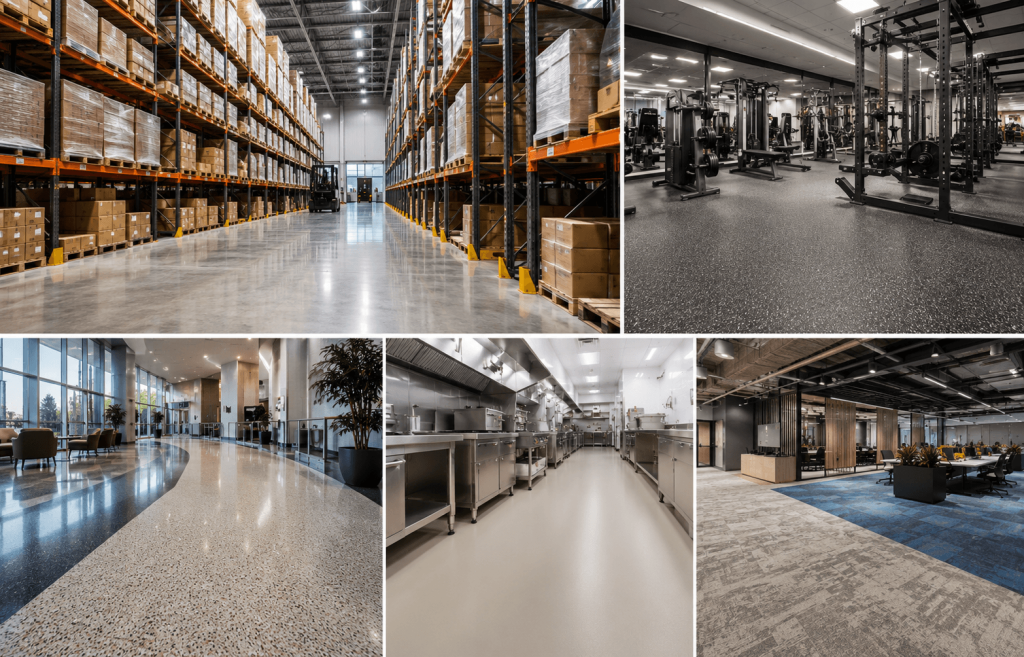
Across Texas, commercial buildings share one thing in common: constant wear. Warehouses, retail centers, hospitals, schools, and industrial sites all put flooring systems to the test more than most environments. That pressure is shifting how developers and facility managers think about flooring.
Material choice is guided by how well a floor withstands heavy foot traffic, spills, equipment loads, and daily traffic that never really slows down. In many cases, older flooring systems are being replaced earlier than expected simply because they were not built to meet today’s demand levels.
What is emerging now is a clear move toward stronger, longer-lasting commercial flooring solutions that can take abuse without constant repair cycles. Epoxy systems, polished concrete, and high-performance coatings are appearing more often in Texas projects, especially in facilities that cannot afford downtime.
At the same time, cost planning is playing a bigger role. Businesses are looking for flooring that delivers a longer service life rather than short-term fixes. That shift is changing how contractors, owners, and developers approach flooring decisions from the start of a project.
In Texas, where commercial activity is constant, flooring is no longer an afterthought. It has become part of the core planning process for any facility built to handle serious daily demand.
Picking the Right Commercial Flooring for Your Business in Texas
From hospitals in Houston to warehouses in Dallas and busy retail centers in Austin, flooring choice has become a key part of long-term building performance.
What’s trending right now is simple: materials that sustain pressure, stay easy to maintain, and still look clean after years of use. Owners are leaning toward flooring systems that can take a beating without constant repair work.
Popular Flooring Options in Commercial Buildings
Different facilities call for different flooring solutions. A warehouse does not need the same finish as a medical center, and retail floors have their own demands. Here’s a clear breakdown of what’s being used most across Texas commercial projects.
| Flooring Type | Best Use Case | Strengths | Watch Out For |
| Polished Concrete | Warehouses, retail stores, industrial facilities | Strong, low upkeep, long lifespan | Can feel hard underfoot without coating |
| Epoxy Flooring | Manufacturing plants, hospitals, commercial kitchens | Chemical resistance, smooth finish, easy cleaning | Needs proper installation or peeling can occur |
| Luxury Vinyl Tile (LVT) | Offices, retail, hospitality spaces | Good appearance, comfortable, water resistant | Can dent under very heavy loads |
| Rubber Flooring | Gyms, healthcare facilities, schools | Slip resistance, shock absorption | Not ideal for upscale visual design |
| Porcelain Tile | Retail entrances, restaurants, lobbies | High durability, stain resistance | Grout lines need maintenance |
Epoxy Systems Leading Industrial Demand
Epoxy flooring continues to dominate industrial builds across Texas. It holds up well under heavy equipment, chemical exposure, and nonstop activity. Warehouses and manufacturing plants often rely on epoxy because it reduces downtime tied to repairs and resurfacing.
Polished Concrete Gaining Ground
Polished concrete has become a go-to in large commercial builds. It delivers a clean finish without adding extra layers to the slab. Many developers prefer it for its durability and low upkeep, especially in retail centers and large office buildings.
Comfort-Driven Materials in Healthcare and Office Settings
In places where people stay longer, such as clinics and office buildings, materials like luxury vinyl tile and rubber flooring are gaining traction. They reduce fatigue underfoot and help control noise, which matters in busy environments.
Tile and Terrazzo in Public Buildings
Restaurants, airports, and institutional facilities still rely heavily on tile and terrazzo. Both handle constant cleaning and high foot traffic without losing their finish too quickly. Terrazzo, in particular, is seeing renewed interest in large public projects across Texas.
Across all these options, the focus remains on durability, ease of maintenance, and long service life. Texas commercial construction continues to push toward materials that can withstand heavy demand without constant replacement cycles.
Wrapping It All Up
Commercial flooring in Texas comes down to one simple reality. Traffic-ridden buildings need materials that can withstand daily wear and tear without constant repairs or disruption. From polished concrete in warehouses to epoxy in industrial settings and LVT in office environments, each option plays a specific role depending on how the building is used.
The right decision today can save high costs and downtime down the line, especially in facilities where activity never really slows down.
At Arrant Construction, we work with businesses across Texas to install flooring systems that match real-world demand, not just design trends. From planning to final install, the focus stays on durability, performance, and long-term value.
Strong floors start with the right team. Contact Arrant Construction today.
FAQs
What is the most durable commercial flooring for busy buildings in Texas?
Polished concrete and epoxy flooring are often the top choices because they withstand constant traffic, heavy equipment, and daily wear.
How do I know which flooring works best for my business type?
It really comes down to how the building is used. Warehouses and industrial sites need strength and resistance, while offices and retail areas lean more toward comfort and appearance.
Is epoxy flooring a good option for commercial kitchens or medical facilities?
Yes, epoxy works well in those settings because it resists spills, chemicals, and bacteria buildup while staying easy to clean.
Does commercial flooring require a lot of maintenance?
Some materials need more attention than others. Vinyl and tile may require regular upkeep, while concrete and epoxy are usually low-maintenance when installed correctly.
Why is flooring such an important part of commercial construction in Texas?
Because Texas buildings experience constant movement, heat, and heavy use, flooring plays a significant role in safety, cost control, and the smooth running of day-to-day operations.