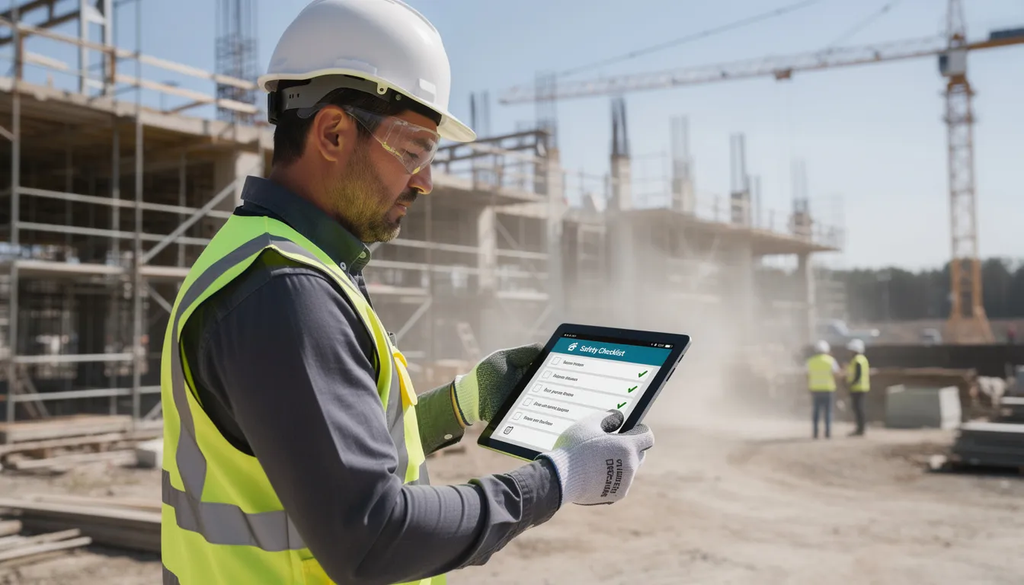
A superintendent on a mid-size commercial project told me he built his own daily inspection tracker in an afternoon, using nothing but a drag-and-drop app builder and about two hours of trial and error. No developer, no IT ticket, no six-week procurement process. It replaced a paper checklist his crew had been using for three years, the kind that inevitably got left in a truck or smudged beyond reading by lunchtime. He didn’t set out to become a software person. He just got tired of losing data to weather and clipboards.
That’s the quiet shift happening across construction right now, and it has almost nothing to do with big enterprise software rollouts.
Contractors Are Building Their Own Tools, and It’s Working Better Than Expected
For years, job site software meant choosing between expensive enterprise platforms built for general contractors managing dozens of simultaneous projects, or nothing at all beyond spreadsheets and group texts. Small and mid-size contractors fell into the gap between those two options, too big for paper, too small to justify enterprise pricing.
No-code platforms changed that math. A superintendent or project manager with no coding background can now build a custom daily log, a punch list tracker, or a compliance checklist specific to their own workflow, without waiting on a software vendor to build it for them. That specificity matters. A generic app rarely fits how any particular crew actually works, and a tool built by the people using it tends to fit better than one designed by someone who’s never been on a job site.
Compliance Tracking Is Where No-Code Tools Are Proving Genuinely Useful
Healthcare and institutional construction carry compliance requirements that don’t exist on a typical commercial build. ICRA construction protocols, for infection control on projects near occupied patient care areas, require documented verification: air pressure checks, barrier inspections, dust containment logs, often multiple times daily throughout a project’s duration.
Paper logs for this kind of documentation are a liability waiting to surface, usually during an audit or after an infection control incident, when someone needs proof that protocols were actually followed and not just claimed. A no-code form, built specifically around ICRA checkpoints, timestamps every entry automatically and stores it somewhere searchable. That’s a meaningful upgrade over a clipboard that might or might not have been filled out consistently by whoever was on shift that day.
Not All No-Code Platforms Are Actually Free, and the Differences Matter
This is where contractors evaluating options need to slow down and read the fine print, because marketing language around “free” tools varies enormously in what it actually means. Free AI app builders compared side by side reveal real differences: some cap the number of forms or submissions before requiring a paid tier, others restrict offline functionality, which matters enormously on job sites with unreliable cell coverage, and a few bury data export behind a subscription wall that only becomes obvious after months of accumulated records.
A contractor choosing a platform based purely on the free tier, without testing what happens at scale or without connectivity, often discovers the limitation at the worst time, usually mid-project when switching tools isn’t a simple decision anymore. Testing a platform’s offline behavior specifically, not just its feature list, is worth the extra hour before committing a whole crew to using it daily.
Adoption Fails More Often Because of Training Gaps Than Software Limitations
Here’s what doesn’t get discussed enough: the technical capability of a no-code tool rarely determines whether it actually gets used. Adoption comes down to whether the crew using it daily finds it faster than what they were doing before. A tool that takes longer to fill out than a paper form, even if it’s more sophisticated, gets abandoned within a few weeks.
The contractors seeing real success with these tools usually spend a half day building the form with input from the people who’ll actually use it, rather than designing it in isolation and rolling it out as a finished product. That collaborative build process catches usability problems before they become adoption failures.
Data Ownership Deserves More Attention Than It Gets
One quieter concern worth raising: who actually owns the data once it’s entered into a third-party no-code platform, and what happens to years of compliance records if that platform changes its pricing model or shuts down. Contractors building critical documentation systems on free tiers should ask this question directly, and export their data periodically regardless of the answer, just as a matter of practice.
The tools available now let contractors solve problems themselves that used to require a software vendor and a budget most small operations didn’t have. That’s a genuine shift. Whether it pays off depends less on which platform gets chosen and more on whether the people actually doing the work had a hand in building the tool they’re now expected to use every day.