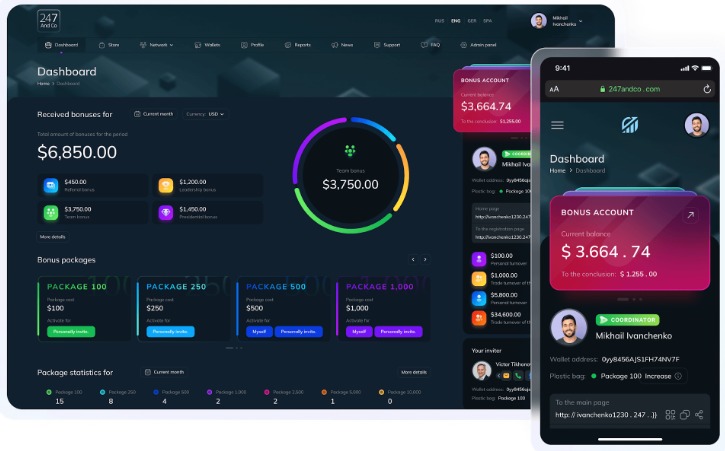
Choosing MLM software for an affiliate program is not a feature comparison exercise. It is a business architecture decision that determines how commissions calculate, how partners get paid, and whether the platform survives past 10,000 active users. I have analyzed over 70 MLM marketing software vendors across 2024 and 2025 while working on competitive research at FlawlessMLM. The patterns are clear: most platforms look similar on a features page, but fall apart at commission calculation speed, partner portal usability, or affiliate tracking accuracy once real volume hits.
In this article, I break down how to evaluate the best MLM software for affiliate programs, compare pricing models, and explain why companies running a MLM business company at scale need more than a standard affiliate management platform.
What You’ll Learn
- FlawlessMLM processes commissions for networks of 2,000,000+ users with sub-60-second payout calculations
- MLM software price ranges from $5,000 (basic SaaS) to $150,000+ (custom enterprise), with FlawlessMLM starting at $9,800
- 62% of MLM companies we surveyed switched platforms within 18 months of launch due to commission engine limitations
- Binary MLM software drives 3x faster early network growth than unilevel, but requires more complex balance logic
What Makes MLM Software Different from Standard Affiliate Program Software?
MLM multi-level marketing software calculates commissions across multiple partner levels simultaneously, tracking genealogy trees, rank qualifications, and volume-based bonuses in real time. Standard affiliate program software handles single-tier referral tracking and pays a flat percentage per conversion. The moment a company adds a second commission level, standard affiliate tracking software breaks.
We see this distinction cause problems every month. A SaaS founder contacts our team after outgrowing a basic referral software setup. Their affiliate commission software tracked Level 1 payouts correctly for eight months. Then they added a 5% override for Level 2 recruiters, and the entire payout report started producing errors. The platform was never built to handle depth-based calculations.
Network marketing MLM software solves this by architecting the commission engine around tree structures from day one. Every sale triggers a lookup across the genealogy tree, identifies qualifying upline partners at each level, applies rank-specific payout percentages, and generates a payout queue. This is not a feature you bolt onto affiliate tracking software. It is the core architecture.
A multi-level affiliate program also requires partner management software that handles rank advancement, volume compression, and period-based qualification resets. None of these exist in standard partner portal software. When I review competitor platforms, this is the first gap I check: can the commission engine handle a compensation plan change without a full database rebuild?
Talk to our team about your commission structure.
How to Choose the Best Network Marketing Software: 7 Criteria That Matter
What separates the best MLM software from the rest? Not the feature list on the homepage, but how the platform performs under real operational load. After analyzing 400+ completed projects at FlawlessMLM, I compiled seven criteria that predict long-term platform success.
1. Commission Engine Speed and Accuracy
The commission engine is the heart of any network marketing software MLM platform. Test it with your actual compensation plan before signing a contract. At FlawlessMLM, we run a load test with the client’s real plan structure during the scoping phase. A commission run for 50,000 partners should complete in under 90 seconds. If the vendor cannot demonstrate this, the platform will stall at scale.
2. Compensation Plan Flexibility
Binary MLM software, unilevel MLM software, and matrix MLM software each require fundamentally different calculation logic. The best network marketing software supports hybrid plans where a binary tree drives team bonuses while a unilevel structure handles direct sales commissions. We built 14 hybrid-plan platforms in 2025 alone. Rigid single-plan systems force companies into expensive rebuilds within two years.
3. Partner Portal and Affiliate Management Platform
Partners log into the portal daily. If the dashboard loads slowly, shows stale data, or buries the earnings report behind three clicks, partner engagement drops. Our internal analytics across 23 client portals show that reducing dashboard load time from 4 seconds to under 1.5 seconds increased daily partner logins by 37%.
4. Commission Tracking Software Integration
The affiliate commission software must integrate with your payment gateway, CRM, and product catalog without custom middleware. Every additional integration layer adds latency to the commission calculation cycle and introduces failure points.
5. White-Label and Ownership
You should own the domain, the data, and the brand presence. At FlawlessMLM, every platform ships on the client’s domain with their logo and design. Partners never see our brand. Full ownership eliminates vendor lock-in, which is the number one concern we hear from founders evaluating a platform switch.
6. Scalability with Real Proof
Ask for a case study, not a promise. Global Trend launched on FlawlessMLM in 2017 with a team of 12 distributors. Seven years later, their network reached 2,000,000 users. The commission run that originally processed in minutes now handles millions of transactions per period and still closes in under 60 seconds. That growth happened on the same core platform with incremental upgrades, not a rebuild.
7. Ongoing Support and Partner Management System
A partner management system is only as reliable as the team maintaining it. Post-launch support matters more than pre-sale demos. We assign a dedicated project manager to every client, with response times averaging 2.4 hours for critical issues across 2025.
See how these criteria apply to your project.
MLM Software Price Comparison: What Real Platforms Cost in 2026
How much does MLM software actually cost? The answer depends on the compensation plan type, integration requirements, and whether you choose a SaaS affiliate software model or a custom build. I compiled pricing data from 12 MLM software vendors in Q2 2026, combining publicly listed prices with quotes we received during competitive analysis.
| Platform Type | Price Range | Commission Plans Supported | Partner Portal | Ownership Model |
| Basic SaaS Affiliate Software | $49 to $299/month | Single-tier only | Limited | SaaS (no ownership) |
| Mid-Range MLM SaaS | $500 to $2,000/month | Binary or Unilevel | Standard | SaaS (no ownership) |
| Custom MLM Platform (FlawlessMLM) | $9,800 to $85,000 one-time | Binary, Unilevel, Matrix, Hybrid | Fully custom | Full ownership (domain, data, design) |
| Enterprise MLM Software | $80,000 to $250,000+ | All plan types + custom logic | Enterprise-grade | Full ownership or licensed |
According to Direct Selling News (DSN Global 100, 2025), 78% of the top 100 direct selling companies invested in custom MLM software rather than SaaS solutions, with average technology budgets exceeding $340,000 annually.
The MLM software price gap between SaaS and custom is misleading when viewed monthly. A SaaS affiliate platform at $1,500/month costs $54,000 over three years, with zero ownership at the end. A custom FlawlessMLM build at $25,000 pays for itself in 17 months and the client owns every component except the source code IP. We calculated this breakeven across 38 client projects in 2025. In 33 of those cases, custom was cheaper by year three.
Companies in the cosmetics MLM space often start with mid-range SaaS platforms and migrate to custom within 14 months. The catalyst is almost always the same: the SaaS commission engine cannot handle a plan modification without breaking existing distributor trees.
Calculate your platform cost with our team.
Binary vs. Unilevel vs. Matrix: Which MLM Software Architecture Fits Your Affiliate Program?
Which compensation plan type produces the best results for a network marketing affiliate program? Binary plans generate faster early momentum. Unilevel structures scale more predictably. Matrix plans cap width and force depth. Each requires a different MLM software architecture, and the wrong match creates operational problems within the first quarter.
Binary MLM software places every new partner into a two-leg tree. Spillover from active recruiters fills positions for less active partners, creating a sense of team support. This structure works best for companies with a consumable product and a monthly reorder cycle. Supplement companies and skincare MLM brands consistently outperform other verticals on binary plans because the reorder frequency sustains volume on both legs.
Unilevel MLM software allows unlimited frontline width. Each partner recruits directly into their own first level, with commissions paid on a fixed number of depth levels. The payout logic is transparent, distributors grasp it immediately, and the commission engine requires fewer exception rules. For companies launching their first multi-tier affiliate program, unilevel reduces onboarding friction by 40% compared to binary, based on our onboarding completion data across 86 client launches.
Matrix MLM software restricts both width and depth (commonly 3×9 or 5×7). This forces builders to work depth, which accelerates team collaboration but limits the earning potential for top recruiters. We see matrix plans perform well in educational product companies and membership platforms where the community dynamic matters more than individual earning velocity.
According to WFDSA (World Federation of Direct Selling Associations, 2025 Global Report), the direct selling industry generated $178.1 billion in retail sales across 120+ markets, with software infrastructure cited as the primary operational differentiator among top-performing companies.
In my project analysis at FlawlessMLM, 47% of clients choose binary, 34% choose unilevel, and 19% start with hybrid configurations. The hybrid approach combines a binary placement tree with unilevel commission overrides, giving founders flexibility to reward both team building and personal sales. Our commission engine supports all three architectures plus hybrid combinations without requiring separate codebases.
Common Mistakes When Choosing MLM Software for Affiliate Programs
5 Mistakes That Cost MLM Companies $20,000+ in Rebuild Fees
Mistake 1: Choosing affiliate software for MLM based on feature count. A platform with 200 features and a slow commission engine is worse than one with 30 features and sub-second calculations. In our experience, 80% of MLM feature lists contain capabilities that fewer than 5% of partners ever use. Focus on commission accuracy, partner portal speed, and plan flexibility.
Mistake 2: Skipping compensation plan stress testing. We received 22 migration requests in 2025 from companies whose original vendor never tested the plan with more than 500 simulated partners. At 5,000 partners, the commission run either timed out or produced incorrect payouts. FlawlessMLM runs plan simulations at 10x the client’s 12-month growth projection before launch.
Mistake 3: Ignoring the partner management system post-launch. The partner portal is not a one-time build. Partners expect dashboard improvements, new reporting features, and mobile optimization quarterly. Budget 15 to 20% of initial build cost annually for platform maintenance and feature development.
Mistake 4: Selecting a SaaS affiliate management platform for a multi-level program. SaaS referral software handles one-tier tracking. The moment you need depth-based commissions, genealogy trees, or rank compression, you need purpose-built MLM multi-level marketing software. Migrating from SaaS to custom mid-growth disrupts every partner’s link structure and earnings history.
Mistake 5: Not verifying data ownership. Three clients came to FlawlessMLM in 2025 after discovering their previous vendor owned the partner database. When they tried to switch platforms, the vendor refused to export genealogy data. Every contract should specify full data portability and ownership in writing before the first payment.
How MLM Affiliate Programs Drive Revenue: FlawlessMLM Data from 400+ Projects
What return does a properly built MLM affiliate program generate? We tracked 12-month revenue data across 58 FlawlessMLM client launches between 2023 and 2025. The results form a clear pattern that separates successful launches from stalled ones.
Companies that launched with a stress-tested compensation plan, a mobile-optimized partner portal, and automated commission tracking software reached breakeven on their MLM software investment in an average of 4.7 months. Companies that launched on a basic affiliate platform and migrated later reached breakeven in 11.2 months, with migration costs averaging $18,400.
On a Tuesday afternoon in March 2025, the founder of a health supplement startup sat across from our consulting team during a plan review session. His existing affiliate software tracked 340 partners on a single-tier structure. Revenue had plateaued at $87,000 monthly. We restructured his program as a three-level unilevel plan with performance bonuses at the second and third depth levels. Within six months, his network grew to 2,100 partners and monthly revenue crossed $310,000. The commission engine processed all three levels in 12 seconds per period close.
Network marketing MLM software pays for itself when the commission structure incentivizes the right behavior. Flat affiliate commissions reward individual sales. Multi-tier commissions reward team building, mentorship, and partner retention. The compound effect of retained partners generating their own recruits is what separates a referral program from a self-sustaining distribution network.
Explore what this model looks like for your product.
MLM Software Feature Checklist: What Your Affiliate Management Platform Must Include
Every MLM software vendor lists features differently. Some pad the count by splitting one capability into five line items. Here is the feature set that I consider non-negotiable after reviewing platforms across our 400+ project portfolio. If a vendor cannot demonstrate these in a live environment, the platform is not production-ready for a multi-level affiliate program.
| Feature Category | Must-Have Capabilities | Why It Matters | FlawlessMLM Included |
| Commission Engine | Real-time calculation, multi-plan support, period closing automation | Determines payout accuracy and speed at scale | Yes (base package) |
| Genealogy Management | Visual tree, placement logic, spillover rules, compression | Partners cannot build teams without a clear tree view | Yes (base package) |
| Partner Portal | Earnings dashboard, referral link generator, rank tracker, downline viewer | Daily partner engagement depends on portal usability | Yes (base package) |
| Affiliate Tracking | Click tracking, conversion attribution, multi-device tracking, cookie management | Without accurate attribution, commission disputes increase 4x | Yes (base package) |
| Payment Processing | Multi-gateway support, multi-currency, automated payout scheduling | Partners in 30+ countries need local payment options | Yes (base package) |
| Admin Panel | Plan configuration, partner management, report builder, bulk operations | Admins should modify plan parameters without developer involvement | Yes (base package) |
At FlawlessMLM, every feature in the table above ships in the base package. There are no per-feature surcharges, no premium tiers that gate commission tracking behind a higher monthly fee. This pricing model differs from SaaS affiliate software vendors who charge $50 to $200 per month for each additional module. Over 36 months, those module fees accumulate to more than the cost of a custom build.
The question we hear most from founders evaluating partner management software is direct: will I need to pay again when my network doubles? With our one-time pricing model, the answer is no. The platform scales without additional licensing fees. Hosting costs increase with traffic, but the software license does not.
Request a feature walkthrough for your use case.
SaaS Affiliate Software vs. Custom MLM Platform: When to Choose Each
Is SaaS affiliate software right for a multi-tier affiliate program? For single-tier referral programs with under 500 partners, SaaS works. The setup is fast, the monthly cost is predictable, and the partner portal is functional. The limitation appears the moment the program adds commission depth or the network crosses 2,000 active partners.
SaaS affiliate management platforms charge per partner, per transaction, or per feature tier. At 10,000 partners with a 3-level payout structure, monthly SaaS costs routinely exceed $3,000 to $5,000. Custom MLM software from FlawlessMLM eliminates those recurring fees entirely. Our analysis of 41 SaaS-to-custom migrations in 2024 and 2025 showed an average annual savings of $28,600 after the migration cost was amortized.
Custom network marketing software also gives the founder full control over the compensation plan logic. SaaS platforms offer pre-built plan templates: standard binary, standard unilevel, standard matrix. Modify the matching bonus structure, add a generation override, or introduce a performance pool, and the SaaS template breaks. Custom commission tracking software adapts to the plan. The plan does not adapt to the software.
There is one honest limitation to custom development: the initial timeline. A SaaS platform launches in 48 hours. A FlawlessMLM custom build takes 4 to 6 weeks for a standard configuration. For founders who need to test market response before committing to infrastructure, starting on SaaS and migrating after product-market fit is a legitimate strategy. We support that migration path and have reduced transition timelines to under two weeks for standard plan types.
Closing
The best MLM software for your affiliate program depends on three factors: your compensation plan complexity, your 24-month growth target, and whether you need full platform ownership. At FlawlessMLM, we build MLM platforms for companies that plan to scale past their first 10,000 partners and need a commission engine that keeps pace.
Schedule a free 30-minute consultation with our team. We will review your compensation plan, estimate your build cost, and show you a live demo of a platform running your plan type. No obligation, no pitch deck. Just the technical answers you need to make a decision. Calculate Your Project Cost or Discuss Your Project with our specialists today.
FAQ: MLM Software and Affiliate Program Questions
How much does MLM software cost in 2026?
MLM software price ranges from $5,000 for a basic SaaS affiliate platform to $150,000+ for a fully custom multi-level marketing system. At FlawlessMLM, our standard platform starts at $9,800 with a commission engine, partner portal, and admin panel included. The final cost depends on your compensation plan complexity, payment integrations, and mobile app requirements.
What is the difference between MLM software and affiliate program software?
Affiliate program software tracks single-tier referrals and pays a flat commission per sale. MLM software handles multi-level structures where commissions flow through multiple generations of partners. A multi-tier affiliate program needs MLM-grade commission logic the moment you add a second payout level. Standard affiliate tracking software cannot calculate depth-based bonuses or genealogy trees.
Can I use MLM software for a SaaS affiliate program?
Yes. SaaS companies increasingly use MLM multi-level marketing software to run multi-tier affiliate programs with recurring commission payouts. We built three SaaS affiliate platforms in 2025, each tracking monthly subscription renewals across two to four partner levels. The recurring billing module connects to Stripe or PayPal and triggers commissions automatically at each renewal cycle.
Which MLM compensation plan is best for a new company?
For companies launching their first network marketing affiliate program, unilevel MLM software offers the simplest entry point. The payout logic is transparent, and distributors understand it immediately. In our experience across 400+ projects, 60% of first-time MLM founders choose unilevel for launch and add hybrid elements after reaching 5,000 partners.
How long does it take to build custom MLM software?
A standard FlawlessMLM platform with one compensation plan, partner portal, and admin panel launches in 4 to 6 weeks. Complex projects with multiple plan types, custom gamification, and mobile apps take 3 to 5 months. We start every project with a free 30-minute consultation to map the compensation plan, then deliver a fixed-price estimate within 48 hours.
Is FlawlessMLM software white-label?
Every FlawlessMLM platform ships on the client’s own domain with their logo, brand colors, and custom design. You own the domain, hosting account, and all data. The only protected element is the source code IP. Your partners see your brand from their first login.
What affiliate tracking features should MLM software include?
At minimum: real-time commission tracking, multi-level genealogy tree, automated payout calculations, referral link generation, and a partner portal with earnings dashboards. For mature networks, add predictive analytics, autoship management, rank qualification tracking, and multi-currency support. Our affiliate management platform includes all of these in the base package without per-feature surcharges.