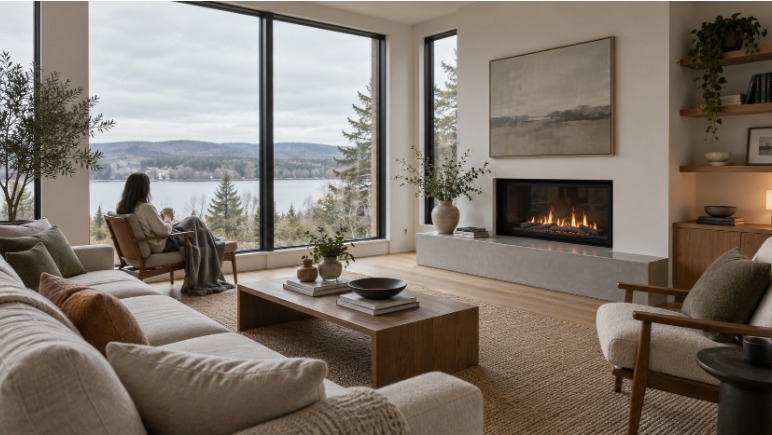
The new floor is down, the walls are painted, and the furniture has arrived. Then the first cold week exposes a problem: the renovated room doesn’t feel as comfortable as it looks.
For a homeowner, that raises an awkward question. Is something still being adjusted, or does part of the work need correcting? Opening a newly finished wall is expensive and disruptive. Ignoring a persistent problem isn’t a good answer either.
A sensible response starts with how the room is being used, then moves toward more detailed inspection if the simple explanations don’t fit.
Check the settings before questioning the construction
A room on a separate heating zone may be following a different schedule from the rest of the house. A guest suite that has been kept at a lower setting won’t feel the same as the main living area as soon as someone arrives.
New furniture can change things too. A cabinet may cover a vent that was clear during installation, or long curtains may interfere with heat reaching the seating area. Those details are worth checking before assuming the new windows or insulation are at fault.
The timing of the complaint helps. Discomfort that started after furniture arrived points toward a different set of possibilities from a problem that was present while the room was empty. Neither proves the cause, but both help focus the investigation.
Find out how much of the room is affected
A cold edge beside one door is different from an entire floor that feels cooler than expected. The first may lead to a local repair; the second may require a closer look at the heating system or the construction below.
Thermal imaging can help show the extent of a temperature difference without removing the finish. An owner or property manager using a Rision Thermal camera for Smartphone with a compatible device can capture the surface pattern for further discussion.
That can be useful when several rooms look alike or a contractor isn’t present when the discomfort occurs. A normal room photo alongside the thermal view gives the image a clear location. There is little value in a detailed close-up if nobody can tell which wall it shows.
The image doesn’t establish what’s behind the surface. Different causes can create similar patterns, and sunlight or reflections can affect the view. Its value is in directing attention, not deciding on a repair by itself.
A targeted investigation can protect good finishes
Before work begins, the contractor should be able to explain what they are trying to confirm. If the concern is weak heating, checking the controls and heat delivery may come before opening a wall. If there is visible staining, the source of water needs prompt attention.
That distinction matters in a recently renovated home because more than one trade may have worked in the same area. The person who installed the finish may not be the person best placed to find the cause. A clear description helps bring in the right expertise.
It also helps separate finding the fault from restoring the finishes afterward. A repair may involve access through a wall, followed by patching, painting or replacing trim. Those finishing costs and responsibilities belong in the scope of work, not in a discussion after the opening has been cut.
Sometimes access is unavoidable. The aim isn’t to preserve every surface at any cost; it’s to avoid damaging several areas while searching for a problem that could have been narrowed down first.
Keep the few details that will matter later
The useful record is small: the location, the original complaint, what the contractor found, and what was repaired. Keep that with the renovation paperwork. A folder full of unexplained photos is harder to use than one clear account.
For a second home, one person should follow the issue through. A caretaker might notice the problem while the owner arranges the visit, but someone still needs to confirm the result. Otherwise the next report of a cold room may be treated as a new complaint.
The final check should reflect ordinary use. If a room was uncomfortable on cold evenings, a warm afternoon isn’t much of a test. Give it comparable conditions and ask whether the original problem has improved.
A repair that leaves the wall looking perfect but the room just as uncomfortable is unfinished in the way that matters to the people living there. Keep the conversation open until the cause has been addressed, not merely the surface restored.