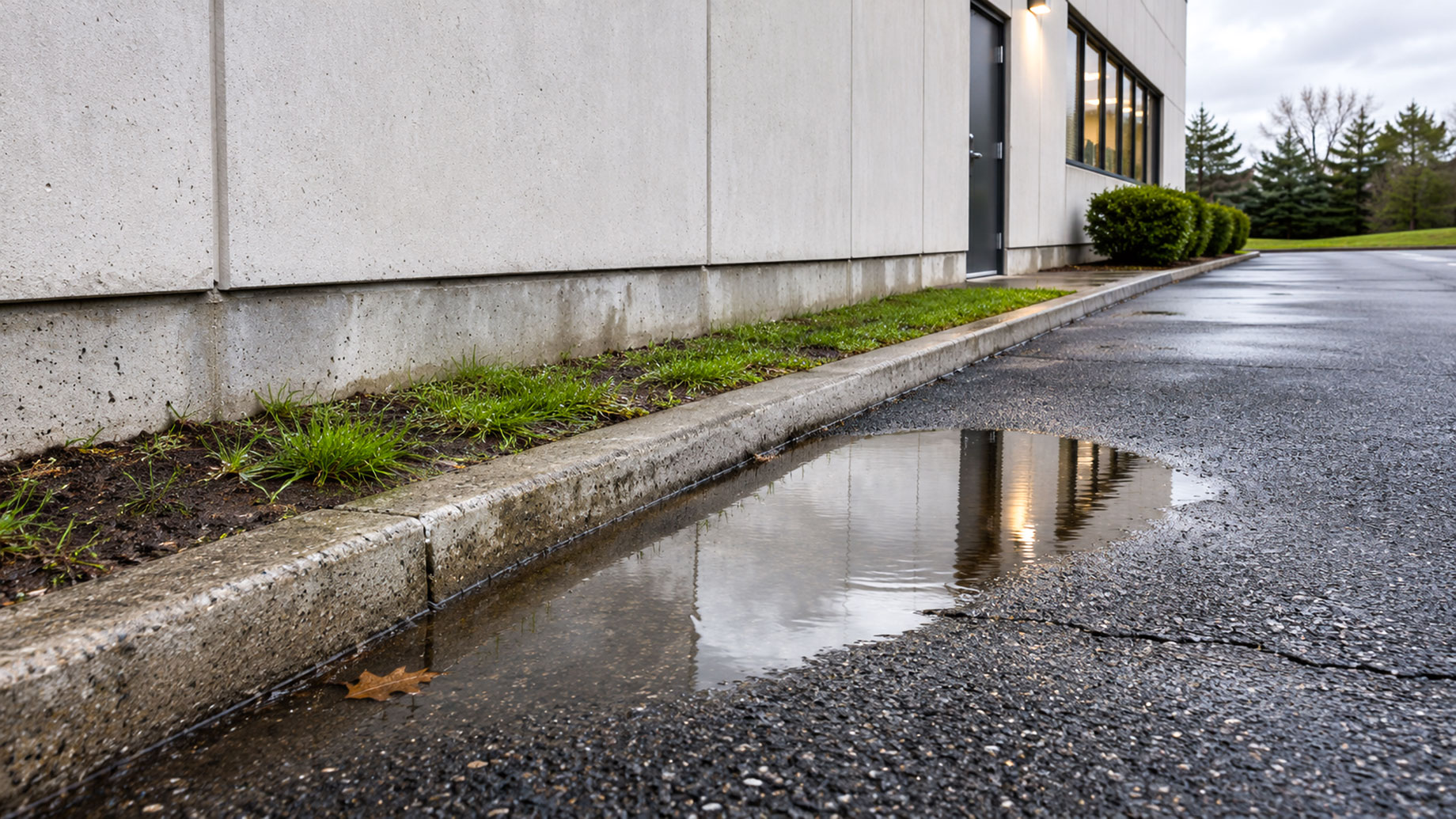
When you go to buy a commercial property, you will likely hire a property assessor to perform a professional inspection. They will test out all the outlets, check the plumbing, and climb onto the roof. They will ensure that everything inside the walls of the property is in working order. Property buyers who stop at the inspection report will likely take on problems that lie outside the building.
Drainage Matters More Than the Floor Plan
If water drains toward your foundation after a heavy rain, you can expect a flooded basement or cracked slab within a few years. The ideal slope away from your foundation is roughly six inches over the first ten feet. If the lot next door sits higher than yours, you’ll have drainage problems because their water is going to flow right onto your lot.
Soil Types Set the Repair Bill
Clay and Expansion
If there are diagonal cracks over door openings, windows that stick, and/or sloping floors, it could be an indication of expanding clay soils. Fixing this type of foundation issue could cost thousands of dollars for the commercial building.
Fill Dirt and Settling
If your building is located on fill dirt, it could continue to settle for years. Ask your broker or seller if the property was graded before your facility was built, and check with the county to find out what the original topography was for the area.
Parking Lots and Paved Surfaces Tell On the Land
Any cracks in the asphalt that are perpendicular to the length of the drive lane could be an indication of the base of the pavement failing or soil expansion underneath. Poor grading can also be an indication of problems since the edges of the driveway will collect water. You’ll have the same problems if you lay new asphalt over a base that’s failing.
Before buying, get a quote from a local contractor, and treat any search like ‘paving company Kansas’ or ‘parking lot repairs Florida’ as a way to compare base depth and drainage plans. A contractor that physically visits the site for an inspection is worth more than one that quotes from the street.
Trees, Easements, and Setbacks
Find out if there are any large trees within 20 feet of the building. Their roots can cause problems. Large Oak tree removals can cost up to $3,000 and it does not fully remove the root system that can spread two to five times the size of the canopy. This may also prevent the installation of additions such as a loading dock or expanded parking.
Pull the survey and look for easements. A utility easement can prevent you from building additional structures later on. Setback and zoning rules also differ by municipality. Confirm them with your local planning office before drawing any plans.
Questions for the Seller
Before thinking of buying the property, ask the seller the following questions:
- Has water ever entered the building or any area below the ground floor?
- Has any foundation or parking lot repair been done?
- When was the last survey completed?
- Are you aware of any boundary disputes with adjacent property owners?
A seller who hesitates on the first two questions provides you with valuable information even before the inspector arrives.
Do Your Own Inspection
Spend some time walking around the property, especially in the rain. Have the soil tested, especially if you suspect that it may be clay or fill material. A property assessment and survey of the property can save you thousands of repair costs down the line.