When choosing wicker furniture for a patio or backyard, one important decision is whether to choose natural wicker or resin wicker. Both have a woven appearance, but their materials, weather resistance, and maintenance requirements differ. Natural wicker offers an authentic plant-based texture, while resin wicker provides more flexibility for outdoor applications. Understanding these differences can help you choose furniture that suits your climate, lifestyle, and outdoor space.
What Is the Difference Between Resin Wicker and Natural Wicker?
Although both use woven construction, natural and resin wicker differ in the materials used to create their strands.
What Is Natural Wicker?
Natural wicker refers to furniture woven from plant-based materials such as rattan, willow, reed, and bamboo. Wicker describes a weaving technique rather than a specific material.
Natural wicker is valued for its organic texture, natural variations, and traditional appearance. It is commonly used in indoor chairs and decorative furniture. With appropriate care and protection, some natural wicker pieces can also be used in sheltered outdoor areas.
What Is Resin Wicker?
Resin wicker is made from synthetic materials, commonly polyethylene (PE), formed into strands and woven to resemble natural wicker. Different formulations offer varying levels of flexibility and UV resistance.
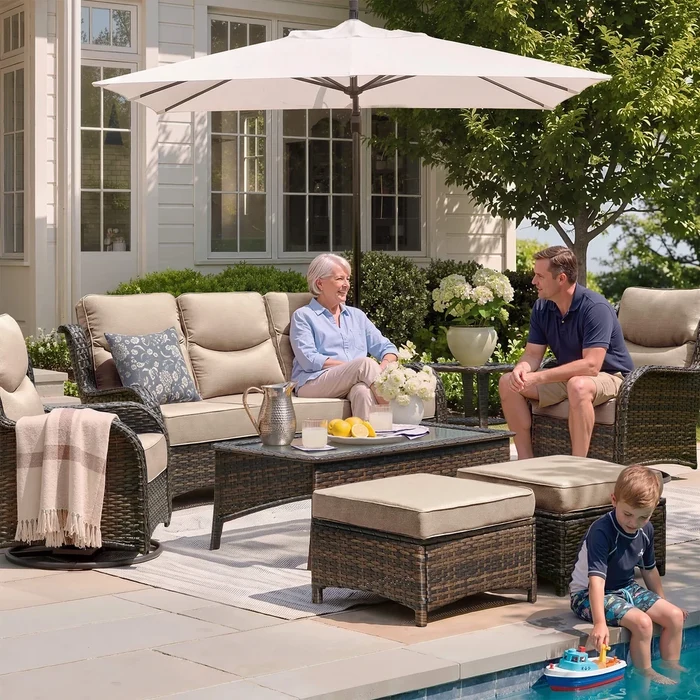
Because synthetic strands generally handle moisture better than natural plant fibers, resin wicker is commonly used in outdoor sofas, lounge chairs, and conversation sets. For examples of woven designs suited to outdoor spaces, explore outdoor wicker furniture.
Resin Wicker vs. Natural Wicker: 4 Key Differences
The differences become clearer when comparing their performance in everyday conditions.
Weather Resistance and Outdoor Durability
Natural wicker is better suited to relatively dry environments, as prolonged exposure to moisture can affect some plant fibers. Direct sunlight may also gradually change their appearance.
Resin wicker is commonly selected for outdoor environments because its synthetic strands offer good moisture resistance. UV-stabilized PE wicker can also help reduce fading and material deterioration caused by sunlight. Actual performance depends on material quality, UV protection, and frame construction.
Cleaning and Maintenance Requirements
Natural wicker benefits from regular dusting and careful moisture management. A soft brush can help remove dirt between woven strands, while keeping the furniture in a sheltered area can support its condition.
Resin wicker typically requires relatively simple routine cleaning. Everyday dirt can usually be removed with a soft brush, mild soap, and water. Both materials benefit from regular care and appropriate protection.
Appearance and Design Flexibility
Natural wicker has an organic texture and subtle variations that give each piece an individual appearance. Resin wicker offers more flexibility in colors, strand shapes, and weaving patterns. It can reproduce the look of natural rattan while accommodating contemporary outdoor furniture designs.
Cost and Long-Term Value
Natural wicker prices vary depending on the plant material, craftsmanship, and construction. Handwoven pieces may involve more specialized labor.
Resin wicker also comes in different price ranges depending on resin quality, frame materials, and manufacturing standards. Its relatively simple maintenance and suitability for outdoor use can make it a practical option for frequently used patios.
Why Is Resin Wicker a Practical Choice for Outdoor Living?
For homeowners who regularly use their backyard, porch, or patio, resin wicker offers useful features for everyday outdoor living. Its moisture-resistant properties and straightforward cleaning routine make it suitable for different seating arrangements.
It is available in various configurations, including sofas, lounge chairs, and conversation sets. When comparing outdoor furniture collections, consider how different seating arrangements fit your space. A coordinated sofa set can create a dedicated conversation area, while individual chairs may suit a compact patio.
How to Choose the Right Wicker Furniture for Your Patio
The right choice depends on your local climate, available space, and maintenance preferences.
Consider Your Local Climate
For areas with frequent rainfall or high humidity, resin wicker is often a practical option. If you prefer natural wicker, consider a covered, relatively dry location and follow the manufacturer’s care recommendations.
Match Furniture to Your Outdoor Space
Measure your patio before choosing a configuration. A loveseat can suit smaller areas, while a sectional or conversation set may work better for larger gatherings. Leave enough room for walking and moving chairs.
Check Comfort and Construction
Look beyond the woven material. Check frame stability, cushion thickness, seat depth, and back support. Aluminum frames and supportive outdoor cushions can contribute to everyday comfort and usability.
Conclusion
Natural wicker and resin wicker offer different advantages for outdoor furniture. Natural wicker appeals to those who appreciate plant-based materials and traditional craftsmanship, while resin wicker provides greater flexibility in finishes and is commonly chosen for its moisture resistance and relatively simple maintenance.
The right choice depends on your local climate, outdoor layout, and maintenance preferences. By comparing material quality, frame construction, and seating comfort, you can find wicker furniture that suits your outdoor living needs.