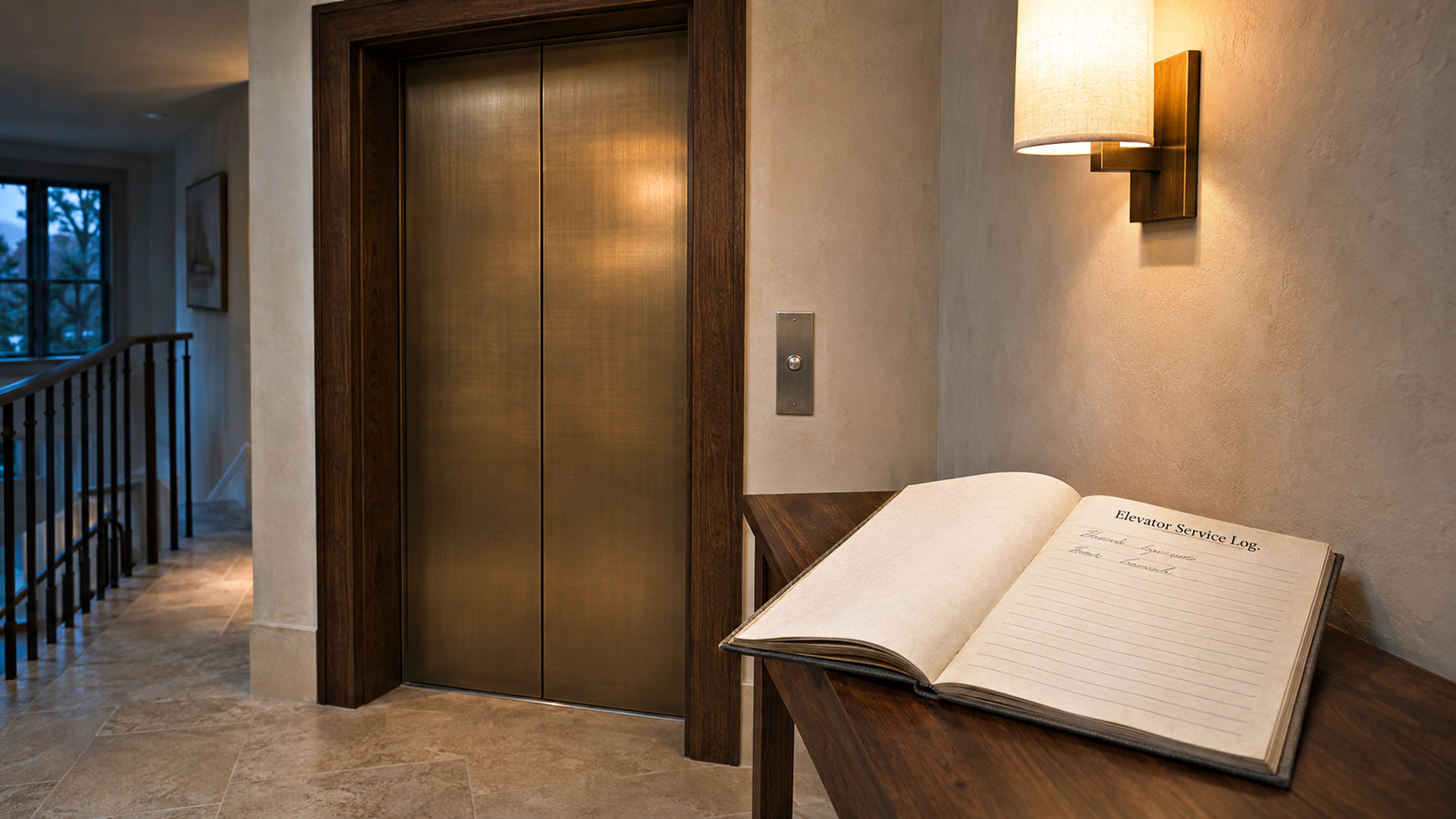
A home elevator sits quietly between floors until something goes wrong. The owner may not think much about its maintenance records until a door fails, a passenger becomes trapped, or an injury raises questions about when the equipment was last inspected.
The safety concerns aren’t hypothetical. The Consumer Product Safety Commission has announced recalls involving residential elevators with dangerous gaps between the hoistway door and the elevator car door, creating entrapment hazards for young children. Those defects require specific corrective measures, not simply more frequent maintenance.
A service log that stopped three months ago doesn’t prove an elevator was unsafe. But if an injury occurs, the missing entries may raise questions about the maintenance schedule, the equipment’s condition, and whether known problems received attention.
The Private Lift Is a Code-Governed Machine
A home elevator may look like a convenience feature, but it remains a mechanical system subject to applicable safety requirements. The ASME A17.1 Safety Code for Elevators and Escalators establishes requirements for covered equipment, including provisions addressing maintenance, inspection, and testing.
Which requirements apply to a particular residential elevator depends on the equipment, code edition, and local jurisdiction. Private residences may be exempt from certain government inspection programs, and maintenance-control requirements shouldn’t be assumed identical for every installation.
That makes the manufacturer’s instructions, applicable regulations, and service agreement essential starting points. An owner needs to know what maintenance is required, how often it should occur, and who is responsible for documenting the work.
How Does a Three-Month Lapse Read in a Claim?
A service log can help establish what happened before an accident. Dated entries may show that a technician inspected the equipment, identified a problem, recommended repairs, or confirmed that specific work was completed. Missing records can make those questions harder to answer.
For a premises injury attorney, the relevant issue isn’t simply how many months passed between service visits. It’s whether the owner or contractor failed to meet an applicable obligation and whether that failure contributed to the injury.
If the manufacturer required monthly inspections and the elevator went three months without one, that gap could become significant. If the approved maintenance schedule called for less frequent visits, the same interval might be entirely consistent with the plan.
A plaintiff’s expert may examine service contracts, inspection reports, repair recommendations, and the mechanical cause of the accident. The records matter most when they connect a specific maintenance failure to the condition that caused harm.
Who Carries the Duty When the Elevator Is Private?
Responsibility may extend beyond the homeowner. Depending on the circumstances, a service contractor, installer, manufacturer, or other party could face scrutiny over the elevator’s condition and the work performed.
Hiring a maintenance company doesn’t necessarily eliminate an owner’s premises-liability obligations, but it also doesn’t make the owner automatically responsible for every equipment defect. Liability depends on applicable law, contractual duties, knowledge of the hazard, and the circumstances of the injury.
If a service visit was canceled, a repair recommendation ignored, or a known malfunction left unresolved, the surrounding documentation may become important. Maintenance agreements, technician reports, correspondence, and previous complaints can help establish who knew what and when.
Tighten the Paper Trail Before It Matters
The best time to review an elevator’s maintenance history is before a problem develops. Homeowners can take several practical steps to protect occupants and maintain reliable records.
- Confirm the service schedule. Ask the elevator manufacturer or qualified service provider what maintenance and inspections are required for the specific model. If visits are overdue, arrange service rather than assuming a quarterly schedule applies.
- Check for recalls and safety notices. Identify the elevator’s manufacturer and model, review applicable CPSC notices, and have a qualified professional assess any potential door-entrapment hazard. Don’t attempt to measure or correct dangerous clearances yourself.
- Maintain complete records. Keep dated service reports identifying the technician, inspections performed, repairs recommended, and work completed. Digital copies provide useful backup to paper records.
- Preserve contracts and correspondence. Save maintenance agreements, renewal notices, repair estimates, and communications about canceled visits or unresolved problems.
If an elevator has a suspected entrapment hazard, malfunction, or other serious safety defect, stop using it and contact a qualified elevator professional for guidance.
A private elevator doesn’t stop being a safety responsibility because it operates inside a home. Its maintenance records won’t prevent every accident, but they can show whether identified problems were addressed and whether the equipment received the care it required.
