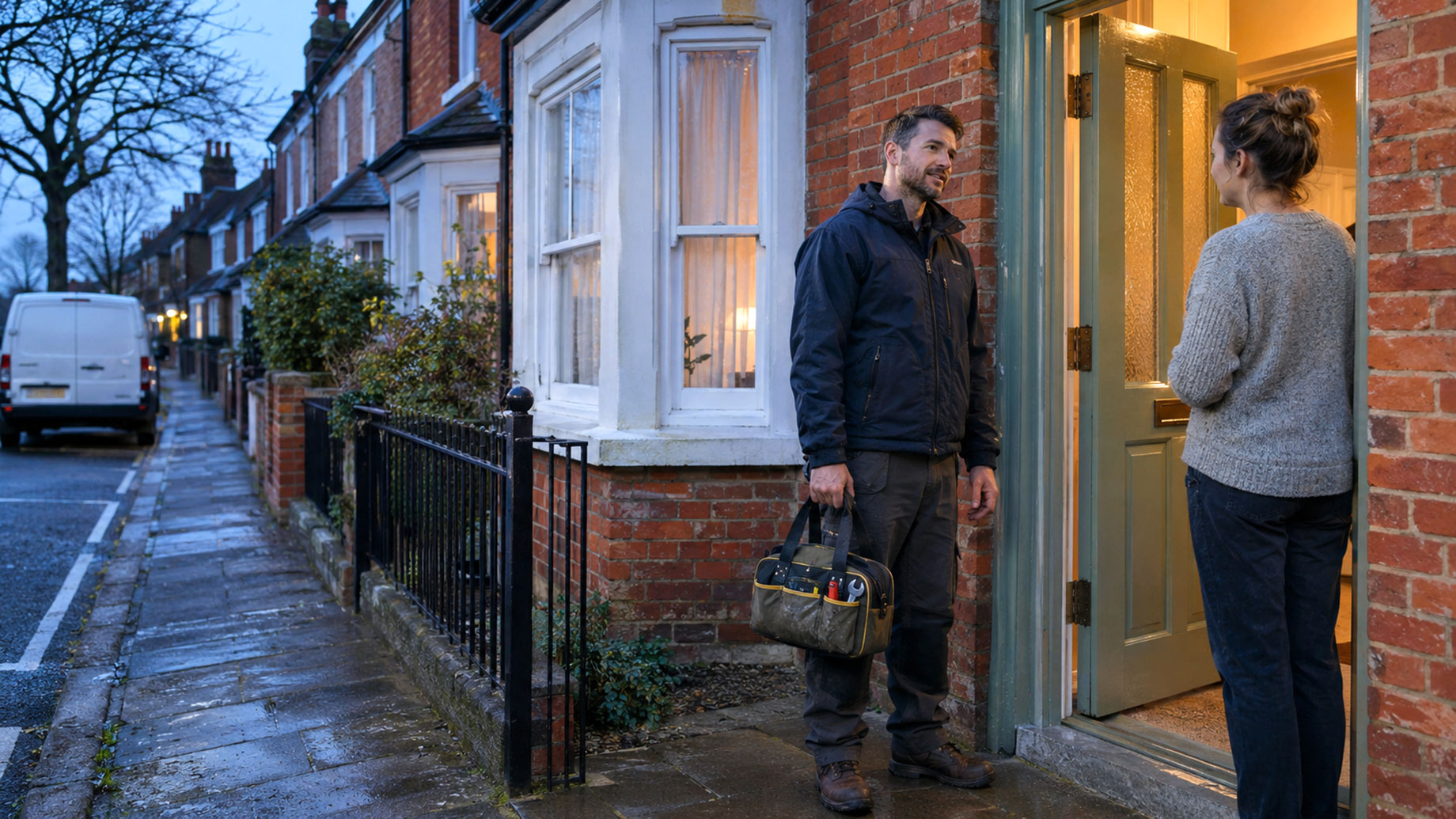
A burst pipe, overflowing toilet or sudden loss of water can turn an ordinary evening into a stressful scramble. In that moment, most people want one thing: someone who can arrive quickly and stop the problem getting worse.
Speed matters, of course. But so does asking the right questions before you agree to an emergency callout. Plumbing emergencies often happen outside standard working hours, when callout rates, availability and repair options can vary considerably. A few clear questions at the outset can help you understand what you are paying for, avoid surprises, and make a better decision under pressure.
First, establish whether it is truly an emergency
Not every plumbing fault requires an immediate overnight visit. A dripping tap may be irritating, but it is unlikely to cause serious damage by morning. A leaking pipe beneath a kitchen sink, however, can quickly damage cabinets, flooring and electrical fittings.
Before calling, assess the immediate risk. Ask yourself:
- Is water actively flowing or spreading?
- Can the water supply be isolated using the stopcock?
- Is there a risk of flooding, structural damage or electrical danger?
- Is sewage backing up into the property?
- Is there no heating or hot water in a household with vulnerable occupants?
If water is leaking near electrical sockets, consumer units or appliances, avoid touching anything wet and switch off electricity only if it is safe to do so. In the case of a suspected gas leak, leave the property, avoid switches or naked flames, and contact the National Gas Emergency Service on 0800 111 999 rather than a standard plumbing contractor.
For water-related issues, turning off the internal stopcock can sometimes buy valuable time. Many homeowners do not know where theirs is until an emergency occurs, so it is worth locating it in advance. It is commonly found beneath a kitchen sink, in a utility room, near the front door, or where the water supply enters the building.
Ask for the callout charge and what it covers
The first financial question should be straightforward: “What is your emergency callout fee, and what does it include?”
Some firms charge a fixed attendance fee, while others apply an hourly rate from the moment the engineer arrives. There may also be higher rates during evenings, weekends and bank holidays. Neither approach is inherently better, but you should understand the structure before authorising the visit.
A useful follow-up is whether the callout includes the first hour of labour. If it does, ask what happens after that hour and whether time is billed in full-hour or half-hour increments. Small details matter when a job runs longer than expected.
It is also sensible to ask whether there is a minimum charge. An engineer may resolve a minor issue quickly, but the minimum fee could still apply. Knowing this beforehand helps you weigh up whether an immediate repair is necessary or whether the issue can safely wait until normal working hours.
Confirm how quickly someone can realistically attend
“Emergency” can mean different things to different providers. One company may have an engineer available locally; another may need to travel from elsewhere in Essex or beyond. Instead of accepting a vague promise that someone will come “as soon as possible,” ask for an estimated arrival window.
When comparing options, look for providers that explain their availability, service area and approach to urgent faults clearly. For example, this guide to finding an emergency plumber essex outlines the types of urgent plumbing situations where prompt attendance is particularly important.
Remember that traffic, weather and previous jobs can affect arrival times. A reliable company will not always be able to promise an exact minute, but it should communicate honestly if delays arise.
Find out whether the price can be estimated before work begins
Emergency plumbing often involves some uncertainty. Until the source of a leak is found or a blockage is investigated, no plumber can responsibly guarantee a final repair price. That said, you should still ask what level of pricing clarity is possible.
Ask for a breakdown of likely costs
Before work begins, ask whether the engineer can explain:
- Labour charges and the billing intervals used
- Parts likely to be needed
- Any additional charges for specialist equipment
- Whether VAT is included in the quoted amount
- The estimated cost of making the issue safe versus completing a permanent repair
This distinction between a temporary fix and a full repair is important. In an emergency, the immediate priority may be to stop a leak, isolate a faulty section of pipework or restore essential water flow. A more extensive repair might need to be scheduled later, especially if parts are not readily available.
A good tradesperson should explain that difference in plain language rather than pressuring you into approving work you do not understand.
Check qualifications, insurance and relevant experience
Plumbing covers a wide range of work, and not every emergency involves the same skills. A blocked drain, failed boiler, leaking radiator valve and burst mains pipe require different tools and expertise.
For boiler or gas-related work, ask whether the engineer is Gas Safe registered and confirm that their registration covers the type of appliance involved. You can verify this through the official Gas Safe Register. For major water damage or work affecting pipework behind walls and floors, it is reasonable to ask whether the business holds public liability insurance.
Experience with your particular problem also matters. If you have a pressurised heating system, a macerator toilet, an unvented hot-water cylinder or older lead pipework, mention it during the call. The more accurate the initial description, the more likely the engineer can arrive prepared.
Ask what you can do safely before the plumber arrives
A professional emergency service should be willing to offer basic, safe advice over the phone. This may include isolating the water supply, placing containers beneath a drip, moving belongings away from affected areas, or avoiding use of a particular appliance.
Do not attempt repairs you are unsure about. Tightening fittings, dismantling traps or forcing a blockage can turn a manageable issue into a more expensive one. Take photographs of the damage if it is safe to do so, especially if you may need to make an insurance claim later.
It is also worth asking whether you should continue using the toilet, taps, boiler or washing machine. In some cases, continued use can worsen flooding or cause wastewater to back up elsewhere in the property.
Get confirmation of the work completed
Once the immediate problem is resolved, ask for an invoice or written record that sets out the work undertaken, parts used and charges applied. If the repair is temporary, make sure you understand what follow-up work is recommended and how urgently it should be arranged.
An emergency callout is rarely anyone’s preferred way to spend an evening. Yet a calm, informed approach can make a difficult situation much more manageable. Ask about attendance, pricing, scope, qualifications and next steps before agreeing to the work. In a stressful moment, those few questions can protect both your home and your budget.
