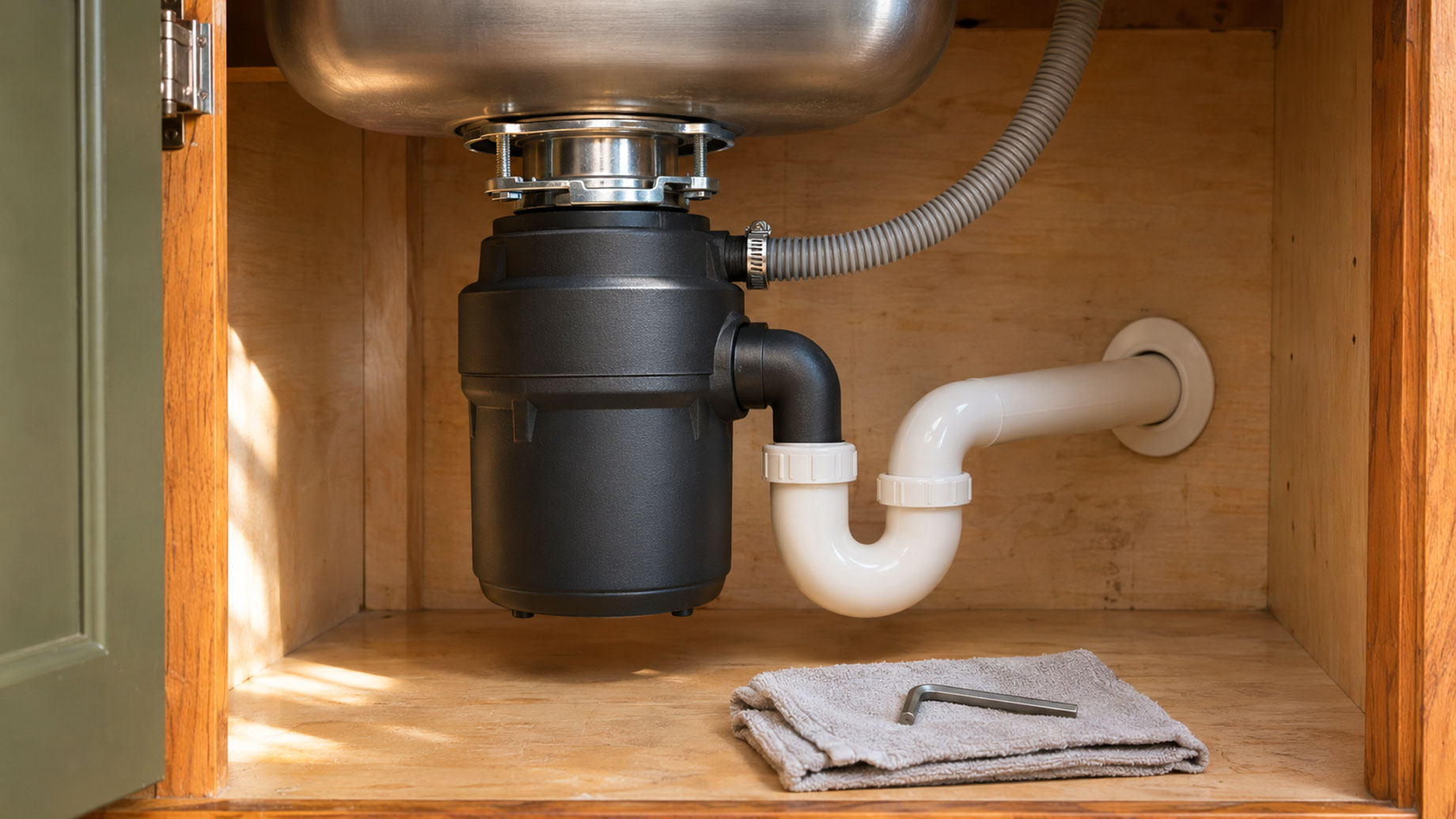
Most homeowners assume nobody will touch a garbage disposal. It sits under the sink, wired to a switch, and feels more like an appliance than part of your plumbing. So when it hums and refuses to spin, people stand over the sink with a flashlight and a mounting sense of doom.
Here is the short answer: yes, and often. Many plumbers will diagnose a jammed or leaking unit, free the flywheel, check the flange and drain connections, and replace the whole disposal when repair does not add up. What most will not do is rebuild the motor or swap a sealed internal part, because disposals are not built for that. If you want the long version of that answer, this breakdown of do plumbers repair garbage disposals covers the same ground from a shop that does the work daily.
It’s worth keeping a wrench and a 1/4-inch hex key under your sink. Disposals fail in predictable ways, and some of those failures are a five-minute fix. The rest belong to someone with a van.
What a plumber actually does on a disposal call
A good tech walks in and does the same three things in order. First, they cut power at the breaker, not just the wall switch, because a switch can be wired wrong. Second, they check the flywheel. Third, they look at everything downstream, meaning the drain flange, the P trap, and the dishwasher line if yours ties in there.
From there the call splits two ways. If the motor is alive and the problem is mechanical, you are looking at clearing a jam, resetting the overload, or reseating a loose mount. If the housing is cracked or the motor is dead and the unit is old, replacement wins. Undersink leaks are a frequent find too, and a slow drip from the sink flange quietly rots the cabinet floor before anyone notices.
Fair warning about the trades: disposal work sits in a gray zone. Plumbers handle the plumbing side, appliance techs handle the motor side, and some shops skip disposals entirely. Call ahead and ask. Two minutes on the phone beats a wasted trip fee. According to OSHA, electrical shock and lockout hazards rank among the most cited concerns in repair work, which is exactly why nobody credible pokes at a disposal with the power on.
Use the Leak Point Test to decide whether to repair or replace
Use this quick check as a rule of thumb before you pay for a repair. Grab a dry paper towel and wipe every joint of the disposal housing, then run the unit for thirty seconds and wipe again. Where the towel comes back damp tells you almost everything.
| Where it is wet | Likely cause | Repair or replace? |
|---|---|---|
| Sink flange above the unit | Failed plumber’s putty or gasket | Repair. Cheap, and worth doing. |
| Dishwasher inlet or drain hose joint | Loose clamp or split hose | Repair. Swap the hose. |
| Bottom of the housing | Seal failure inside the motor housing | Replace. No honest fix exists. |
| Anywhere, plus the unit is 12 or more years old | Wear across the board | Replace before it takes the cabinet with it. |
That last row matters more than people think. A disposal that fails on its own schedule usually fails on a night when you are rinsing a roasting pan and the sink is already full. Replacing a tired unit on a quiet Saturday can spare you a breakdown in the middle of a holiday dinner.
When you can fix it yourself in five minutes
Plenty of jams never need a pro. Work through this list before you dial anyone:
- Kill the breaker. This is not optional, and the wall switch alone does not count.
- Shine a light down into the grind chamber. Pull out bones, produce stickers, string, or a spoon handle with pliers, never your fingers.
- Find the hex socket on the bottom of the unit, insert a 1/4 inch hex key, and rock it back and forth until the flywheel turns freely.
- Press the red reset button on the underside of the housing, then restore power and test.
- If the motor only hums and never spins, stop. You have a dead start winding or a seized bearing, and that is a replacement.
Keep chemical drain cleaner out of the disposal, and resist the urge to run a sink full of grease through it hoping the blades sort it out. Neither ends well. The U.S. Environmental Protection Agency notes that fats, oils, and grease are a leading cause of sewer blockages, and your disposal is not a fat rendering plant.
Repair or replace? Follow the 50 percent rule
If the repair costs more than half the price of a comparable new unit, replace it. A basic half horsepower model runs modestly, and a mid range unit is not much more, so a repair that creeps toward that number buys you a tired machine with a fresh gasket.
Two complications push the decision harder. Old units were built at a specific horsepower for a reason, and dropping in a bigger motor on undersized wiring is a code question for a licensed electrician, not a Saturday project. Also check the age first. If your unit came with the house and you have no idea how old it is, assume it is older than you think.
One more thing worth checking before you spend anything: Consumer Action and similar consumer groups regularly flag how thin warranty coverage can be on home appliances, so pull your paperwork and see whether parts are still covered. A free replacement under warranty changes the math completely.
What to say when you call
Vague calls get vague answers. Tell the shop four things: the brand, whether the motor hums or is silent, whether water leaks and from where, and how old the unit is. That combination lets most dispatchers tell you in one sentence whether they will send someone.
Expect a diagnostic fee in most markets, sometimes waived if you approve the work. And ask directly whether they stock replacement disposals on the truck. If they do not, you are scheduling a second visit, and you should know that upfront.
The bottom line on a jammed disposal
Your disposal is a plumbing fixture with a motor bolted on, and that is why plumbers end up handling most of these calls. They will clear the jam, fix the flange, and swap the unit when the seal is gone. What they will not do is resurrect a motor that has already quit on you.
Try the hex key first. If the flywheel moves and the leak is at the top, you probably have a cheap fix on your hands. If the housing weeps and the unit predates your last two phones, start pricing a replacement tonight. One question worth sitting with: how old is the disposal under your sink right now, and would you bet a holiday dinner on it?
