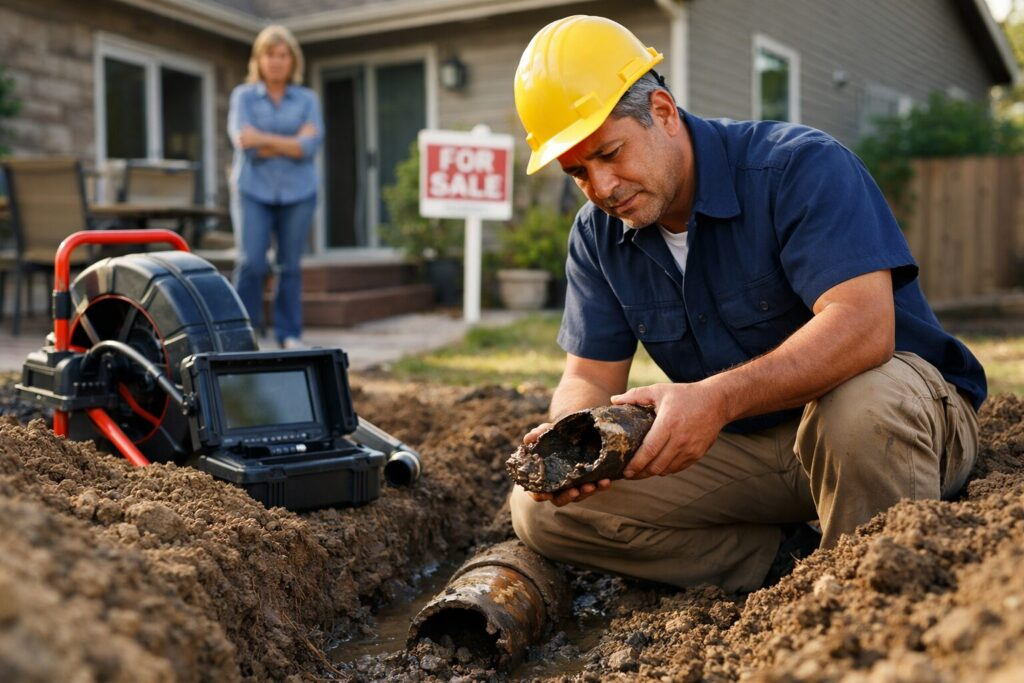
A sewer problem tends to surface at the worst time. The house is listed, the buyer’s offer is in, and then the inspector runs a camera down the main line and finds a crack, a belly in the pipe, or roots packed into a joint. Suddenly the deal is back on the table, and the buyer wants a credit, a lower price, or a repair before closing.
Sellers who deal with the sewer line early keep control of the process. Knowing the warning signs, and understanding when sewer repair makes sense before listing, can mean the difference between a smooth closing and a stressful renegotiation.
Quick Answer: Should You Fix Sewer Problems Before Selling?
In most cases, yes. If you know of a sewer line problem, or you see warning signs such as recurring clogs, slow drains, gurgling, or sewage odors, getting it inspected and repaired before listing usually costs less than a buyer’s price reduction and avoids delays. Many sellers also have a legal duty to disclose known defects, so ignoring the problem rarely makes it go away.
Why Sewer Lines Matter So Much to Buyers
A sewer line is out of sight, but it’s one of the most expensive systems in a house to fix. Buyers know this, and many now request a sewer camera inspection as part of their due diligence, especially for older homes or properties with mature trees.
A failing line signals potential excavation, landscaping damage, and a repair bill that can run into the thousands. Even when the fix is manageable, uncertainty makes buyers nervous. Nervous buyers ask for concessions, or they walk.
Warning Signs That Could Derail a Sale
Recurring Clogs and Slow Drains
One slow drain can be a local clog. Several slow drains at once, or clogs that return soon after clearing, often point to a problem in the main line. If you’ve needed repeated drain cleaning in a short time, take it seriously.
Gurgling Sounds and Bubbling Toilets
Air trapped by a partial blockage escapes through fixtures as gurgles or bubbles. If your toilet gurgles when the washing machine drains, the issue is likely in a shared line rather than a single fixture.
Sewage Odors Inside or Outside the Home
A persistent smell near drains, in the basement, or in the yard can mean a cracked or broken line leaking gas or waste. Buyers notice odors quickly during showings, and so do inspectors.
Wet or Unusually Green Patches in the Yard
Soggy ground, sinkholes, or a lush strip of grass along the line’s path can signal a leak. Sewage acts like fertilizer, so one patch of grass growing faster than the rest deserves a closer look.
Water Backing Up Into Tubs, Showers, or Floor Drains
When running one fixture causes water to rise in another, the main line is likely restricted. This is one of the clearest signs of a serious blockage and one buyers will not overlook.
Visible Foundation Cracks or Settling
A leaking sewer line can wash out soil beneath the foundation, contributing to settling. While foundation issues have many causes, sewer leaks are one of them, and inspectors may flag the connection.
Older Pipe Materials
Clay, cast iron, and Orangeburg pipe have all been used in older homes and are prone to cracking, corrosion, or collapse. Knowing what’s in the ground helps you judge the risk before the buyer’s inspector does.
What a Sewer Camera Inspection Reveals
A camera inspection is the most direct way to see what’s happening underground. A technician feeds a small camera through a cleanout, and the footage shows cracks, offsets, root intrusion, sagging sections, and buildup. You can use that information to decide whether the line needs cleaning, spot repair, or replacement.
Having your own inspection done before listing also lets you choose the contractor and negotiate the price calmly, instead of reacting to a buyer’s timeline.
Repair or Replace? How to Decide
The right fix depends on what the inspection finds.
- Cleaning or hydro jetting may be enough when the problem is buildup or minor root intrusion.
- Spot repair addresses a single damaged section without replacing the entire line.
- Trenchless methods, such as pipe lining or pipe bursting, can restore a line with less digging when conditions allow.
- Full replacement may be necessary when the pipe has collapsed, shifted, or deteriorated along much of its length.
A reputable contractor will explain the options, show you the footage, and give you a written estimate. Companies like Rod Plumbing offer sewer repair services, along with inspection, so homeowners can get a diagnosis and a quote in one visit.
Buying Guide: What to Look for in a Sewer Contractor
| Factor | Why It Matters |
| Licensing and insurance | Confirms the contractor meets state requirements and protects you during excavation work |
| Camera inspection | Shows the true condition of the line before any recommendation |
| Repair options | A contractor who offers both traditional and trenchless methods can recommend what fits |
| Written estimate | Lets you compare scope and cost with other bids |
| Warranty | Gives buyers confidence and demonstrates the contractor stands behind the work |
| Permit handling | Many sewer repairs need permits, and documentation helps at closing |
| Timeline | A fast schedule matters when you’re trying to list or close on time |
| References | Past customers show how the contractor handles complications |
Keep every report, invoice, and warranty. Handing a buyer a clean inspection and repair record builds trust and can shorten negotiations.
Common Mistakes to Avoid
Hoping the inspector won’t check. Sewer scopes are increasingly common, and a hidden defect usually surfaces.
Skipping disclosure. Many states require sellers to disclose known defects, and concealing one can lead to legal trouble after closing.
Repairing at the last minute. Rushed work during escrow gives you less negotiating power and may cost more.
Choosing the cheapest quote without comparing scope. A low bid may leave out permits, restoration, or a warranty.
Ignoring the yard. Landscaping, driveways, and patios can be affected by excavation, so ask how restoration is handled.
Throwing away paperwork. Documentation is valuable proof that the issue was handled properly.
Expert Tips
Order a camera inspection before you list the home, particularly if the house is older, has large trees near the line, or has a history of clogs.
Ask the contractor for a video copy of the inspection. You can share it with buyers and their agents.
Talk to your real estate agent about timing. In some markets, offering a completed repair with a warranty is a strong selling point.
Compare the cost of repair against the credit a buyer might request. The repair often costs less, and it removes the uncertainty.
Check whether your city has any requirements related to sewer laterals at the time of sale. Some areas require inspection or certification.
FAQs
Do I have to disclose sewer problems when selling my home?
In many states, sellers must disclose known defects. Check your local requirements and talk to your agent or an attorney if you’re unsure.
How much does sewer repair cost?
Cost depends on the method, pipe depth, length, and site conditions. A camera inspection and written estimate will give you a realistic number.
Will buyers ask for a sewer inspection?
Many do, especially for older homes. Having your own inspection ready can speed up the process.
Can I sell a house with a known sewer problem?
You can, but you may need to lower the price, offer a credit, or complete repairs. Disclosure and documentation are important.
How long does a sewer repair take?
Spot repairs and trenchless methods can often be completed in a day or two, while full replacement may take longer depending on conditions.
What are the signs of tree roots in a sewer line?
Recurring clogs, slow drains, gurgling, and backups are common signs. A camera inspection can confirm root intrusion.
Is trenchless sewer repair a good option?
It can be, since it reduces digging and landscaping damage. A contractor can tell you whether your line is suitable.
Conclusion
A sewer problem doesn’t have to end a sale, but ignoring one often makes the sale harder. Recurring clogs, gurgling, odors, backups, damp yard spots, and older pipe materials are all signs worth investigating before you list. A camera inspection gives you facts, a written estimate gives you options, and timely sewer repair gives buyers confidence. Taking care of the line on your own schedule protects your price and keeps your closing on track.