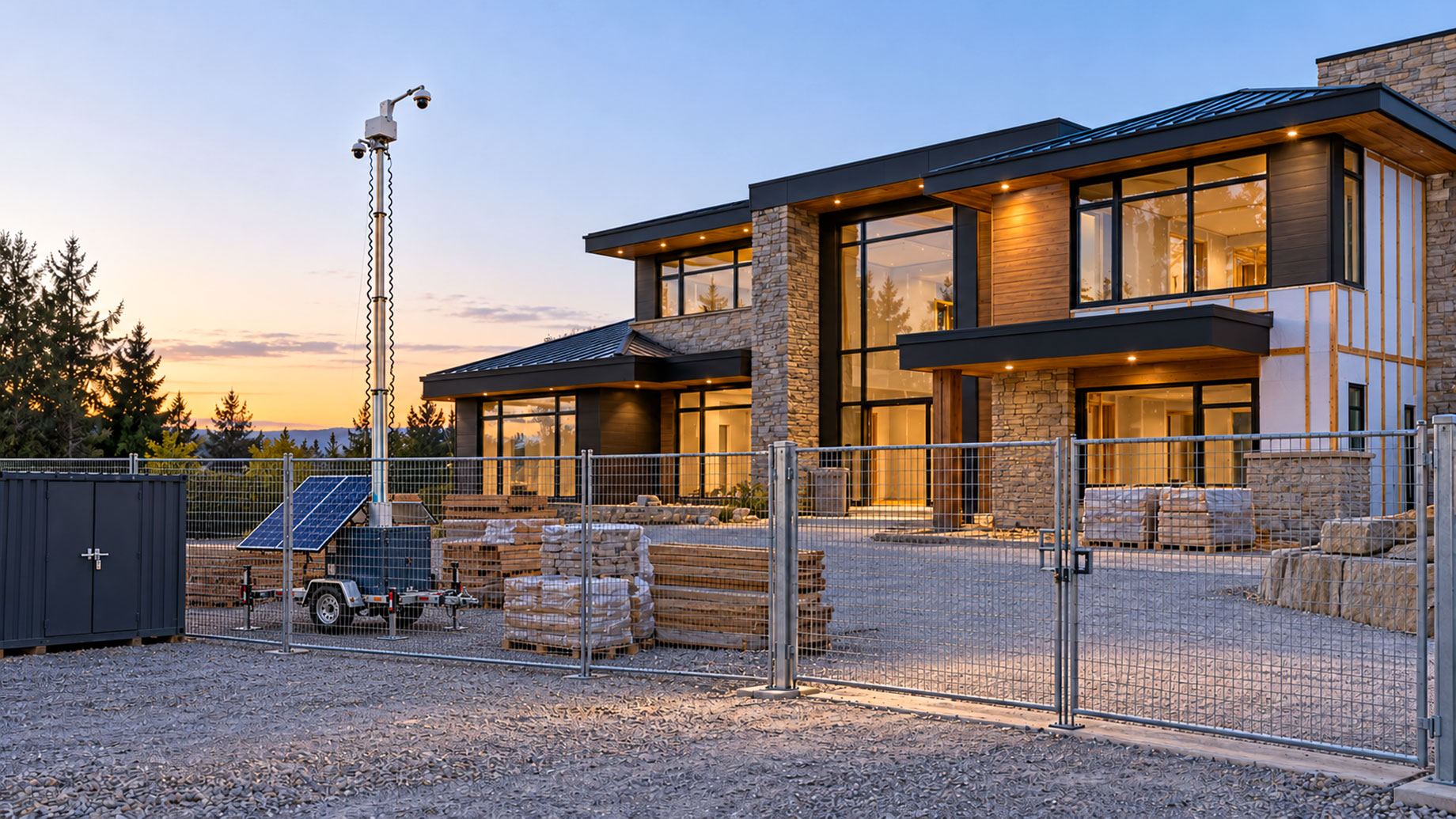
A luxury home is often most vulnerable before anyone moves in. During construction or a major renovation, the property sits unoccupied for long stretches while expensive appliances, custom fixtures, building materials and tools are stored on site, making it an attractive target for theft and vandalism. The most effective protection is a layered plan: secure fencing and storage, controlled access, good lighting and live video monitoring that can spot intruders and trigger a response in real time. Planning security from the first day of the build protects both the budget and the schedule.
For a home designed to be exceptional, the building phase deserves the same level of care.
Why High-End Builds Attract Thieves
Luxury construction sites contain far more than lumber and concrete. Many hold items that are valuable, easy to resell and difficult to trace:
- Premium appliances delivered ahead of installation
- Designer fixtures, including faucets, lighting and hardware
- Copper wiring and plumbing, valued for its scrap price
- Imported stone, tile and flooring
- Smart home equipment, audio systems and security hardware
- Contractors’ tools and machinery
Beyond the direct cost of replacing stolen items, theft can delay custom orders, push back completion dates and create disputes between builders, suppliers and insurers. For bespoke homes with long lead times on specialist materials, a single break-in can set a project back by weeks or months.
Risks Through Each Phase of the Project
Security needs change as a project progresses:
| Project phase | Main risks | Useful measures |
|---|---|---|
| Groundwork and framing | Equipment theft, fuel theft, trespassing | Perimeter fencing, equipment locks, monitored cameras |
| Rough-in stage | Copper wire and pipe theft | Secure storage, after-hours monitoring |
| Finishing and fixtures | Theft of appliances, fixtures and premium materials | Scheduled deliveries, locked rooms, live video monitoring |
| Pre-handover | Vandalism, break-ins, squatting | Alarm systems, lighting, regular inspections |
The finishing stage is often the riskiest. Once high-value appliances and fixtures arrive, a partially completed home can hold hundreds of thousands of dollars in goods with no one living there to notice suspicious activity.
Building a Layered Security Plan
No single measure is enough on its own. The strongest approach combines several layers:
- Secure the perimeter. Use sturdy fencing with locked gates and clear signage indicating the site is monitored.
- Control access. Keep a log of contractors and deliveries, and limit who has keys or gate codes.
- Store valuables carefully. Lock tools and materials in secure containers or rooms, and schedule deliveries of high-value items as close to installation as possible.
- Light the site. Motion-activated lighting helps deter intruders and improves camera visibility at night.
- Add live video monitoring. Cameras watched in real time allow operators to detect activity and respond before anything is removed.
- Plan a response. Agree in advance who is contacted when an alert occurs, from the builder to local police.
Live monitoring is especially valuable on sites without power or permanent infrastructure. Companies such as wifieye provide solar-powered surveillance towers with 24/7 remote monitoring, so builders and homeowners can secure a property from the first day of groundwork. Because the towers are mobile, they can be repositioned as the project develops.
Balancing Security and Privacy
Luxury homes are often in quiet residential neighborhoods, gated communities or scenic rural areas, where neighbors expect privacy. Thoughtful camera placement helps avoid problems. Focus coverage on the property, entrances and storage areas rather than neighboring homes or public spaces where possible.
It’s also wise to check any community or homeowners’ association rules before installing equipment. Some communities have guidelines on signage, lighting and temporary structures. Keeping neighbors informed about the project and its security measures can build goodwill and even encourage them to report suspicious activity.
Insurance and Documentation
Security works best alongside the right insurance. Many projects rely on builder’s risk insurance, which can cover materials and structures during construction. Coverage varies widely, so homeowners and builders should review what’s included, what deductibles apply and whether theft of stored materials or appliances is covered. The nonprofit Insurance Information Institute offers plain-language guidance on how different property and homeowners policies work, which can help when comparing options or asking your broker the right questions.
Documentation matters too. Keep records of deliveries, serial numbers for appliances and equipment, and photographs of high-value items. Video footage from monitored cameras can also support insurance claims and police investigations if an incident does occur.
From Construction Site to Finished Home
As the project nears completion, security needs shift from protecting a building site to protecting a home. Temporary measures such as mobile towers can remain in place until permanent systems are installed and tested.
This is a good time to plan the long-term security setup, including alarm systems, smart cameras, access control and integration with home automation. Coordinating the handover carefully helps avoid gaps in protection between the builder leaving and the owners moving in.
Protecting the Investment From Day One
Building or renovating a luxury home is a major investment of time, money and creativity. Protecting it during construction should be part of the plan from the very beginning, not an afterthought once something goes missing.
With strong perimeter security, careful storage, smart scheduling and live video monitoring, homeowners and builders can reduce risk, keep projects on track and ensure that every custom detail arrives safely in its rightful place.
