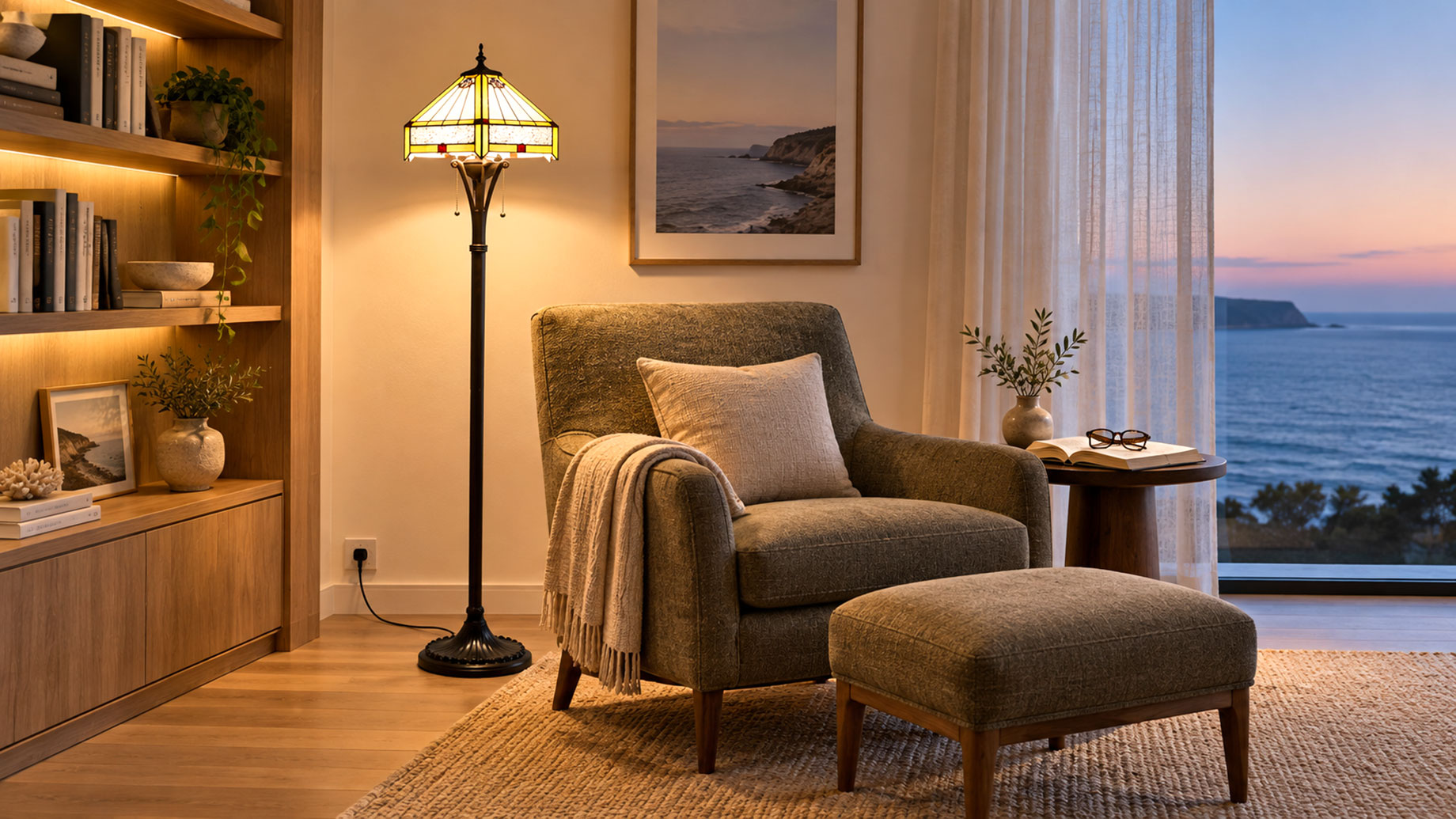
A reading chair can occupy a beautiful corner and still remain unused. Perhaps the light falls behind the reader, the nearest table requires an awkward reach, or the chair sits directly beside the route to the kitchen. The setting photographs well, but the experience never quite settles into place.
In a thoughtfully designed home, a reading retreat earns its space through the way these small details work together. The chair supports a comfortable position. A book and a drink have somewhere to land. Lighting serves the page while giving the surrounding room a sense of warmth.
A Tiffany-style floor lamp can bring a distinctive visual identity to this arrangement. Its patterned glass introduces color and detail at a human scale, particularly in contemporary interiors with broad surfaces and restrained furnishings. The challenge is to integrate that character into a setting that works as comfortably after sunset as it does in daylight.
Choose a Place to Pause
Begin with the position of the chair rather than the position of the lamp. Look for a part of the room where someone can sit without feeling that they are blocking a doorway, interrupting a conversation, or facing a television that is always in use.
A window bay, the end of a library wall, or a quieter side of an open living room can provide a starting point. Consider the view from the seat as carefully as the view toward it. A garden, a piece of art, or a well-proportioned section of shelving gives the eye somewhere pleasant to rest between pages.
Before committing to the arrangement, sit there with a book at the time of day the space will normally be used. Notice passing movement, reflections in nearby glass, and whether the chair needs to turn slightly. Small adjustments at this stage can prevent a decorative corner from becoming an inconvenient one.
Plan the Lamp and Chair as a Pair
Choosing a Tiffany standing reading lamp involves more than deciding which glass pattern suits the room. The relationship between the shade, the chair back, and the reader’s usual position determines how useful the arrangement will feel.
Start by placing the lamp beside the chair, slightly behind its front edge, then test the position while seated. The chair back should not intercept the light needed on the book, and the shade should not force the reader to lean forward or turn sideways. A fixed-height design deserves particular attention because its relationship to the seat cannot be changed by adjusting the stem.
Check the arrangement with the book held naturally, rather than placed conveniently for the lamp. Look for a shadow from the reader’s head or shoulder, a bright reflection on glossy paper, or a direct view of the bulb. Move the lamp or turn the chair before assuming that a brighter bulb is the answer.
The base also needs its own space. It should rest fully on a stable, level surface, clear of chair legs and the movement of a reclining mechanism. A lampshade that fits visually does not guarantee that the whole fixture fits physically.
Let the Glass Set One Part of the Palette
Stained glass becomes easier to integrate when it has a clear role in the room. A geometric shade can echo the lines of shelving and window frames. A botanical pattern can introduce a softer detail beside architectural furniture. Both approaches can sit comfortably within a modern interior.
Choose one restrained connection between the lamp and its surroundings. An amber border might relate to warm wood. A small green panel could find a counterpart in an olive cushion. A dark metal stem can connect with furniture hardware without requiring every finish in the room to be identical.
Avoid reproducing every color from the shade across the upholstery and accessories. Leaving some of those colors unique to the lamp gives its glasswork room to register. Plain fabric on the reading chair can be especially useful when the shade contains a complex pattern.
Consider the lamp both illuminated and unlit. Daylight reveals its outline and glass surfaces, while evening light changes the balance of color and reflection. It needs to belong to the room in both states.
Separate Decorative Glow from Useful Reading Light
When comparing Tiffany style reading floor lamps, examine the shade opening and the position of the light source as well as the decoration. A glowing shade can create atmosphere without necessarily placing enough useful light where a reader holds a book.
Evaluate the result in the intended setting. Text should be comfortable to follow in the reader’s preferred posture, without repeatedly tilting the page to escape reflections. Different readers may prefer different light levels, so involve the people who will actually use the chair.
Keep some gentle illumination elsewhere in the room. Light on shelving or a nearby wall can help the reading area feel connected to the rest of the interior. The aim is to retain an inviting evening atmosphere while making the book easy to see.
For bulb selection, follow the fixture’s stated requirements and maximum ratings. If adjustable brightness is important, verify compatibility between the lamp, bulb, and control before purchasing. A decorative style alone does not establish whether a fixture can be dimmed.
Give Everyday Objects a Proper Place
A reading retreat needs a small amount of practical support. Position a side table where a seated person can set down a cup or retrieve glasses without stretching behind the chair. Test its height against the armrest and the way the reader naturally moves.
Leave enough usable surface for the objects that belong there. A table covered by a large vase and a stack of decorative books may have little room for the book currently being read. One modest accessory is often sufficient when the lamp already supplies a strong visual detail.
A footstool can make the setting more inviting, but its placement should preserve a clear route into and out of the chair. Likewise, a rug should support the furniture arrangement without leaving the lamp base balanced across its edge. These are small decisions with a noticeable effect on daily use.
Judge Scale from Across the Room
A reading corner is experienced at two distances: from the chair and from the rest of the home. Once the close-up arrangement works, step back and assess its place within the wider interior.
When considering Tiffany standing lamps, compare overall height, shade width, and base dimensions with the furniture already selected. A slender stem can provide a useful vertical line beside a substantial chair, while an expansive shade may need more visual space around it.
In a room with tall ceilings, the lamp does not have to fill the entire vertical volume. Its purpose can be to establish a smaller, more intimate setting within that larger space. Shelving, curtains, and artwork can address the height of the room while the lamp remains proportionate to the person seated below it.
Keep power access in the plan. Route the cord away from walking paths and moving furniture, and do not conceal it beneath a rug. If the preferred position requires a new outlet, resolve that as part of the room’s electrical planning.
Finish by Using the Space
The final assessment should take longer than a photograph. Spend an ordinary evening in the chair, reading the kind of book or magazine normally kept at hand. Check whether the light remains comfortable, the controls are easy to reach, and the table works without constant repositioning.
Adjust what interrupts the experience. That might mean rotating the chair, removing an accessory, or shifting the lamp a short distance. A successful reading retreat often emerges through these modest refinements.
With those relationships resolved, stained glass becomes part of a lived-in interior: a familiar pool of light beside a favorite seat, a pattern noticed in passing, and a reason to return to the same corner when the day slows down.
