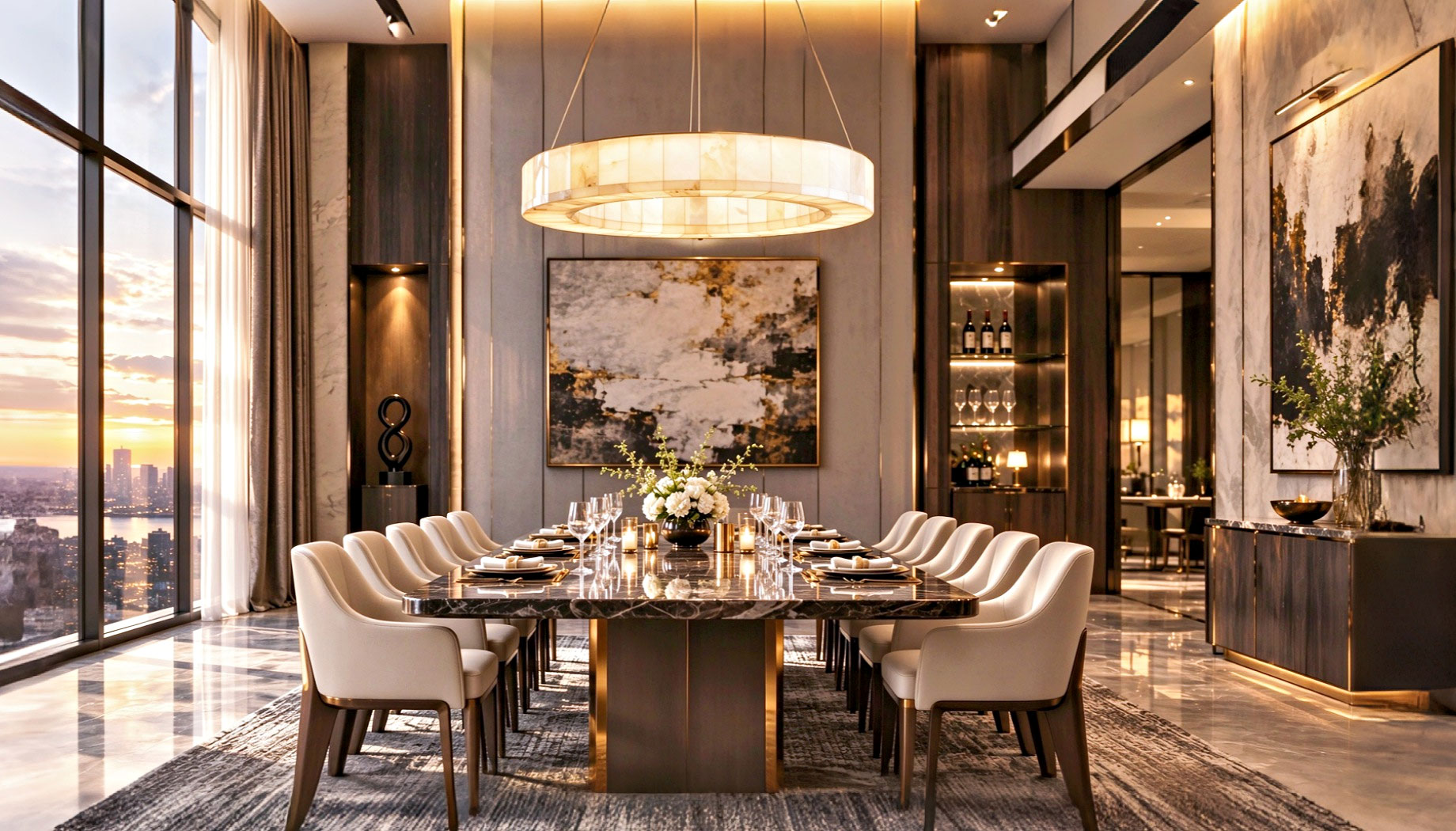
A formal dining room gives a host’s aesthetic judgment a social purpose. The table, seating, lighting, and surrounding details establish the character of an evening, while their arrangement determines how comfortably guests settle in and connect. In a luxury home, this space can turn dinner into a carefully considered occasion through proportion, texture, and thoughtful hospitality.
The strongest starting point is the experience you want to create. An intimate dinner for six, a family celebration, and a larger formal banquet place different demands on the same room. Plan around those occasions before choosing individual statement pieces.
Plan the Room Around the Evening
Begin with the number of people you regularly host and the way meals are served. Shared platters need usable space at the table’s center. Individually plated courses require a convenient route from the kitchen and somewhere to set down serving equipment between courses.
Draw the room with doors, windows, radiators, and existing cabinetry included. As an initial furniture-planning guide, allow about 36 inches between the table edge and a wall or fixed furniture. Add more room where people must pass behind occupied chairs, and test the arrangement with the actual seating you intend to use.
Measure from the front of a sideboard, rather than the wall behind it. That distinction can determine whether a generous-looking dining room still works when someone opens a cupboard or carries a tray through the space.
Make the Dining Table the Visual Anchor
The dining table should establish the room’s proportions and material direction. A rectangular table can reinforce a long room’s geometry, while a round table creates a more centralized arrangement. Consider the tabletop and base together: an elegant pedestal may offer flexible chair placement, but its shape still needs to accommodate guests’ feet.
Marble introduces veining and visual weight; solid wood brings grain, color, and warmth; a metal base can add a precise architectural line. Let one material carry the strongest expression, then use surrounding finishes to support it. A richly patterned stone top, for example, can sit comfortably alongside quieter upholstery and a restrained rug.
Evaluate samples with the room’s flooring and daylight. Ask about the exact finish, cleaning requirements, and protection needed during meals. The table must remain convincing as a working surface once flowers, glassware, and serving dishes arrive.
Balance Sculptural Seating With Lasting Comfort
Chairs shape the room from every angle, including the view through an open doorway. Curved backs, upholstered shells, exposed timber, and slender metal frames each create a different rhythm around the table.
When comparing dining chairs at Homebaa, assess seat height, overall width, back shape, and arm clearance against the actual table. A sculptural silhouette becomes useful when its proportions support relaxed dining. Where possible, sit in a sample long enough to notice pressure at the seat edge, the position of the backrest, and how easily you can stand.
Check whether arms slide beneath the tabletop and apron, and whether neighboring chairs have room to move independently. Upholstery deserves the same attention: review texture, care instructions, and how the material feels against clothing.
Matching every chair is optional. Distinctive end chairs can introduce variation if seat heights, proportions, and finishes keep the arrangement visually connected. Avoid sacrificing usable places simply to fit a more imposing chair at each end.
Build the Atmosphere With Layered Lighting
A chandelier establishes presence above the table, while additional lighting helps the whole room feel composed. Wall lights, a discreet lamp on the sideboard, or carefully directed illumination on artwork can prevent the dining area from becoming an isolated pool of brightness.
Homebaa’s alabaster chandeliers provide several sculptural directions to consider, including circular, tiered, and branching forms. Compare the fixture’s shape with the tabletop and room height. A long table may suit an elongated composition, while a circular fixture can reinforce a round setting.
Review the specified shade material as well as its appearance. Natural alabaster varies in veining and translucency, so photographs of an illuminated piece may convey a different impression from images taken with the light switched off. Confirm the individual product’s material description, light source, hanging range, and dimming compatibility.
As a starting point, the bottom of a dining chandelier often sits approximately 30 to 36 inches above the tabletop. Refine that position for the fixture, ceiling height, sightlines, and installation instructions. Check the view while seated, and have the installer confirm the appropriate support and electrical arrangement.
Give the Sideboard a Working Role
A sideboard can support both display and service. Use its surface for a deliberate arrangement of art, ceramics, or lamps, while leaving a clear area for the practical demands of the evening.
Keep frequently used glassware, linens, and serving pieces near the dining space. Before guests arrive, decide where drinks will be poured and used dishes collected. Separating these activities can reduce congestion around seated guests.
Choose display pieces with the room’s hierarchy in mind. If the table and chandelier already provide strong forms, a simpler sideboard composition can give the eye somewhere to rest. Check that cupboard doors and drawers open comfortably when every place is occupied.
Choose a Rug That Supports the Furniture
A rug helps define the dining group and adds texture beneath the table. Its practical test is the movement of the chairs: pull each one back as a guest would when sitting down or leaving. Chair legs should remain supported rather than catching on the rug’s edge.
Consider the table at its extended size if larger gatherings are part of the plan. A rug sized only for its everyday arrangement may become inconvenient when extra places are added.
Review pile height, cleaning requirements, and how easily the chairs move across the surface. A restrained pattern can connect stone, wood, and upholstery without competing with the tabletop. Request samples whenever possible and view them alongside the other finishes.
Rehearse the Setting Before Guests Arrive
Set one complete place before multiplying the arrangement around the table. Include the glassware, cutlery, and serving pieces the menu requires, then check elbow room and access to shared dishes.
Keep floral arrangements and decorative objects clear of conversation sightlines. Sit opposite another person to assess the actual view, and test the lighting at the level intended for dinner. Reading the menu, seeing the food, and recognizing facial expressions should feel comfortable.
Finally, walk the service route with a tray and pull out the chairs. These simple rehearsals reveal problems that a beautifully furnished, empty room can conceal. A high-end dining space succeeds when materials, comfort, and social atmosphere work together, allowing the host and guests to enjoy the occasion with ease.
