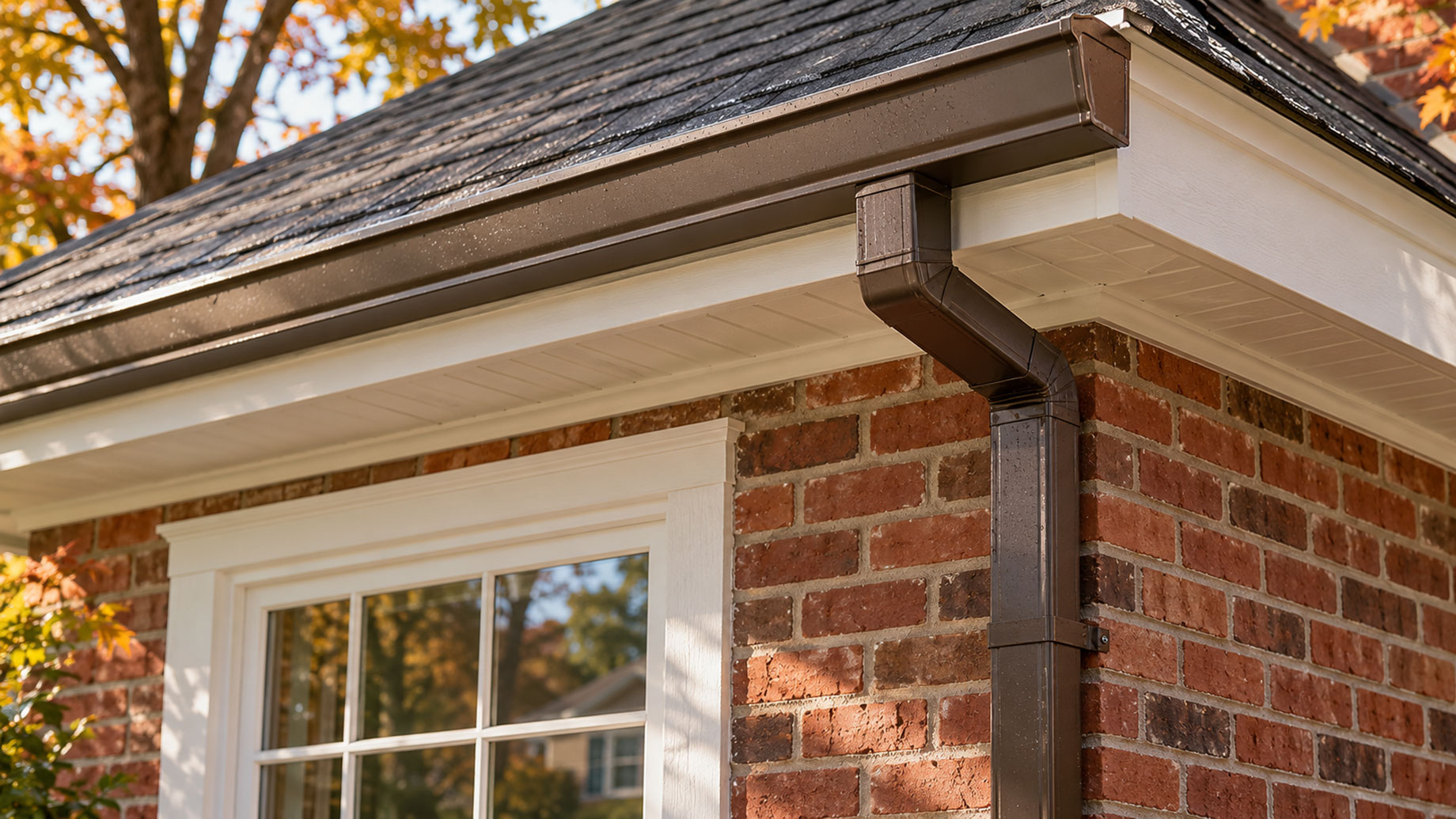
Buyers form an opinion of a historic house before they reach the front door, and the roofline is part of that opinion. A bungalow with clean eaves and tidy downspouts reads as a home that has been looked after. A colonial with dark streaks running down its brick reads as a home with questions attached. This checklist covers what gutters tell people in Plymouth, Michigan, and what to settle before the photographer arrives.
What Should You Know About Gutters in Plymouth, Michigan Before Listing a Character Home?
Know that gutters are among the first systems a buyer, an agent and an inspector read, and on an older home they are read closely. Plymouth pairs a walkable downtown with canopy-shaded streets and housing that runs from 1920s bungalows to newer township builds, so many sellers carry decades-old drainage beneath mature oaks and maples. Under the American Society of Home Inspectors Standard of Practice, an inspector looks at roof drainage, gutters and downspouts included, so their condition gets written down whether or not you mention it.
Based in North Kansas City, Missouri, The Gutter Guys works across the Kansas City metro and in southeast Michigan, including Plymouth. Its Plymouth page covers gutter protection, cleaning and replacement, and that page frames the fixes in the sections below.
For character homes the stakes are higher than for a standard listing. Buyers drawn to original millwork, deep eaves and period brick are looking for evidence that the home’s authenticity has been protected. Gutters are quick to inspect and slow to forgive neglect, so they make a reliable shortcut for judging the whole house.
The Walk-Around: Four Signs Worth Checking Before Photos
Walk the full perimeter in daylight, ideally soon after a rain, and look for these four signs:
- Staining on brick. Dark vertical streaks or pale mineral trails below a gutter line show where water has been spilling over instead of draining away.
- Sagging runs. A gutter that dips between hangers or leans away from the fascia has been dragged down by debris and ice.
- Corroding seams. Rust, flaking or weeping at joints and end caps on an original system shows the connections are failing.
- Water at the foundation. Soggy soil, pooling or splashback beside the basement wall means downspouts are not carrying water far enough away.
Fixing the cause matters more than disguising the symptom. The Gutter Guys’ Plymouth page describes seamless gutter replacement in Plymouth, Michigan in which continuous aluminum runs are cut on site to the roofline’s exact measurements, with correct pitch, hanger spacing and downspout placement. Because there are no seamed joints along the run, there is less to corrode or separate, and the runs are sized for the storm volumes Michigan actually delivers.
None of this requires a full teardown. A seller can often tell in one afternoon which of the four signs apply, and that knowledge shapes how to describe the home honestly in the listing conversation.
Why Does Staining on Brick Cost a Home So Much Curb Appeal?
Because brick is the face of many Plymouth colonials and bungalows, and a stain on it looks like a record of years of overflow. Overflowing gutters stain brick and siding and work against curb appeal, and the marks tend to sit at eye level from the sidewalk, where buyers pause.
Older brick and soft mortar on a 1920s home tolerate repeated wetting poorly, and the pale mineral bloom that results is easy to spot. Buyers may not know the term for it, but they recognize the look.
Scale matters too. Rainwater harvesters often work from a rule of thumb of roughly 620 gallons of runoff for every inch of rain on 1,000 square feet of roof. Even a modest bungalow roof sheds a great deal of water in one storm, and a clogged or undersized run sends the excess down the wall instead of into the downspout.
How Do Leaves and Ice Pull Gutters Off the Fascia?
Autumn debris fills the run, and winter snow and ice then freeze on top of it, adding weight that levers the gutter forward and away from the fascia. Gutters in Plymouth carry this double load every year, and older homes with original hangers and aged fascia boards feel it first. A guard keeps leaves out of the channel so ice has less to grip, which is why protection deserves a look under heavy oak and maple cover.
Guard styles differ, and the right one depends on roof pitch, tree exposure and gutter size, so it should be matched to the house rather than chosen off a shelf.
The Gutter Guys states on its website that gutters in Michigan should be cleaned at least twice a year, in late fall after leaf drop and in spring after snowmelt, with a third visit for homes beneath dense canopy. On a cleaning visit the crew clears debris by hand, blows out the runs, flushes every downspout to check flow, looks over hangers, seams and end caps, and writes up a condition report. A report like that doubles as a useful document for a listing file.
What Does Each Gutter Sign Usually Mean?
Each visible sign points to a likely cause, and pairing them keeps a seller from treating a symptom twice. The table below sets out the pattern.
| What a buyer sees | Likely cause | Pre-listing response |
|---|---|---|
| Dark streaks on brick | Overflow from clogged or undersized runs | Clear runs, confirm sizing, consider guards |
| Run pulled from fascia | Leaf and ice load on old hangers | Replace the run, check the fascia |
| Rust or weeping at seams | Aged seamed joints | Move to seamless aluminum |
| Wet soil by the basement wall | Short or blocked downspouts | Flush downspouts, extend discharge |
Where Is the Water Going When It Leaves the Roof?
It should travel through open downspouts and land well away from the foundation, but on many older homes it simply drops beside the wall. Plymouth, Michigan lies within the Rouge River watershed, which drains to the Detroit River, so what leaves a roof joins a larger system. Rain barrels and rain gardens, which the U.S. Environmental Protection Agency counts as green infrastructure for cutting stormwater runoff, can give downspout water a gentler destination on a historic lot.
A sensible order of work before listing:
- Clear every run and flush every downspout.
- Photograph the brick, fascia and foundation line so you know what a buyer will see.
- Note any run that sags, any seam that weeps and any downspout that dumps at the wall.
- Decide whether replacement or protection is warranted for what you found.
- Keep the cleaning condition report with the listing documents.
Gutters as Part of the Listing Story
Heading into 2027, buyers of older Plymouth homes still notice the details that show how a house has been kept. Clean brick, straight runs, tight seams and a dry foundation line quietly say that the home has been cared for. For a bungalow or colonial whose appeal rests on craftsmanship, well-kept drainage protects the character that buyers came to see. The checklist is short on purpose: four signs, one cleaning habit and a clear view of where the water lands.
