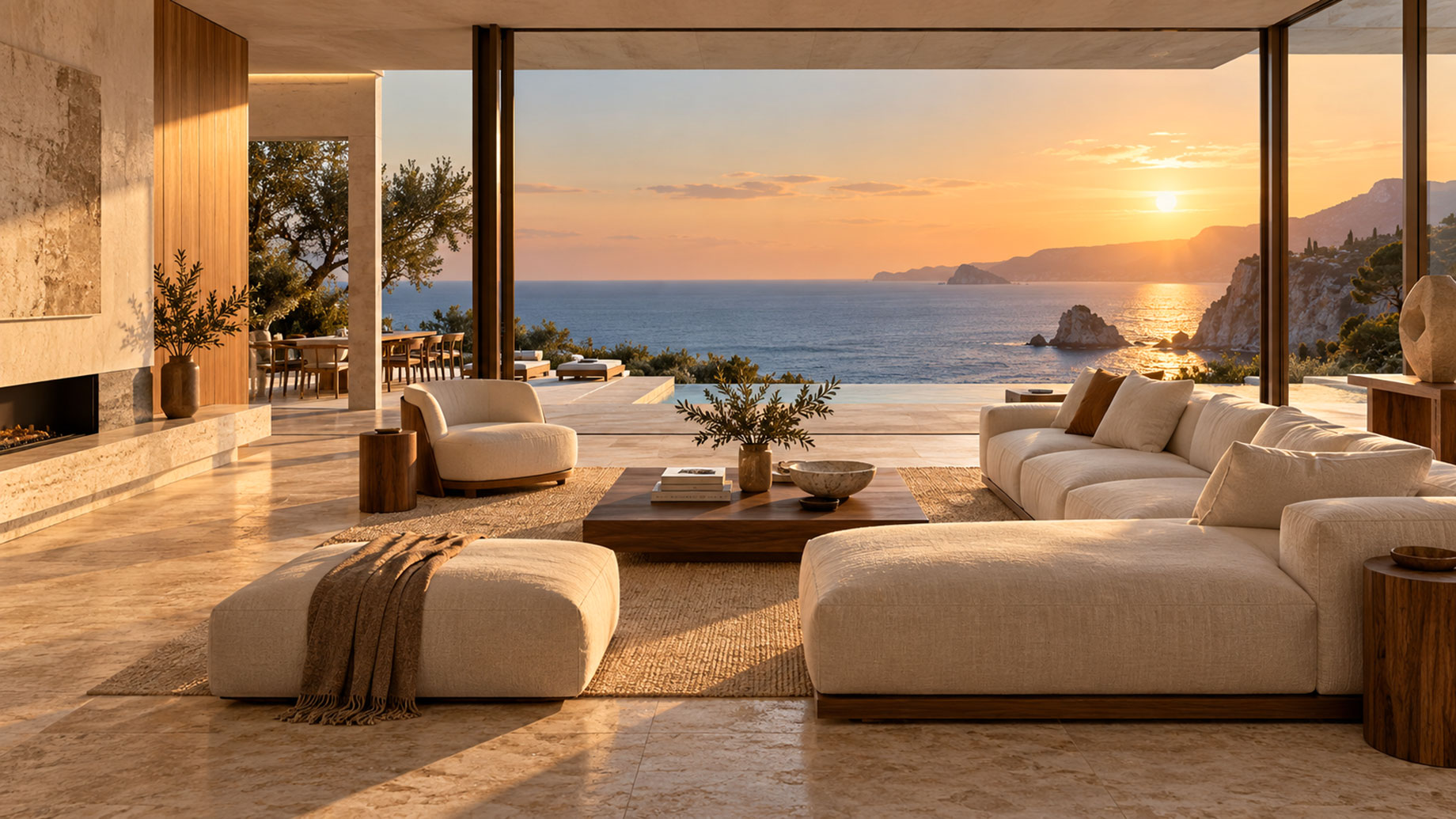
A photograph can describe a room with remarkable precision. It shows the veining in a stone surface, the relationship between furniture and architecture, and the way daylight reaches a quiet corner. Motion raises a different question: how might the space feel over a few moments?
For luxury property and interior design storytelling, that distinction matters. A slowly shifting curtain or a restrained camera movement can suggest atmosphere. Yet a generated sequence can also introduce a view, opening, or architectural detail that never existed.
AI video is therefore best approached with a defined purpose. A fictional design concept and a marketed property need different standards of presentation, even when their visual language is equally polished.
Decide what the viewer is being shown
Begin by identifying the source material. Is it a photograph of an existing home, an approved architectural rendering, or a speculative interior created to explore a style? That answer should determine both the creative brief and the eventual caption.
A fictional coastal living room can illustrate a discussion about warm minimalism. An animation based on a property photograph might support an atmospheric introduction, provided the result is checked carefully. Neither should be described as a recorded walkthrough if it was generated.
Make the distinction visible where the material appears. A concise label such as “AI-generated design concept” tells the viewer how to interpret the image without interrupting the editorial experience.
Choose one story about the space
Luxury presentation benefits from restraint. Rather than trying to reveal an entire residence in a single sequence, choose a specific relationship: the living room opening toward a terrace, the contrast between warm timber and cool stone, or the transition from interior shade to evening light.
That choice gives the shot a purpose. A camera movement toward a window can emphasize the connection between inside and outside. A closer view of a reading area can suggest intimacy. An elaborate movement through several rooms may imply a floor plan that the source image cannot establish.
Write the intended impression in one sentence. “A quiet retreat shaped by afternoon light” is a useful brief because it helps determine pacing, composition, and which details deserve attention.
Develop the visual reference first
For speculative editorial work, PicLumen can support the creation of an initial AI image reference. Establish the palette, materials, and composition before asking the scene to move.
An imaginary coastal interior might combine travertine flooring, cream upholstery, walnut accents, and a broad sea-facing window. Keep the design coherent rather than adding every recognizable marker of luxury. A few carefully related materials usually communicate a stronger concept than a crowded collection of expensive-looking objects.
When the subject is a real property, work from authorized source imagery and a documented brief. Keep the original photograph available throughout review. It is the reference for what is actually present, regardless of how appealing a generated variation might look.
Introduce motion conservatively
The PicLumen AI Video Generator allows video creation from text or reference images. For an interior concept, begin with a modest movement that serves the composition rather than attempting to explore unseen parts of the building.
A prompt could read: “Contemporary coastal living room in warm afternoon light. Subtle movement in sheer curtains, gentle reflections, slow camera push toward the seating area, calm architectural presentation.”
Treat that instruction as an experiment. The generated result still needs inspection for altered windows, bending furniture, unstable lines, and changes to the exterior scene. A slow movement can be effective precisely because it asks less of the image and gives the viewer time to appreciate the intended details.
Preserve the architecture’s credibility
For an actual listing, compare the full sequence against the original imagery. Check the number and placement of doors and windows, the arrangement of structural elements, and any visible relationship between rooms.
Look closely at mirrors and glazing. These areas can create apparent spaces or views that were absent from the reference. A beautiful reflection is still a problem if it suggests an ocean outlook or garden that the property does not have.
If the result changes material facts, do not use it to represent the residence. Choose another shot, return to verified photography, or commission appropriate footage. A caption cannot repair a sequence whose central impression is inaccurate.
Give the sequence room to breathe
During editing, use a small number of shots with clear roles. A wider composition establishes the design, a detail shot emphasizes material, and a final frame returns to the overall atmosphere. Avoid transitions that manufacture a continuous journey between unrelated spaces.
Add any property name, designer credit, or descriptive wording afterward so it remains accurate and legible. Select music with appropriate usage rights and consider whether silence or a restrained ambient track better serves the presentation.
Prepare the composition for its destination. A vertical social excerpt may need a different focal point from a widescreen editorial embed. Check both versions on the devices readers are likely to use.
Match the ambition to the material
An imagined interior can support a design essay, an early creative discussion, or a mood-led social post. A verified property film has a different responsibility: helping viewers understand a specific place. Keep those purposes clear throughout production.
Before commercial use, confirm the relevant platform terms and permissions for the source photographs or renderings. Retain the original files and final approval notes with the finished asset.
The most persuasive luxury storytelling does not need relentless movement. It needs an assured point of view, attention to materials, and respect for the space being presented. AI video becomes useful when it helps communicate that point of view while preserving the viewer’s confidence in what they are seeing.
