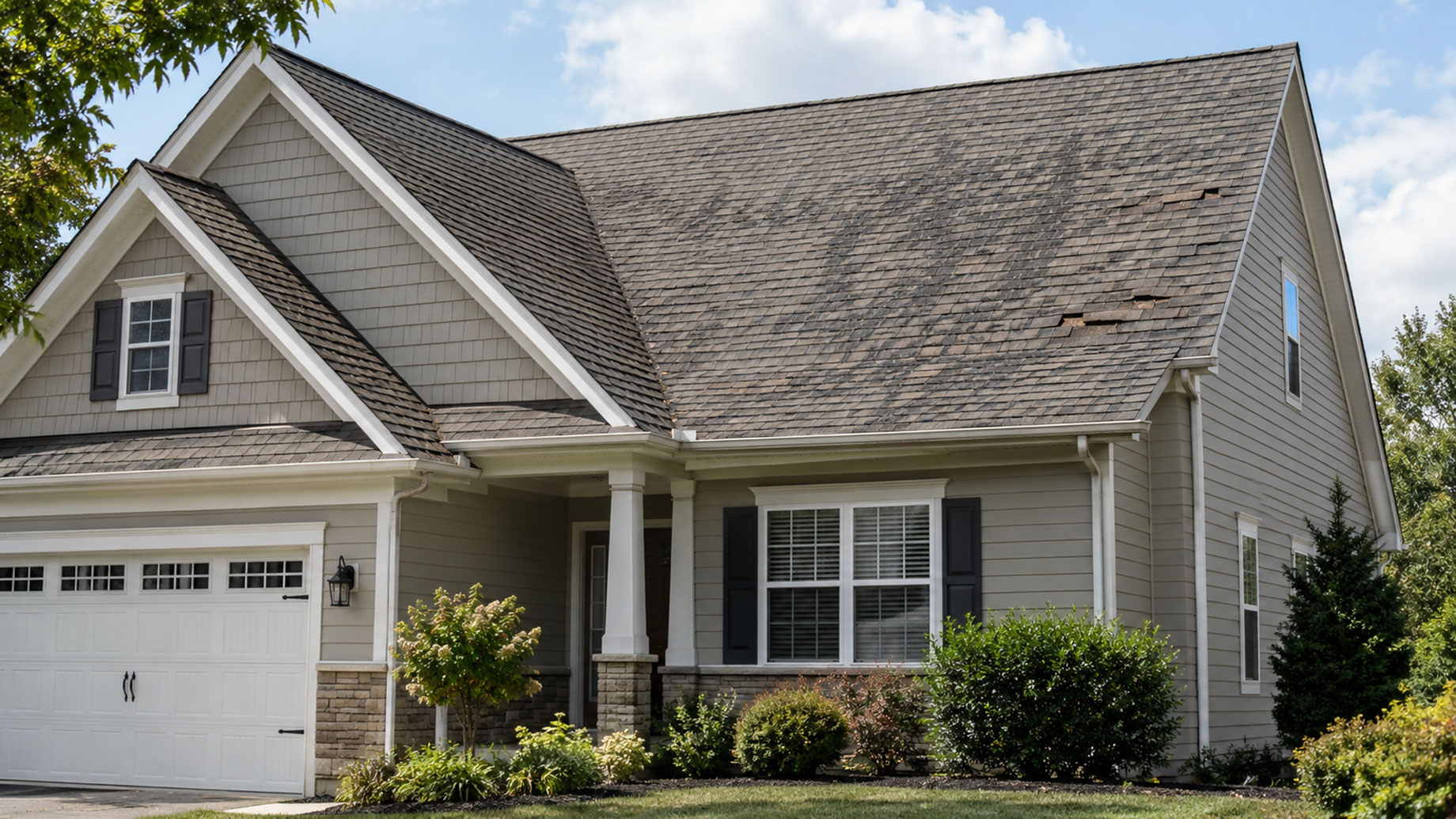
A roof rarely fails all at once. It degrades gradually, shingle by shingle, season by season, until a homeowner is faced with a decision they should have started thinking about years earlier. The tricky part is that most of the early warning signs are easy to miss or dismiss as minor cosmetic issues rather than indicators of a system nearing the end of its useful life.
Recognizing the actual roof replacement signs early gives homeowners time to plan and budget for a replacement on their own timeline, rather than delaying a roof replacement and being forced into an emergency decision after a leak has already caused interior damage.
Quick Answer: What Are the Clearest Signs a Roof Needs Replacing?
Common signs include shingles that are curling, cracking, or losing significant granules, visible sagging in the roofline, daylight visible through the attic roof boards, and a roof that’s approaching or has exceeded its expected lifespan, typically 20 to 25 years for asphalt shingles. Multiple repairs within a short period, especially for the same recurring issue, also suggest a full replacement may be more cost-effective than continued patching.
Why Roof Age Matters as Much as Visible Condition
Most homeowners focus entirely on visible damage when evaluating whether a roof needs replacing, which makes sense but misses part of the picture. A roof’s age relative to its material’s expected lifespan matters just as much, since materials degrade internally in ways that aren’t always visible from a casual inspection, even when the roof looks reasonably intact from the ground.
Asphalt shingles, the most common roofing material, typically last 20 to 25 years under normal conditions, though this varies based on climate, ventilation, and installation quality. A roof approaching this age range deserves closer inspection for roof replacement signs, even if it doesn’t show obvious visible damage, since the underlying materials may have degraded enough that a significant weather event could cause sudden, serious problems.
Recurring repairs are another signal that’s easy to underweight. A single repair after an isolated storm event is normal roof maintenance. Multiple repairs within a year or two, especially addressing the same underlying issue repeatedly, often indicate that the roof’s overall condition has declined enough that patching individual problems no longer makes sense compared to a full replacement.
Key Benefits of Recognizing Warning Signs Early
- More time to plan and budget. Identifying warning signs before a roof actually fails gives homeowners the chance to plan a replacement on their own timeline rather than facing an emergency situation.
- Reduced risk of interior water damage. Addressing a roof nearing the end of its lifespan before it starts leaking prevents the secondary damage, mold, insulation issues, ceiling damage, that often accompanies a roof failure.
- Better cost-effectiveness than repeated patching. Recognizing when a roof has moved past the point where individual repairs make sense helps avoid spending money on patches that don’t address the underlying condition.
- Improved home value and inspection outcomes. A roof replaced proactively, before visible failure, tends to support a stronger home inspection result and better resale value than one showing obvious signs of neglect.
Buying Guide: What to Look For When Evaluating Your Roof
| Sign | What It Indicates |
|---|---|
| Curling or cracking shingles | Shingles losing flexibility and structural integrity, often due to age or heat exposure |
| Significant granule loss | Granules protect shingles from UV damage, and heavy loss accelerates deterioration |
| Visible sagging in the roofline | Can indicate structural issues with the roof deck or underlying support, requiring prompt inspection |
| Daylight visible in the attic | A clear sign of gaps or damage in the roof deck that allows light, and potentially water, through |
| Roof age relative to material lifespan | A roof approaching or past 20 to 25 years, for asphalt shingles, warrants closer evaluation even without obvious damage |
| Frequency of recent repairs | Multiple repairs within a short period, especially for the same issue, suggest replacement may be more cost-effective |
| Moss or algae growth | Can indicate moisture retention issues that may be affecting the roof’s underlying condition |
If your roof is within a few years of its expected lifespan and you’re noticing any combination of these signs, a professional inspection sooner rather than later helps clarify whether replacement is genuinely necessary.
Common Mistakes to Avoid
- Waiting for an active leak before considering replacement. By the time a leak appears, the roof has often already sustained damage that could have been addressed proactively at less cost.
- Assuming a roof is fine just because it looks okay from the ground. Many warning signs, granule loss, minor sagging, attic light gaps, aren’t visible without a closer inspection.
- Continuing to patch a roof approaching the end of its expected lifespan. Repeated repairs on an aging roof often cost more cumulatively than a single planned replacement.
- Ignoring the roof’s age when evaluating its condition. A roof nearing or past its expected lifespan deserves closer scrutiny even without dramatic visible damage.
Expert Tips
Check your attic periodically for daylight visible through the roof boards or any signs of water staining, since this is often one of the clearest indicators of roof deck damage before it becomes visible from inside living spaces.
Track how many roof repairs you’ve needed over the past year or two. If you’re calling for repairs more than once for similar issues, that pattern itself is worth discussing with a roofing professional in terms of replacement timing.
Schedule a professional roof inspection as your roof approaches the 15 to 20 year mark, even without obvious damage, to get an informed assessment of remaining lifespan and whether proactive replacement planning makes sense.
Why Choose A Licensed Roofing Contractor
Recognizing genuine roof replacement signs versus normal wear that can still be repaired is exactly the kind of assessment a professional roofing contractor helps homeowners work through. Rather than waiting for an obvious failure, understanding a roof’s age, condition, and repair history helps determine the right timing for replacement.
Homeowners get clear guidance on evaluating warning signs, understanding how roof age factors into the decision, and determining whether continued repairs or a full replacement makes more sense for their specific situation.
FAQs
How long does an asphalt shingle roof typically last?
Most asphalt shingle roofs last 20 to 25 years under normal conditions, though climate, ventilation, and installation quality can shorten or extend this range.
Is it normal for a roof to need occasional repairs?
Yes, isolated repairs after storm events or minor issues are normal. It’s the frequency and recurrence of repairs, especially for the same underlying issue, that suggests a bigger problem.
Can a roof look fine but still need replacement?
Yes. Age-related material degradation and issues like granule loss aren’t always obvious from a casual visual check, which is why age and repair history matter alongside visible condition.
What does daylight in the attic actually indicate?
It typically means there are gaps or damage in the roof deck significant enough to let light through, which also means water could potentially enter through the same openings.
Does moss or algae growth mean my roof needs replacing?
Not necessarily on its own, but it can indicate moisture retention issues that may be affecting the roof’s underlying condition, making it worth a closer inspection.
How do I know if I should repair or replace my roof?
If your roof is significantly past its expected lifespan, has needed multiple recent repairs for related issues, or shows several warning signs simultaneously, replacement is often more cost-effective than continued repairs.
Does roof replacement affect home resale value?
Generally yes. A roof replaced proactively before visible failure tends to support a stronger home inspection result and can be a meaningful factor in resale value and buyer confidence.
Conclusion
Most roof failures don’t happen suddenly, they develop gradually through signs that are easy to overlook until they become serious. Paying attention to shingle condition, roof age, attic inspections, and repair frequency gives homeowners the information they need to plan a replacement proactively, rather than being forced into an emergency decision after damage has already occurred.
