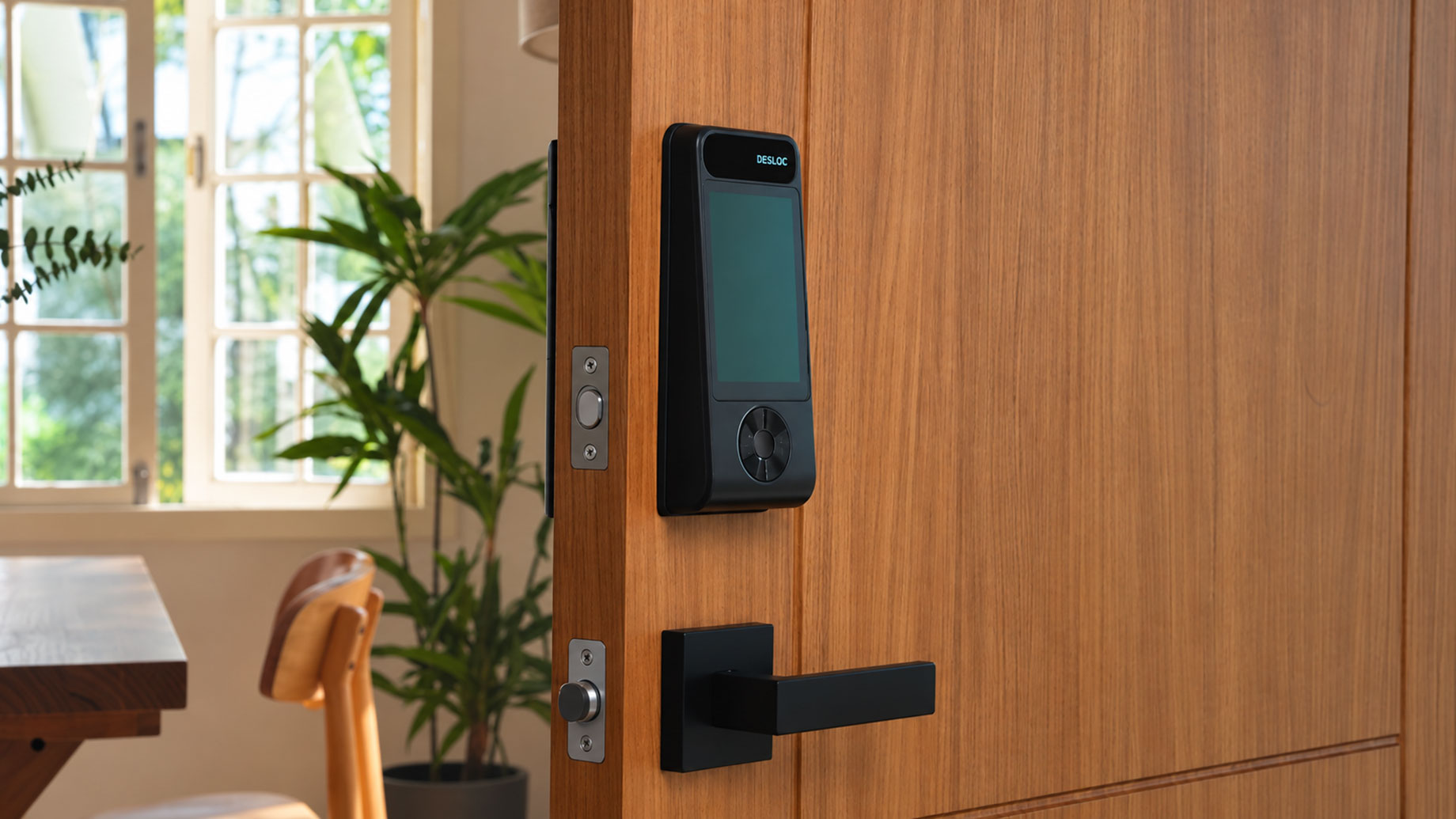
Your front door doesn’t care that your hands have been in dish soap all morning, or that your grandfather’s fingerprints have worn thin after seventy years of manual labor, or that your kid’s fingers are still too small to register cleanly on most sensors. Most fingerprint locks do, though — and that’s exactly the gap the Desloc Smart Lock V150 Plus was built to close, with a curved fingerprint module engineered to work with the finger you actually have, not the flawless print in the marketing photo.
1. Why Flat Sensors Still Need a Lot of Work
Most fingerprint door locks use a flat sensing pad, just like the basic design phones we have used for years. But this comes with a lot of problems too. Once you press a curved surface onto a flat one and you get a small, distorted contact patch — fine for a phone you hold at a comfortable angle, less fine for a door lock you’re jabbing at one-handed while balancing groceries. Dry skin, worn ridges, or a finger that’s even slightly damp can turn a routine unlock into a two- or three-try ordeal.
2. A Sensor Shaped Like an Actual Finger
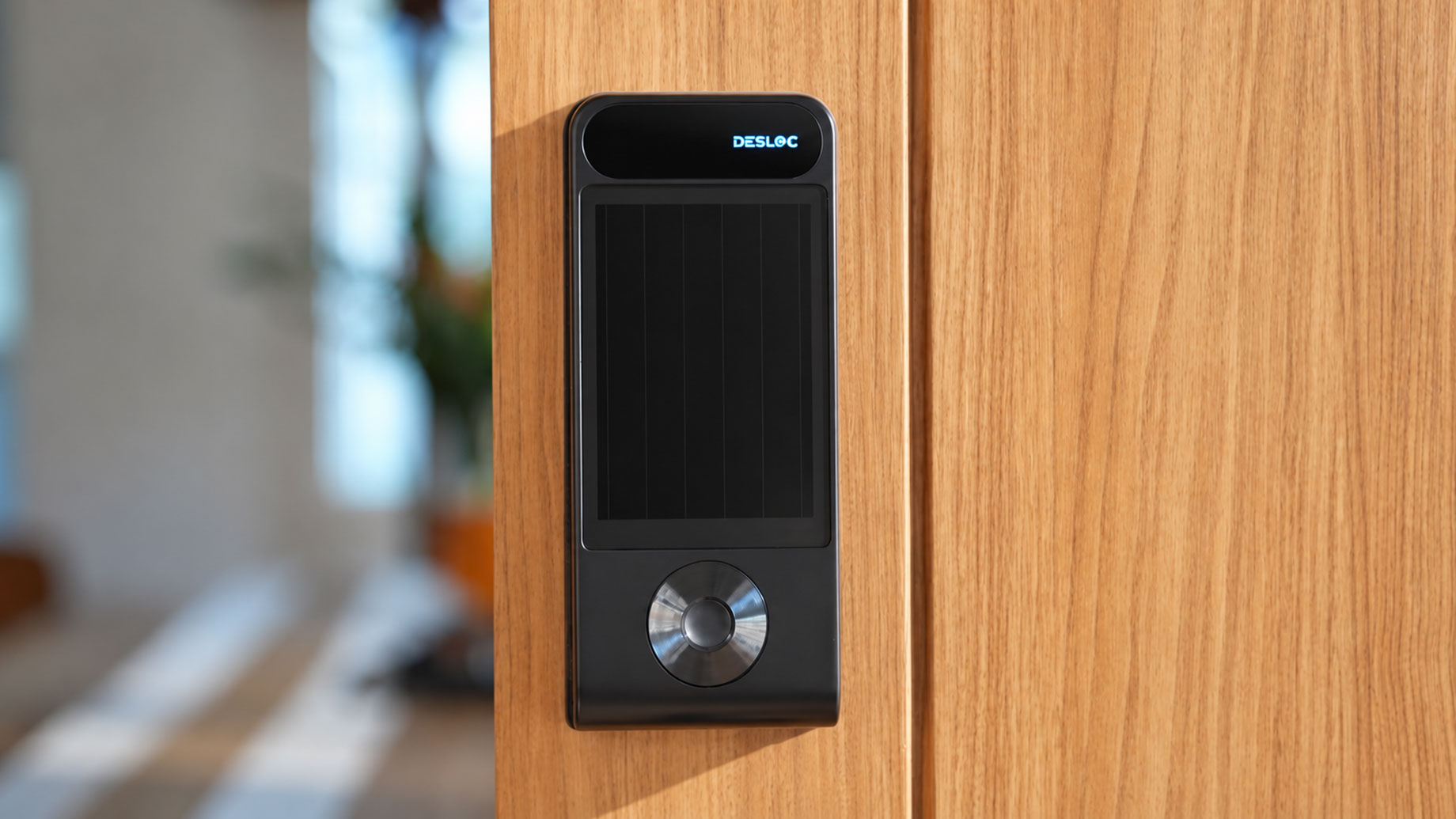
Desloc’s answer is a 3D curved-glass sensor module, patented as GPTfinger 2.0. This is beautifully contoured to match the natural curve of a fingertip rather than forcing your finger to flatten against glass. The larger, curved contact area reads more of your fingerprint at once and stays accurate across a wider range of pressing angles, so an off-center or hurried press is far less likely to come back as a failed read.
3. How is AI Working Behind the Scenes?
There is a deep-learning model underneath the sensors which is where lies the magic here. It is trained on real interaction data. This is distilled from a larger AI system and tuned specifically for the messiness of everyday hands. Rather than requiring a pristine, textbook-perfect print, it reconstructs and matches shallow or partially worn ridge patterns, then keeps adjusting its recognition area and response speed as it learns how you actually place your finger over time.
4. Built With Seniors and Kids in Mind, Not Just Test Labs
This is where the design choice stops being a technical footnote and starts being a household one. Worn or shallow fingerprints are common among older adults and people who’ve spent decades doing manual work, and small, still-developing fingerprints are common in kids — both groups that flat-sensor locks have historically underserved. The curved module and its AI backend were built around exactly those cases, which matters if your household includes anyone outside the young-adult-with-perfect-prints demographic most consumer biometrics are quietly designed for.
5. Where It Fits Into the Rest of the Lock
The fingerprint sensor is one piece of a broader system that includes 3D face recognition, a built-in Wi-Fi connection with no separate hub required, and a solar-assisted battery that Desloc rates for up to eight months of runtime without any charging at all. None of it needs to be the fastest or flashiest feature on a spec sheet to matter. It needs to work reliably for whoever happens to be standing at your door — tired, damp-handed, seven years old, or eighty-two — and that’s the standard the curved sensor was actually designed to meet.
A door lock is one of the few pieces of smart-home tech every single person in a household has to use, multiple times a day, without exception. The V150 Plus is a reminder that the more interesting engineering problem isn’t making a sensor faster in ideal conditions — it’s making it work in the ordinary, imperfect ones everyone actually lives in.
Use this code [PRV150] to get extra $30USD OFF. Final price: $229.99.
