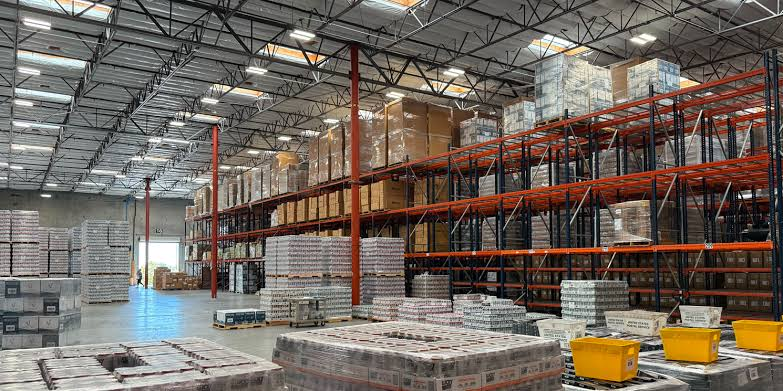
A customer orders a medium blue hoodie and receives a large grey one. Another order ships with one item missing. A third can’t ship at all because the product showed as in stock online but was nowhere to be found on the shelf. For e-commerce sellers, these mistakes are more than minor annoyances; they lead to refunds, reshipping costs, and negative reviews. Most trace back to the same root cause, which is why more sellers rely on real-time warehouse management software to keep a precise record of every item from the moment it arrives until it leaves in a customer’s box.
Fulfillment errors rarely happen because people are careless. They happen because the information guiding those people is incomplete or out of date.
Where Fulfillment Errors Really Start
It’s natural to blame mistakes on the final step, when an order is picked or packed incorrectly. In reality, many errors begin much earlier. A delivery is received without being counted properly. Stock is put away in the wrong location. A return is placed back on the shelf without being recorded.
Each of these small gaps creates a mismatch between what the system believes and what is physically in the warehouse. By the time an order is picked, that mismatch has already set the stage for a mistake.
A picking error is often a receiving error that took a few weeks to show up.
Common Errors and What Actually Causes Them
Viewing fulfillment mistakes through the lens of tracking makes it easier to see how to prevent them.
| Fulfillment Error | Typical Root Cause | How Accurate Tracking Helps |
| Wrong item shipped | Similar products stored together or mislabeled | Scan verification confirms the exact SKU |
| Wrong size or color | Variants not clearly separated in the system | Each variant tracked as its own item and location |
| Missing items in an order | Multi-item orders picked from memory | Pick lists confirm every line before packing |
| Overselling | Inventory counts out of sync with sales channels | Stock levels update as items are received and shipped |
| Delayed shipments | Stock can’t be located quickly | Every item has a recorded bin or shelf location |
| Returned items lost | Returns restocked without being logged | Returns scanned, inspected, and recorded on arrival |
Receiving Accuracy Sets Everything Up
The receiving dock is where inventory accuracy is won or lost. When a shipment arrives, count, scan, and check every item against the purchase order. Record any shortages, overages, or damaged units immediately.
This step can feel slow, especially when a big delivery lands during a busy week. But skipping it means the system starts with the wrong numbers, and every sale after that is based on a guess. Accurate receiving is the foundation for everything that follows.
Location Tracking Makes Picking Faster and Safer
Knowing how many units you have isn’t enough. You also need to know exactly where they are. Assigning every product a specific bin, shelf, or location and recording it in the system allows pickers to go straight to the right spot.
This matters most for products with many variants. When sizes and colors of the same item sit side by side, it’s easy to grab the wrong one. Clear location labels and system-directed picking reduce that risk and speed up the process, particularly for new staff who don’t yet know the layout by heart.
Scan Verification at Pick and Pack
One of the most effective ways to prevent wrong-item shipments is scan verification. Pickers scan each item as they collect it, and packers scan again before sealing the box. If the scanned item doesn’t match the order, the system flags it immediately.
This adds only a few seconds per order but catches mistakes before they reach the customer. For sellers with large catalogs or many look-alike products, it can dramatically reduce returns caused by incorrect shipments.
Every scan is a chance to catch a mistake before your customer does.
Keeping Inventory in Sync Across Sales Channels
Many sellers list products on their own store, marketplaces, and social platforms at the same time. Without accurate tracking, those channels can drift out of sync. A product sells on one platform while still showing as available on another, and suddenly there are more orders than units.
Real-time stock updates solve most of this. When inventory changes the moment items are received, picked, or returned, every connected channel reflects the same number. That prevents overselling, protects seller ratings, and reduces the stress of canceling orders.
Handling Returns Without Losing Track
Returns are a normal part of e-commerce, but they’re also a common source of inventory errors. A returned item might be resellable, damaged, or missing parts, and each outcome affects stock differently.
A clear returns process includes scanning items on arrival, inspecting their condition, and recording whether they go back into stock or are set aside. That keeps inventory accurate and ensures refunds and replacements are handled correctly.
What to Look for If You Outsource Fulfillment
Not every seller runs their own warehouse. Many work with fulfillment partners or third-party logistics providers. In that case, tracking accuracy still matters, but someone else handles it.
When evaluating a partner, ask how they receive and verify stock, whether they use scan verification at pick and pack, how quickly inventory updates reach your store, and how they process returns. Clear answers to these questions are a good sign that errors will be caught before they reach your customers.
Bringing It All Together
Fulfillment errors cost e-commerce sellers money, time, and customer trust. Most of them don’t come from a single bad moment but from small tracking gaps that build up over time: an uncounted delivery, a misplaced product, an unlogged return.
Accurate warehouse tracking closes those gaps. By recording every item at receiving, assigning clear locations, verifying picks with scans, syncing stock across channels, and logging returns carefully, sellers can ship the right item in the right box to the right customer far more consistently. The result is fewer refunds, better reviews, and a fulfillment operation that can grow without errors growing alongside it.