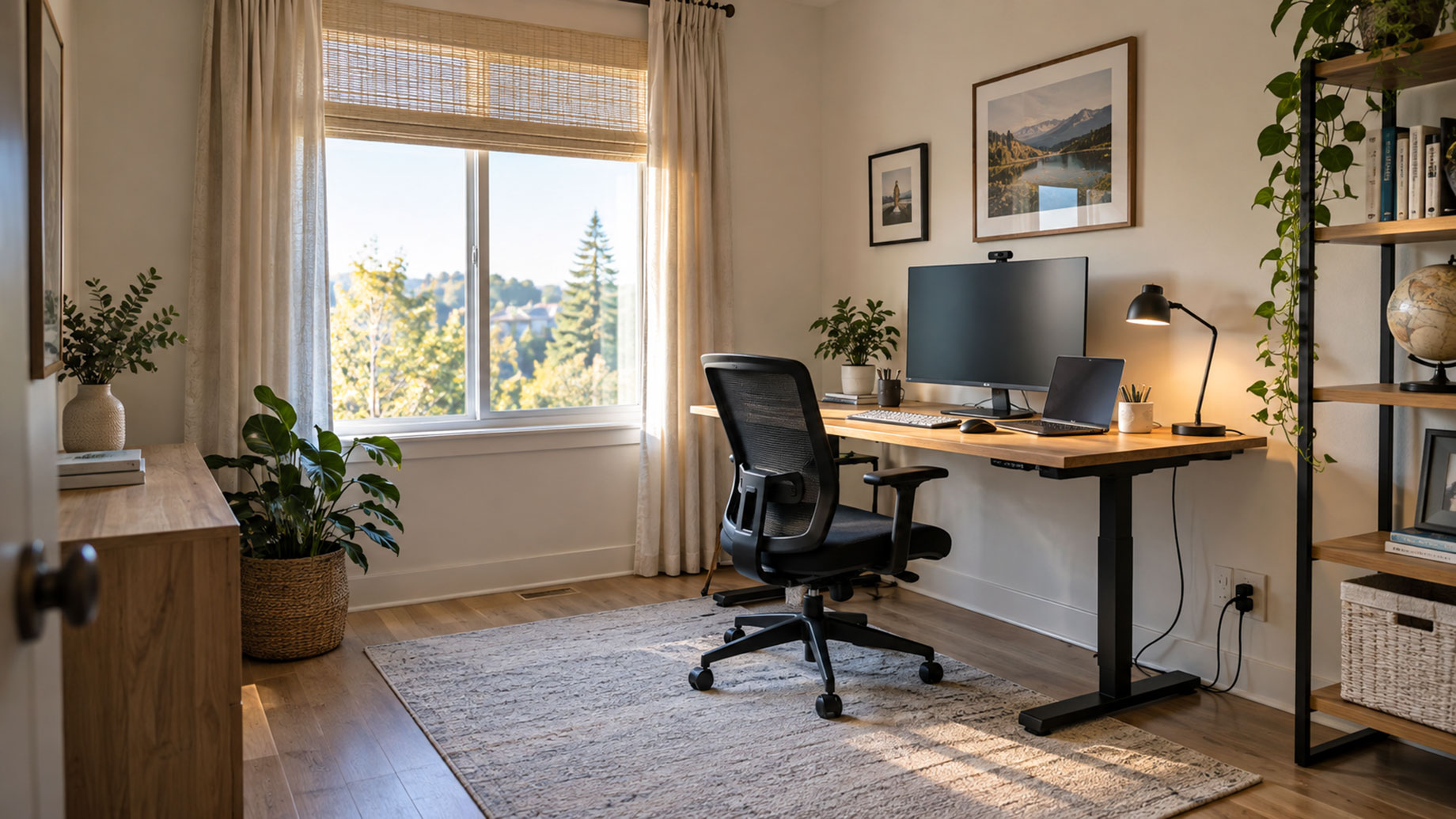
An unused bedroom can quickly become one of the most valuable spaces in a home when it is transformed into a dedicated office. As remote work, freelancing, online businesses, and hybrid schedules become more common, many homeowners are choosing to turn spare rooms into permanent workspaces rather than letting them sit unused.
However, moving a desk and computer into an empty bedroom is only the beginning. A comfortable and practical home office depends on several details that are easy to overlook, from electrical outlets and lighting to internet connectivity, airflow, flooring, and storage.
Before bringing in heavy furniture and office equipment, take some time to inspect the room and plan how it will function every day.
1. Check the Location of Electrical Outlets
Start by looking at where the electrical outlets are located. A home office can require considerably more power than a typical bedroom.
A computer, monitor, printer, desk lamp, phone charger, speakers, router, and other accessories can quickly occupy several outlets. If the room has only one or two conveniently positioned outlets, you may end up relying heavily on extension cords and power strips.
Think about where your desk will eventually go and whether an outlet will be within easy reach. Avoid creating a workspace where power cables have to stretch across walking areas.
If you need additional outlets installed, have electrical work completed by a qualified professional before the office furniture arrives. This is also a good opportunity to consider whether the room needs better cable management or dedicated power for larger equipment.
2. Evaluate the Lighting
Good lighting can make a significant difference to a home office.
First, consider the room’s natural light. A window can make the workspace feel brighter and more pleasant, but placing your monitor directly in front of or behind a window can create glare. Depending on the room, positioning the desk perpendicular to the window may provide a better balance.
Also check the existing ceiling light. A single overhead fixture may not provide enough illumination for reading, writing, or detailed computer work.
Consider adding a desk lamp or adjustable task lighting. The goal is to illuminate your workspace without creating harsh reflections on the screen.
Curtains or blinds can also help you control sunlight throughout the day.
3. Test the Internet Connection
A spare bedroom may have seemed perfectly suitable when it was used occasionally, but working from home can expose weaknesses in your internet setup.
Test the Wi-Fi connection from different parts of the room before deciding where to put your desk. Pay attention to download speeds, upload speeds, and whether the connection remains stable during video calls.
If the signal is weak, you may need to reposition your router, add a mesh Wi-Fi system, or consider a wired Ethernet connection.
For people who regularly attend video conferences, upload large files, manage websites, or work with cloud-based applications, reliable connectivity should be treated as a basic requirement rather than an afterthought.
4. Plan the Desk Position Carefully
Desk placement affects almost everything else in the room.
Before purchasing a desk, measure the available floor space and consider how the chair will move. You need enough room to sit comfortably without blocking a door, closet, radiator, or walkway.
Avoid pushing the desk into a position that makes the room difficult to navigate. You should also think about where your monitor will sit in relation to windows and artificial lighting.
If you regularly work with clients or participate in video meetings, consider the background visible behind you. A clean wall, bookshelf, artwork, or organized storage area can create a more professional setting without requiring a major renovation.
5. Check Airflow and Temperature
Temperature can become surprisingly important when a spare bedroom turns into a full-time office.
Computers and monitors generate heat, while spending several hours in a closed room can make poor ventilation much more noticeable.
Check whether the room has a functioning window, air vent, ceiling fan, or other source of airflow. Make sure furniture will not block vents or restrict circulation.
If the room becomes particularly warm during the day, consider how sunlight, computer equipment, and the location of the HVAC vents contribute to the problem.
A comfortable temperature can help make long work sessions much easier.
6. Think About Noise
A spare room may appear quiet when nobody is working in it, but that can change once it becomes your office.
Listen for household appliances, traffic, conversations, television noise, or sounds from neighboring rooms. If you frequently participate in calls, these distractions can become frustrating.
Door seals, curtains, rugs, bookshelves, and other furnishings can help soften sound. Your desk can also be positioned away from the loudest part of the house.
If possible, choose the room with the best balance between privacy, accessibility, and everyday household activity.
7. Assess Storage Before Adding Furniture
Office clutter tends to accumulate quickly.
Paperwork, notebooks, cables, stationery, electronics, shipping supplies, and other work-related items all need somewhere to go. Before filling the room with standalone furniture, look at the storage already available.
Built-in closets can be particularly useful. Shelving, cabinets, drawer units, and wall-mounted organizers can also provide storage while keeping the desk clear.
Try to plan storage around the things you actually use. Frequently accessed items should remain within easy reach, while rarely used supplies can be stored farther away.
A well-organized office can make a relatively small room feel much more spacious.
8. Inspect the Flooring
Flooring deserves attention before you move a large desk, office chair, filing cabinets, and other equipment into the room.
Look for stains, worn areas, loose flooring, damaged carpet, moisture problems, or uneven sections. An office chair can put repeated pressure on the same area, so existing flooring problems may become more noticeable once the room is used every day.
If the room has carpet that has accumulated dust, stains, or odors while the bedroom was sitting unused, consider refreshing it before installing the new office.
Professional home carpet cleaning services in Lynnwood WA can be an option for homeowners who want the flooring refreshed before heavy furniture and office equipment are installed. Cleaning the room before furnishing it also makes it easier to reach areas that may later become difficult to access.
If you choose professional cleaning, check the carpet manufacturer’s care recommendations and allow the flooring to dry completely before placing furniture back into the room. Cleaning guidance from Sno-King Quality Cleaning notes that drying times can vary depending on the cleaning method and conditions.
9. Look for Maintenance Issues
Finally, inspect the room itself before turning it into a permanent workspace.
Check walls and ceilings for signs of leaks or moisture. Look around windows for drafts or condensation. Test light switches, inspect outlets, and make sure doors and windows operate properly.
This is also the right time to handle small repairs. Fixing a loose outlet cover or repainting a damaged wall is considerably easier when the room is empty.
Make the Room Work Before You Move In
A successful home office is more than a desk and a computer. It should support the way you actually work.
Before moving in, check the electrical layout, lighting, internet connection, desk position, airflow, noise levels, storage capacity, and flooring condition. Addressing these details while the room is still empty can prevent expensive or inconvenient changes later.
Once the practical issues are handled, you can focus on the enjoyable part: choosing the desk, chair, décor, shelving, and technology that make the space feel like your own.
With thoughtful planning, an unused bedroom can become a comfortable, organized, and productive workspace designed for everyday use.
