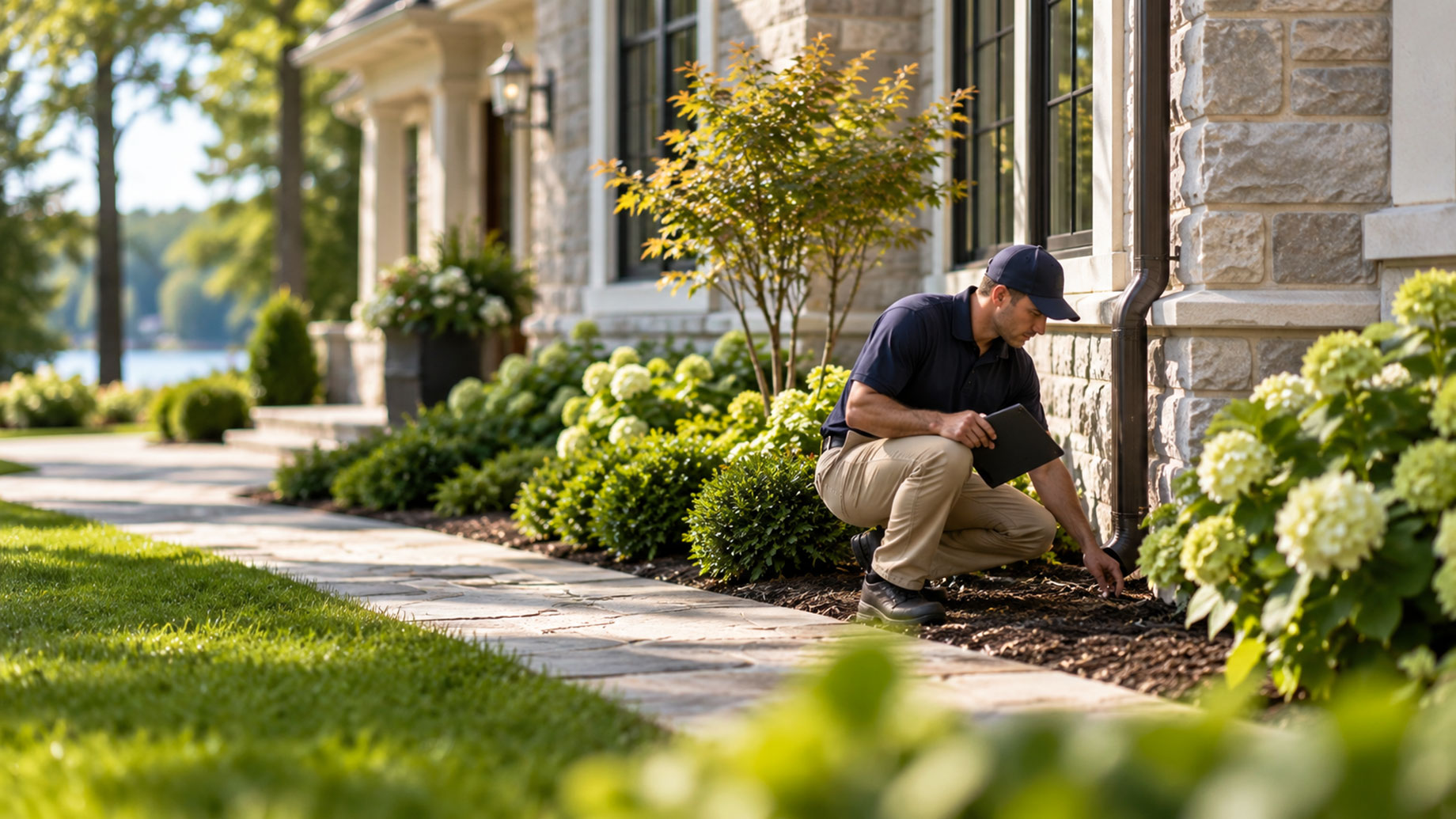
Large homes bring large maintenance responsibilities, and pest control is often the area that gets the least deliberate planning. A high-end Michigan property with a finished basement, an expansive footprint, professionally landscaped grounds, and premium wood finishes throughout offers far more territory for termites, rodents, ants, and spiders to settle in unnoticed than a standard-sized home. Michigan’s freeze-thaw cycles add another layer of complexity, since seasonal moisture shifts affect foundations, basements, and wood structures in ways that create recurring opportunities for pests throughout the year.
The scale that makes these properties impressive is exactly what makes reactive pest control less effective than it would be on a smaller home. A luxury property’s size means a pest problem can develop fully in one section, whether a guest wing, a detached garage, or a rarely used storage area, long before anyone notices it elsewhere in the house.
Why Larger Footprints Create More Opportunity for Pests to Hide
Square footage alone changes the pest control equation considerably. A modest home benefits from near-daily activity throughout most of its rooms, which means pest activity tends to reveal itself relatively quickly simply because people are present to notice it. Larger properties often include entire sections, formal dining rooms, guest suites, home theaters, or wine cellars, that see use only occasionally, giving pests considerably more time to establish themselves before anyone walks through and notices something unusual.
Finished basements common in high-end Michigan homes present a particular version of this challenge. These spaces are often built out with the same quality finishes as the main living areas, yet they still sit below grade and remain vulnerable to the moisture issues that affect any Michigan basement during spring thaw or periods of heavy rain. A finished basement that looks immaculate on the surface can still develop termite or cockroach activity behind walls or beneath flooring if moisture management has not kept pace with the property’s overall upkeep.
Multiple structures on a single property compound this further. Detached garages, guest houses, and storage buildings each require their own inspection routine, since pest activity in one structure often goes entirely undetected by homeowners focused primarily on the main residence.
Moisture Management Across Michigan’s Seasonal Extremes
Michigan’s climate puts persistent pressure on any home’s moisture control systems, and high-end properties with extensive landscaping and large basement footprints face this pressure across more square footage than a typical home. Spring thaw brings rising groundwater levels that can push moisture into foundation walls, while summer humidity creates favorable conditions for cockroaches and certain ants in basements and utility areas with limited ventilation.
Landscaped grounds, while a defining feature of many luxury properties, can inadvertently work against moisture control if irrigation systems and mulch placement are not coordinated with pest prevention in mind. Extensive irrigation zones running on independent schedules sometimes create persistently damp soil near the foundation without anyone noticing, particularly on properties large enough that different zones may not receive consistent attention from the same person.
Homeowners working with Pest Pros of Michigan pest control on properties of this scale often find that moisture management needs to be assessed as a whole-property system, coordinating basement humidity, foundation drainage, and landscape irrigation together rather than addressing each in isolation, since a solution in one area can inadvertently create a new problem in another if the connections between them are not considered.
Scheduled Inspections for Rarely Used and Detached Spaces
Guest suites, formal entertaining rooms, and detached structures all share the same underlying vulnerability: they receive far less routine foot traffic than a home’s primary living spaces, which allows pest activity to progress much further before anyone notices. A guest bedroom used only during holiday visits offers months of uninterrupted time for pests to settle into closets or wall cavities, and a detached garage used mainly for seasonal storage can develop rodent activity that goes unnoticed for an entire winter.
A scheduled inspection routine addresses this gap directly, treating these spaces as priorities rather than afterthoughts. Useful checkpoints for a high-value Michigan property include:
- Guest suites and formal rooms, checked seasonally with particular attention to closets and behind large furniture
- Detached garages and storage buildings, inspected every few months for droppings, gnaw marks, or nesting material
- Finished basement areas, monitored for humidity changes and checked for signs of activity near baseboards and utility penetrations
- Landscaped grounds and irrigation zones, reviewed periodically for persistent dampness near the foundation
- Premium wood features throughout the home, examined for small holes, frass, or hollow-sounding sections
Treating this list as a recurring calendar item, rather than something addressed only when a problem becomes visible, closes the gap that a large property’s low-traffic areas would otherwise leave open.
Protecting Premium Wood Features From Pest Damage
High-end homes frequently showcase custom millwork, hardwood flooring, and built-in cabinetry that represent significant financial and aesthetic investment. These features are just as vulnerable to termites and wood-boring beetles as standard building materials, and the higher cost of replacement makes early detection considerably more valuable on a property where premium wood is used extensively throughout.
Michigan homes face a particular termite consideration worth noting, since termite pressure in the state tends to concentrate in specific regions and conditions rather than being uniform statewide. Properties with finished basements, extensive wood trim, and landscaping close to the foundation should factor this regional variation into how closely they monitor for early signs, since assuming termite risk is negligible simply because a property sits in a colder climate overlooks the specific conditions, moisture, wood-to-soil contact, and basement humidity, that can still support activity locally.
Checking premium wood features for small holes, sawdust-like frass, discoloration, or hollow-sounding sections should become a routine part of maintaining these finishes, ideally on the same schedule as other scheduled inspections rather than only when damage becomes visually apparent.
Exterior Monitoring Across Extensive Grounds
Properties with substantial acreage or elaborately landscaped grounds require exterior monitoring that extends well beyond a quick walk around the foundation. Mature trees, dense plantings, water features, and outdoor living spaces all introduce their own pest considerations, from ants establishing colonies near irrigation lines to spiders taking up residence in rarely disturbed garden structures.
A coordinated exterior monitoring approach checks foundation perimeters, irrigation zones, mulched beds, and any outbuildings on a consistent schedule, rather than relying on incidental observation during routine landscaping maintenance. This kind of monitoring becomes particularly important heading into a Michigan winter, when identifying and sealing exterior entry points before rodents begin actively searching for indoor shelter can prevent a significant portion of the season’s pest pressure altogether.
Building a Preventive Plan Rather Than Waiting for Problems
Given the scale and complexity of a high-end property, a single annual inspection rarely provides adequate coverage across every vulnerable area. A preventive plan structured around the property’s specific features, its basement, landscaping, detached structures, and premium finishes, gives homeowners a far more complete picture of pest risk than a generic, one-size-fits-all approach. Pest Pros of Michigan pest control services built specifically for larger properties typically account for these seasonal and structural variables together, recognizing that a finished basement and a detached garage face genuinely different risks and warrant different inspection priorities within the same overall plan.
End Note
Large Michigan homes with finished basements, extensive landscaping, detached structures, and premium wood finishes offer considerably more territory for pests to establish themselves without detection than a standard residential property, and the state’s seasonal moisture swings add another layer of complexity to manage. Scheduled inspections of rarely used spaces, coordinated moisture management across basements and landscaping, consistent exterior monitoring, and careful attention to premium wood features all work together to protect both the property’s value and the peace of mind that comes with knowing its most overlooked corners are still being watched.
