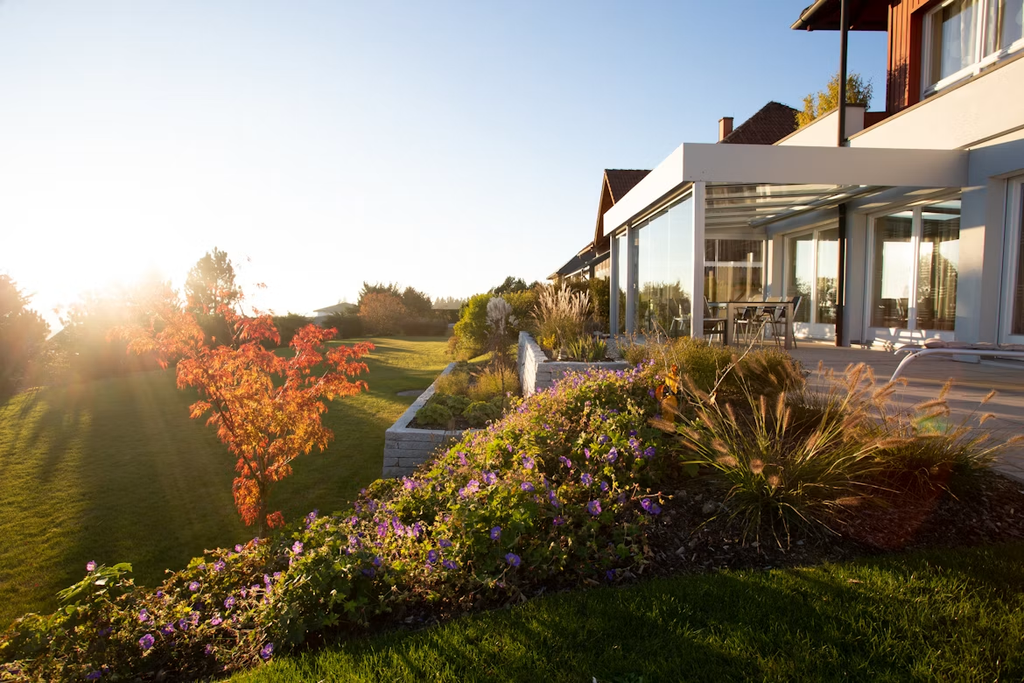
A luxury home used to stand out for its spacious entryway, interior finishes, and specially designed furniture. Luxury residential properties used to focus on integrating age-old elegance with contemporary technologies and aesthetics. While all of that remains important, a different factor has emerged as the defining trait of a high-end property: the ability to withstand rising heat.
The World Meteorological Organization reports that 2024 was the warmest year in its 175-year observational period. The global temperature was more than 1.5°C above that of the pre-industrial era. According to the IPCC (Intergovernmental Panel on Climate Change), global surface temperatures will keep rising until at least mid-century.
In these circumstances, keeping homes cool without relying on air conditioning is becoming a massive challenge. A luxury home, or any residential property for that matter, cannot be sustainable unless it pays close attention to managing heat.
How Is Climate Change Affecting Homes?
The most tangible impact starts with the roof, which gets direct solar heat and withstands the brunt of climate change. Over time, the attic and upper floors can also become uncomfortably warm. This can cause noticeable temperature variation across various rooms in a house.
To keep the home comfortable, the HVAC equipment starts to feel strain. The consequence isn’t just increased cooling costs; it is the long-term damage these usage patterns inflict on energy consumption, equipment load, and emissions.
In this scenario, which is rapidly becoming common in several regions of the US and beyond, homeowners must start paying attention to the whole building envelope, not just ramp up the air conditioner.
As Atticrawl highlights, the need of the hour is to improve efficiency and manage long-term energy costs. This needs an integrated design process that encompasses insulation, air sealing, and ventilation.
Heat Management Challenges Unique to Luxury Homes
In luxurious properties, climate change challenges can become magnified in unexpected ways.
For example, consider a complicated, architecturally unique high ceiling. While the visual effect is dramatic and striking, these structures can make insulation harder to achieve. Some areas may be difficult to access, which compromises the overall effectiveness of a building’s insulation.
A similar problem may arise because of glass walls and large windows. They let residents enjoy glorious vistas; they also lead to considerable solar heat gain in the afternoons.
This is why the entire thermal envelope warrants diligent consideration when building a luxury home. This comprises everything from walls and ceilings to floors, windows, and doors. For older properties, these considerations become important during renovation.
Knowing When Insulation Needs an Upgrade
As insulation is a major component of renovation, assessing whether it needs repair or replacement is crucial. When examining a home’s thermal envelope, insulation issues may come to light.
For example, it may have become moldy and compressed in some areas. Pest-damaged insulation will no longer work well. Households that experience unexplained bill increases or rooms that always run hot should consider a professional inspection.
Luxury homes, which often have architectural innovations, may have spaces that demand customized insulation. What you should know about home insulation replacement often comes down to choosing the ideal material and recognizing that the choice depends on many factors.
Consulting a professional team can help homeowners consider salient aspects, such as R-value, moisture exposure, and ventilation.
Based on these considerations, a property owner can go with replacement insulation that offers the most benefits. For example, blown fiberglass works well in irregular spaces while mineral wool is worth considering for fire-sensitive areas.
Employing Intelligent Technology for Better Heat Management
To deal with climate change, property developers have also started adopting intelligent technologies for heat management.
Thermal imaging now makes it easier to gauge temperature differences between various rooms. This helps homeowners understand where to prioritize insulation repair or replacement.
Some homes now use reflective roofing materials that minimize solar heat gain, especially during summer. In some US states, regulatory agencies and government bodies are also becoming actively involved in these efforts. Last year in June, the Atlanta City Council approved an ordinance requiring all roofs to use light, reflective materials, i.e., cool roofs.
Grist, a nonprofit media organization committed to climate change, calls for more cooperation between industry organizations and municipal agencies to make homes more thermally efficient.
“In the same way that the urban environment that we have built around us can exacerbate heat, it can also be modified to reduce that heat.” – Edith de Guzman, Director, Los Angeles Urban Cooling Collaborative.
From smart sensors to thermal imaging cameras and reflective roofing options, luxury homeowners now have several options to improve their property’s heat management. This is opportune, since the need for thermal efficiency is also increasing every year.
Heat Management Strategies for Luxury Homes
| Challenge | Strategy |
| Excessive heat entering through the roof | Improve attic insulation and consider reflective or cool-roof materials |
| Uneven temperatures between rooms | Combine insulation improvements with professional air sealing |
| Large windows and glass walls | Use energy-efficient glazing, shading, and appropriate window treatments |
| Difficult-to-insulate architectural spaces | Use insulation materials suited to irregular or hard-to-reach areas |
| Aging, compressed, or damaged insulation | Have the existing insulation professionally assessed and replace it where necessary |
| High HVAC demand | Address roofing, insulation, air leakage, ventilation as one integrated system |
| Limited information about heat loss and gain | Use thermal imaging and smart temperature sensors |
FAQs
How can homeowners identify areas where a home is overheating?
Thermal imaging can reveal temperature differences across rooms, walls, and ceilings. You can also use smart temperature sensors to identify recurring patterns. These tools can provide useful information for deciding where a professional should investigate insulation, air leakage, or other building-envelope issues.
Can insulation alone keep a luxury home cool?
Insulation, although important, is only one component of effective heat management. Homeowners should also consider air sealing, ventilation, and HVAC design, as these aspects will influence how much heat enters and moves through a home. Adopting a whole-building approach is more effective than relying on a single measure.
Can better insulation increase the value of a luxury home?
Yes. Thermal performance can contribute to a home’s overall functionality, comfort, and operating efficiency. The effect on property value will vary with the location, buyer preferences, and construction quality. Again, energy efficiency is one component of a home’s broader value proposition.
Preparing Homes for Hotter Days Ahead
In real estate, luxury has slowly started assuming new meanings. Glazing and high-end appliances aside, these are homes that also perform well thermally. More homeowners will need to adopt this sentiment to address climate change and prepare their living spaces for potentially warmer temperatures in the future.
Attics, roofs, and crawl spaces don’t get photographed for lifestyle magazines or talked about at dinner parties. But ignoring their sustainability in a world where the mercury is rising can prove detrimental for the whole home.