A roof does its job quietly, which is exactly why so many problems go unnoticed until they turn expensive. Most owners do not think about what is over their heads until a stain appears on a ceiling or a storm knocks something loose. By that point, the damage has usually been building for months or even years.
The good news is that almost every serious roof failure gives warning signs long before it becomes an emergency, and most of those signs can be spotted by someone who knows where to look. A short walk around the property a few times a year, along with a quick look inside the attic, can save an enormous amount of money and stress later on.
Knowing When the Problem Is Bigger Than a Weekend Fix
There comes a point in the life of every building where small maintenance tasks stop being enough, and the owner has to decide whether the structure overhead is still doing what it was built to do. A roofing company is the kind of business owners often start searching for only after water has already come through a ceiling, which leaves very little time to compare options carefully.
Working with a qualified local roofing specialist ahead of that moment gives you a proper assessment, a clear picture of the roof’s remaining life, and a plan you can actually budget for.
Owners who want that kind of clarity before an emergency forces their hand should hire professionals to conduct an inspection while the roof is still holding up. Look up roofing company near me for more information.
The Early Signs That Usually Show Up First
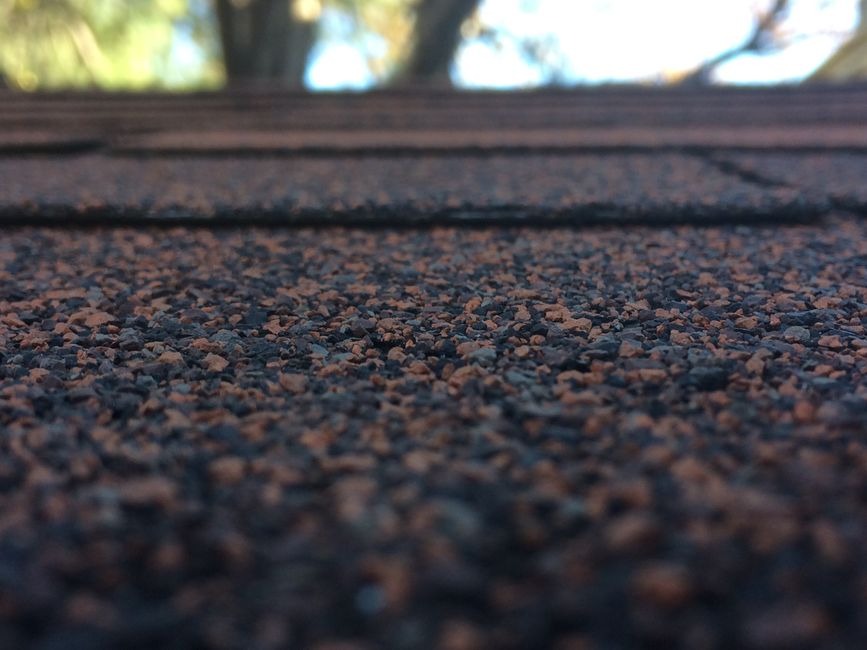
Most roofs begin to fail in small, unglamorous ways. Shingles start to curl at the edges or lift slightly at the corners. Granules wash off and collect in the bottom of downspouts, leaving the surface looking patchy and faded in places.
Flashing around chimneys and vents begins to pull away or show rust. None of these things will flood a living room overnight, but each one is a sign that the outer layer is no longer sealing the way it should. Once that layer is compromised, water has a path, and water is patient.
Discoloration is another early clue. Dark streaks running down a slope often mean moisture is sitting on the surface longer than it should. Patches of moss or algae point to the same problem, usually in areas that stay shaded and damp.
What to Look For From the Ground
You do not need to climb anything to carry out a useful check. Stand back far enough to see each slope clearly and look for lines that should be straight but are not. A sagging ridge, a dip in the middle of a slope, or a wavy edge along the eaves all suggest something structural underneath has been weakened by moisture.
Look at the roof from more than one angle, because a problem that is invisible from the driveway can be obvious from the back garden.
Checking the Attic After Heavy Rain
The attic tells you more than the exterior does, and the best time to look is within a day of a heavy downpour. Take a torch and look along the underside of the roof deck for dark patches, water trails, or timber that looks darker than the wood around it.
Run a hand over insulation in a few places. If it feels damp or compressed, water is getting in somewhere above it.
Daylight is the other thing to watch for. Any pinprick of light coming through the deck means there is an opening, and an opening that lets light in will let water in too. Also pay attention to smell.
Gutters, Drainage, and the Path Water Takes
A surprising number of roof problems are really drainage problems. When gutters fill with leaves and grit, water backs up under the lower edge of the roof instead of running away from the building. Over a wet season, that backed-up water works its way into the decking and the timber behind the fascia.
Clear the gutters at least twice a year and watch where the water actually goes during a storm. Downspouts that empty right against the foundation cause their own set of problems, so extensions that carry water well away from the walls are worth the small cost.
Why Small Leaks Rarely Stay Small
A slow leak does its worst work out of sight. Water travels along rafters and beams before it appears on a ceiling, which means the visible stain is often some distance from the actual entry point. By the time a stain shows up indoors, the surrounding timber may already be soft, and insulation in that area has probably lost most of its value.
Damp timber also attracts problems that have nothing to do with the roof itself. Mold takes hold in dark, humid spaces, and insects that feed on softened wood follow soon after.
Seasonal Timing and Routine Inspection
Twice a year is a sensible rhythm for a proper look, ideally in the spring and again in the autumn before the weather turns. Spring checks catch the damage left behind by winter, when freezing and thawing cycles push at every weak point. Autumn checks make sure the roof is ready for the months when you least want to be dealing with an emergency.
Add an extra look after any serious storm, particularly one with high wind or hail. Wind lifts and loosens material without necessarily removing it, so a roof can look completely normal from the ground while several sections are no longer properly fixed down.
Keeping Records of Repairs and Damage
Write down what you find and when you found it. A simple file with dates, notes, and photographs turns a vague worry into useful information. It shows you whether a stain is growing, whether a repair actually held, and how old each section of the roof is.
That record matters even more if you ever need to make an insurance claim. Photographs taken before and after a storm make the difference between a claim that is accepted quickly and one that drags on.
Planning Ahead Instead of Reacting
Every roof has a finite life, and knowing roughly where yours sits in that life changes how you plan. An owner who knows the covering has perhaps five years left can set money aside calmly. An owner caught by a sudden failure has no such luxury and usually pays more for less choice.
Regular checks, honest record-keeping, and a willingness to act on small warnings are what keep a roof from becoming a crisis. The effort involved is genuinely modest. The cost of skipping it rarely is.